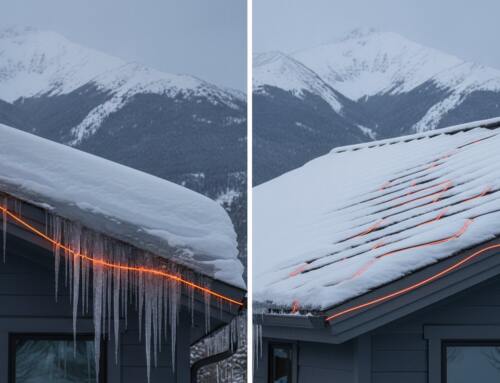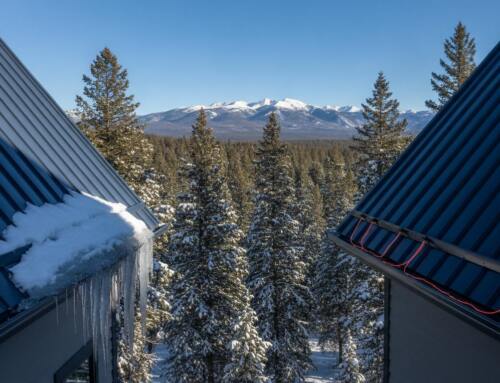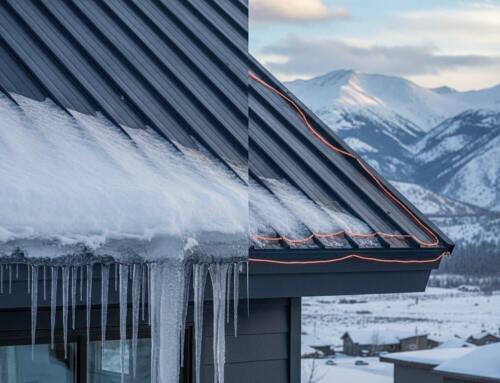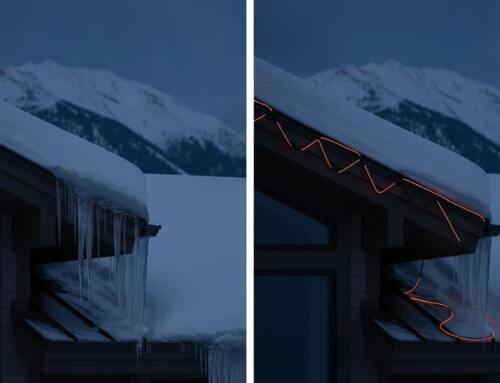
In the first quarter of 2026, winter storms triggered over 46,000 insurance claims for ice, snow, and structural collapse, resulting in an estimated $478 million in losses. For facility managers across Utah, Idaho, and Wyoming, these figures highlight a sobering reality about the risks of heavy mountain winters. You know that a single season of neglect can lead to catastrophic structural failure or significant liability from falling ice at your entrances. Implementing a robust strategy for industrial roof ice prevention is a necessity for your facility’s long-term health and safety.
It’s possible to protect your infrastructure without seeing your energy costs skyrocket. This article will help you master the complexities of large-scale ice prevention to shield your building from damage. We’ll preview how custom heat trace designs and automated systems can reduce waste while ensuring compliance with local electrical codes and ASCE 7-22 structural standards. By the end, you’ll understand how to implement a professional-grade solution that provides peace of mind for decades to come.
Key Takeaways
- Understand how large industrial surface areas amplify snow accumulation and how to protect high-traffic loading docks from the risk of sudden roof avalanches.
- Master the technical shift from standard heat tape to heavy-duty, self-regulating cables to optimize your strategy for industrial roof ice prevention.
- Learn to select the right combination of snow retention and heat trace systems based on your facility’s specific roofing material, such as TPO, EPDM, or industrial metal.
- Explore how automated sensors and predictive controllers can significantly lower energy overhead while maintaining strict compliance with regional electrical codes.
- Discover the benefits of professional heat-trace design to ensure your facility in Utah, Idaho, or Wyoming remains safe and structurally sound for decades.
The Unique Challenges of Industrial Roof Ice Management
Industrial facilities face environmental pressures that residential structures simply don’t encounter. When you manage a building with fifty thousand square feet of roof space, a standard snowfall transforms into a massive structural weight. This scale amplifies every risk, making industrial roof ice prevention a matter of engineering rather than simple maintenance. Large, low-slope surfaces allow snow to accumulate in deep drifts, often shifting toward the eaves or internal drainage points where it compacts into dense, heavy ice. Unlike smaller buildings, these industrial structures have complex drainage paths that are easily obstructed by even a few inches of solid ice.
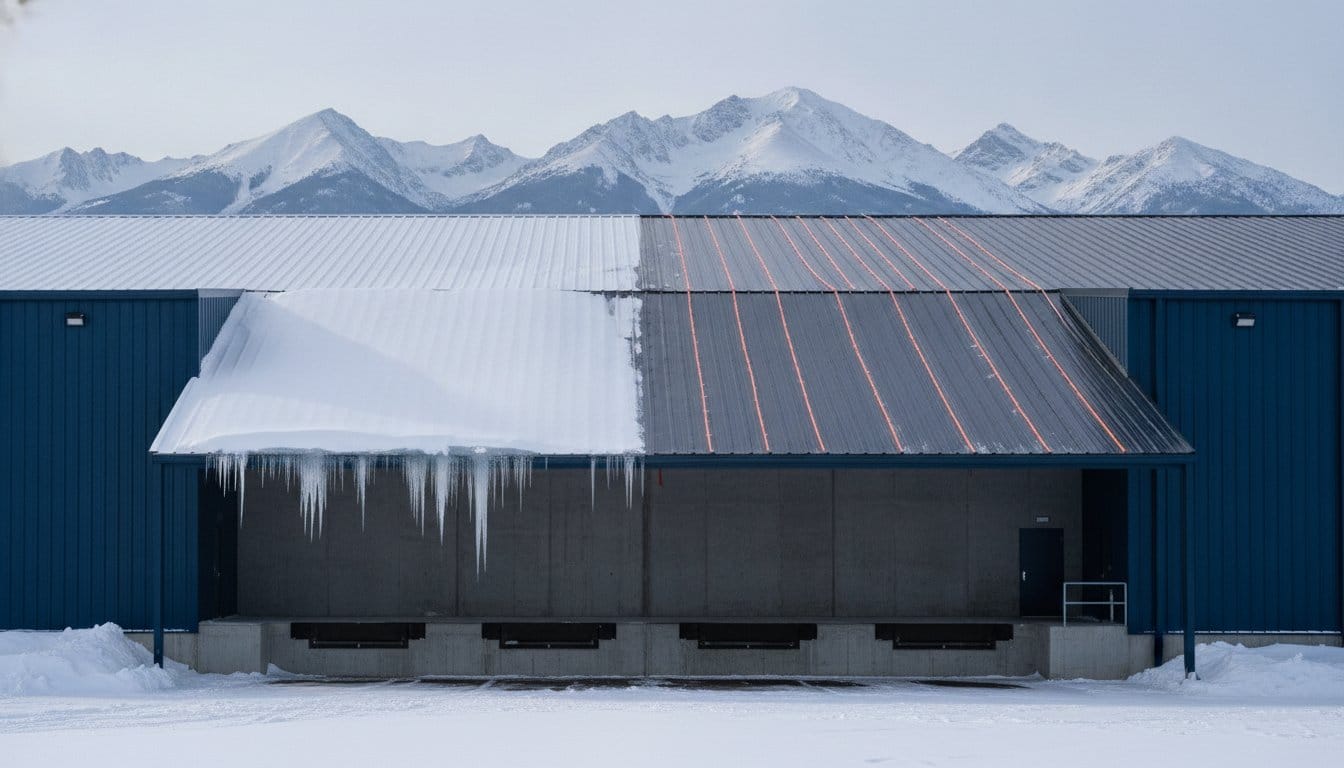
Many facilities also struggle with the “roof avalanche” phenomenon. On large-scale industrial metal roofs, snow doesn’t always melt away gradually. Instead, it can slide off all at once in a massive sheet. This creates a significant danger for high-traffic areas like loading docks and main entrances. If these zones aren’t protected, the liability risk from falling ice is immense. It’s not just about the roof itself; it’s about the safety of every person walking through your doors and the integrity of the equipment parked below.
Structural Integrity and Snow Load Limits
Industrial trusses are designed for specific live loads, but they aren’t always prepared for the uneven distribution caused by massive ice dams. In large-scale steel buildings, thermal bridging occurs where heat escapes through the metal frame, melting the bottom layer of snow. This liquid then refreezes at the cold perimeter, leading to ice dam formation that traps water behind it. This trapped water can weigh thousands of pounds, stressing long-span trusses and creating “hidden” ice dams in internal gutters that are difficult to see from the ground. If these loads exceed the ASCE 7-22 standards, the risk of catastrophic failure becomes a reality during a heavy winter.
Safety Hazards and Liability for Commercial Facilities
Protecting your team is the highest priority. High-eave buildings often create “kill zones” where ice sheds unexpectedly. These events can crush HVAC units, damage expensive rooftop equipment, and lead to costly downtime. OSHA and local safety standards in Utah, Idaho, and Wyoming require facility managers to maintain safe working environments, which includes managing winter roof hazards. A proactive approach to industrial roof ice prevention ensures you aren’t just reacting to problems after they occur, but rather stopping them before they start. The financial impact of structural damage or a liability claim far outweighs the cost of a professionally designed prevention system.
Commercial Heat Trace Design: Systems for Large-Scale Facilities
Effective industrial roof ice prevention relies on more than just “plug-and-play” hardware. In a large-scale facility, a heat trace system is an engineered network of specialized cables designed to maintain clear drainage paths through the coldest months. While residential properties might get by with retail-grade “heat tape,” industrial environments require heavy-duty, self-regulating industrial cables that can withstand the rigors of high-voltage electrical systems. These facilities often operate on 208V, 240V, or even 277V circuits, necessitating a custom electrical design that ensures the system remains reliable without overloading your infrastructure. Off-the-shelf solutions frequently fail in mountain environments because they lack the wattage density and thermal resilience required to combat the deep freezes found in Utah, Idaho, and Wyoming.
When you’re dealing with the scale of a warehouse or manufacturing plant, the cost of inefficiency adds up quickly. A professionally designed system ensures that energy is only used where and when it’s needed. For those looking for broader ice dam prevention tips, the National Weather Service emphasizes the importance of maintaining a cold roof, which is precisely why these specialized cables are positioned only in critical drainage zones rather than across the entire surface. If you’re unsure about the electrical capacity of your current roof, consulting with a specialist for a custom heat-trace design is the most reliable way to avoid mid-winter system failures.
Self-Regulating vs. Constant Wattage in Industrial Settings
Self-regulating heat cable is generally considered the gold standard for industrial applications due to its inherent energy efficiency. The cable’s core adjusts its heat output based on the ambient temperature, providing more warmth as it gets colder and tapering off as the weather improves. This prevents energy waste during milder winter days. However, certain high-demand industrial drainage areas may benefit from constant wattage heat cable, which provides a consistent, high-heat output regardless of temperature. For long-term durability, we prioritize cables with advanced UV resistance and rugged outer jacket materials like fluoropolymers to resist chemical exposure and physical wear.
Mapping the Heat Trace Layout
Designing an effective layout requires more than just lining the gutters. Our approach involves mapping “melt paths” that guide water from the roof ridge all the way to the ground-level storm drain. This often involves calculating thousands of linear feet of cable for large industrial gutter systems and ensuring there are no gaps where refreezing could occur. A complete solution often integrates industrial roof ice prevention cables with roof snow retention systems. By combining these technologies, we can hold the snow mass in place with guards while the heat trace ensures that the resulting meltwater has a clear, unobstructed path off the building. This dual-layered strategy is the only way to truly protect the structural integrity of a large-span facility.
Comparing Commercial-Grade De-Icing Technologies
Selecting the right technology for industrial roof ice prevention requires a deep understanding of your building’s specific anatomy. Industrial roofs aren’t a one-size-fits-all scenario; a metal standing-seam roof behaves fundamentally differently than a flat EPDM or TPO membrane. On a large-scale metal roof, the primary goal is often managing the sheer volume of snow that wants to slide off at once. Here, the synergy between snow guards and heat cables is vital. The guards hold the snow mass in place, while the heat cables create regulated channels for meltwater to escape. Without this integrated approach, you risk either crushing your gutters with sliding ice or wasting energy heating a roof that can’t effectively drain.
Energy consumption is a major factor in system architecture. While the upfront investment for a high-end, self-regulating system might be higher, the 20-year life-cycle costs are significantly lower than cheaper, constant-wattage alternatives. When you account for the reduced energy overhead and minimal maintenance requirements of industrial-grade components, the professional choice becomes clear. You’re not just buying cable; you’re investing in a long-term structural protection plan that guards against the expensive repairs caused by ice expansion and water infiltration.
Flat Roof and Parapet Wall Solutions
Flat industrial roofs face a unique enemy: ponding. When ice builds up around internal roof drains or scuppers, water backs up across the membrane, leading to immense weight and potential leaks. We solve this by heating the scuppers and internal downspouts directly, ensuring a constant flow even in sub-zero temperatures. Because membrane roofs are sensitive to damage, we use specialized, non-penetrating mounting clips. These clips secure the system firmly without puncturing the TPO or EPDM layers, preserving your roof’s warranty while keeping the drainage paths clear.
Snow Retention for Industrial Slopes
For industrial buildings with sloped roofs, we evaluate snow retention based on the “kinetic punch” of the snow load. Standard residential brackets won’t cut it on a fifty-foot span. We typically recommend heavy-duty bar-style snow guards for these large areas because they provide a continuous barrier that distributes the weight of the snow more evenly across the structural members. Engineering these systems to work alongside de-icing cables ensures that snow stays on the roof until it can be safely melted and drained. This integrated strategy is the most reliable way to protect loading docks and pedestrian walkways from the danger of falling ice.
Implementation & Compliance: Integrating Automated Controls
Managing a massive facility requires a level of oversight that manual switches simply can’t provide. For industrial roof ice prevention, automated controllers are the primary tool for reducing energy overhead while maintaining safety. Without automation, a large-scale system can consume excessive power during mild days or fail to activate when a sudden storm hits. Modern controllers use a combination of moisture and temperature sensors to ensure the system only draws power when precipitation is present and temperatures are in the freezing range. This precision prevents ice from forming in the first place, ensuring your drainage paths remain clear without inflating your utility bill.
Compliance is another area where industrial systems differ from smaller projects. National Electrical Code (NEC) Article 426 governs fixed outdoor electric de-icing and snow-melting equipment. This code requires specific safety measures, including Ground Fault Equipment Protection (GFEP). Unlike standard residential GFCI outlets, GFEP is designed to handle the higher leakage currents typical of long industrial cable runs. Neglecting these requirements isn’t just a safety risk; it can lead to failed inspections and significant liability. If you’re looking to upgrade your facility’s efficiency, exploring professional controller options is the first step toward a smarter, code-compliant system.
Automated Sensors and Remote Monitoring
Industrial facility managers need data to make informed decisions. We often integrate snow-melting controllers into existing Building Management Systems (BMS), allowing for centralized monitoring of the entire roof. This integration provides real-time health alerts and remote troubleshooting capabilities. You can choose between ambient sensors that detect air temperature or gutter-mounted sensors that verify the presence of actual moisture. By using both, you create a fail-safe environment where the system reacts instantly to localized weather changes, providing a level of protection that manual oversight can’t match.
Professional Installation and Code Compliance
Because these systems often involve high-amperage start-up loads, a licensed electrical contractor is mandatory for a safe installation. Self-regulating cables draw a surge of power when they first turn on in cold weather, which requires precise circuit sizing to prevent tripped breakers. We also perform rigorous Megger testing on every circuit to verify the insulation integrity of the cables. This testing provides a baseline for system longevity and ensures that your investment will perform reliably for decades. Proper documentation of these tests is a hallmark of professional workmanship and a requirement for many industrial insurance policies.
Partnering with Utah Heat Cable for Industrial Solutions
Managing the complexities of industrial roof ice prevention requires a partner who understands the specific meteorological patterns of Utah, Idaho, and Wyoming. At Utah Heat Cable, we approach every facility as a unique engineering challenge. As a licensed electrical contractor with specialized experience in the Intermountain West, we’ve built a reputation as the master craftsmen who often teach other experts in the field. This deep technical knowledge ensures that your system isn’t just a temporary fix. It’s a permanent structural asset designed to withstand the harshest mountain winters while maintaining total safety for your staff and equipment.
We pride ourselves on a steady, methodical approach that prioritizes long-term reliability over quick installations. Because we understand the underlying mechanics of heat transfer and electrical load, we can offer solutions that smaller contractors might miss. Our team acts as a protective shield for your property, providing the local reliability and professional-grade protection you need to focus on your core business operations without worrying about the next winter storm.
Our Industrial Design Process
Our process begins with a comprehensive site audit to identify every environmental risk. We don’t rely on guesswork or generic layouts. Instead, we use CAD-based heat trace mapping to visualize every drainage path and potential bottleneck on your roof. This precision allows us to select industrial-grade components specifically chosen for 20-year reliability. We understand that your facility needs to remain operational. To support this, we coordinate our installation schedules to minimize any impact on your daily activities. By integrating the automated controls and specialized mounting systems mentioned in previous sections, we deliver a turnkey solution that operates autonomously.
Request Your Commercial Facility Audit
Securing your property for the 2026 winter season starts with a professional consultation. During a Utah Heat Cable audit, we evaluate your existing electrical capacity, roof membrane condition, and high-risk zones like loading docks. We provide a clear roadmap for protection that balances structural safety with energy efficiency. Don’t wait for the first storm to identify your roof’s weaknesses. Instead, take a proactive step toward total facility security. You can protect your industrial property with expert heat trace design by scheduling an assessment today. Our goal is to provide the peace of mind that comes from knowing your building is shielded by professional-grade engineering.
Preparing Your Infrastructure for the Challenges of 2026
As the winter seasons in Utah, Idaho, and Wyoming become increasingly unpredictable, the importance of a precision-engineered strategy for industrial roof ice prevention cannot be overstated. We’ve explored how specialized heat trace layouts and automated controls protect your building’s structural integrity while minimizing energy waste. By integrating these systems with robust snow retention, you effectively eliminate the risks of roof avalanches and catastrophic snow load failure. A professional approach ensures that your facility remains code-compliant and safe for every employee and visitor.
Utah Heat Cable is here to act as your protective shield against the elements. As a licensed electrical contractor with decades of experience in mountain climates, we provide custom industrial-grade designs that outlast off-the-shelf alternatives. Don’t leave your facility’s safety to chance when you can rely on the expertise of a local specialist who understands the underlying mechanics of winter protection. You can Schedule a Professional Industrial Roof Assessment to secure your property before the next storm hits. We’re ready to help you build a durable, long-term solution that provides true peace of mind.
Frequently Asked Questions
Does a flat industrial roof need ice prevention if it has internal drains?
Yes, flat roofs often require protection because internal drains and scuppers are prone to freezing first. When these drainage points become blocked by ice, meltwater ponds across the roof membrane, which significantly increases the structural load. Implementing industrial roof ice prevention at these critical points ensures that water always has a clear path to exit the building, preventing the ponding effect that leads to leaks and stress on the trusses.
How much electricity does an industrial roof heat trace system consume?
Electricity consumption depends on the total linear footage and the ambient temperature, but self-regulating systems are designed for maximum efficiency. These cables automatically adjust their power draw based on the intensity of the cold. For a large-scale facility, the energy usage is typically managed through automated controllers that only activate the system during specific weather events, ensuring you aren’t paying for heat when the roof is dry.
What is the difference between residential heat tape and industrial heat trace?
Industrial heat trace is a heavy-duty, engineered system designed for high-voltage environments like 208V or 277V circuits. Unlike residential heat tape, which often has a short lifespan and constant power draw, industrial cables are self-regulating and feature rugged outer jackets made of fluoropolymers. These materials resist UV damage and chemical exposure, providing the durability needed for the expansive surface areas of commercial warehouses and manufacturing plants.
Can heat cables be installed on an existing industrial roof?
You can certainly install heat cables on an existing industrial roof without compromising the membrane or the warranty. We use specialized, non-penetrating adhesive clips for TPO and EPDM roofs or seam-mounted brackets for metal roofs. This approach allows for a full industrial roof ice prevention upgrade without the need for a complete roof replacement, making it a practical solution for facilities facing immediate winter safety concerns.
How long do industrial-grade self-regulating cables typically last?
High-quality industrial-grade self-regulating cables typically last between 20 and 40 years when they are professionally installed. Their longevity is rooted in their construction, which includes tinned-copper bus wires and advanced core materials that don’t degrade like cheaper retail alternatives. Regular maintenance and proper controller settings further extend this lifespan, providing a reliable long-term solution for managing snow and ice on large facilities.
Are snow guards necessary if I already have a heat trace system?
Snow guards are often necessary even with a heat trace system because they serve a different safety purpose. While heat cables ensure that meltwater drains properly, snow guards hold the bulk of the snow mass in place until it can melt gradually. This prevents sudden snow slides or roof avalanches. Combining these two technologies is the most effective way to protect loading docks and pedestrian walkways from the weight of falling ice.
What electrical upgrades are needed for a large-scale de-icing system?
Large-scale systems often require dedicated circuits with Ground Fault Equipment Protection (GFEP) to meet NEC Article 426 standards. Because self-regulating cables have a high amperage inrush current when they first activate in cold weather, your facility’s electrical panel must be sized to handle these initial start-up loads. A licensed electrical contractor will assess your current infrastructure to ensure it can safely support the increased demand of a comprehensive de-icing network.
How do automated controllers save money on industrial roof heating?
Automated controllers save money by ensuring the system only operates when weather conditions actually require it. By using moisture and temperature sensors, these units prevent the heat trace from running on dry, cold days or during warm afternoons. This targeted activation can reduce energy waste by a significant margin compared to manually operated systems, lowering the operational overhead for large-scale industrial facilities.