Did you know that roughly 1 in 60 insured homes files a claim for water or freezing damage every single year? For HOA board members, this risk often results in an average insurance payout of over $11,000 per incident. Implementing a comprehensive strategy for ice dam prevention for HOAs is the most effective way to avoid these financial hits and the heated resident disputes that follow structural damage. You likely recognize that reactive maintenance is a constant drain on your community’s reserves and your board’s time.
This guide will show you how to protect your shared assets by moving from crisis response to professional-grade prevention. We’ll explore how to navigate liability, understand the mechanics of heat trace technology, and build a long-term plan that reduces maintenance costs. By the end of this article, you’ll have the technical knowledge needed to keep your community safe and your budget intact throughout the harshest winter months.
Key Takeaways
- Learn how the freeze-thaw cycle specifically targets multi-unit developments and why north-facing units require specialized attention.
- Understand the “Duty of Care” regarding roof maintenance to help your board navigate liability and distinguish between common area and individual unit responsibilities.
- Develop a proactive strategy for ice dam prevention for HOAs by utilizing professional thermal assessments to identify and prioritize high-risk roof sections.
- See why partnering with licensed electrical contractors is essential for code compliance and protecting your community’s insurance coverage.
- Discover how to reduce long-term maintenance costs by replacing emergency steam removal with permanent, professional-grade de-icing solutions.
Understanding the Ice Dam Threat to HOA Communities and Shared Structures
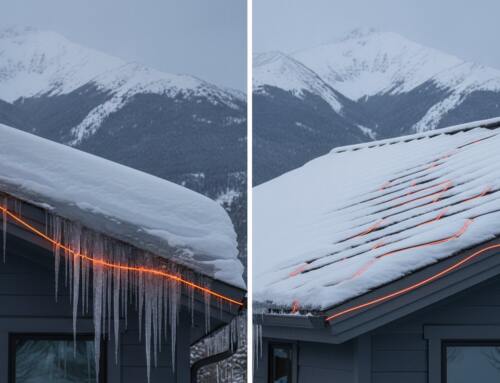
For community managers and board members, Understanding the Ice Dam Threat is the first step toward effective property stewardship. An ice dam forms when heat escaping from a building’s interior melts the bottom layer of snow on the roof. This meltwater flows down to the cold eaves, where it refreezes into a thick ridge of ice. In multi-unit developments, this process is often accelerated by shared attic spaces that accumulate heat from multiple residences, creating a consistent “freeze-thaw” cycle. This cycle is particularly aggressive in the Intermountain West, where high daytime sun exposure meets plummeting nighttime temperatures.
Adopting a “wait and see” approach is a high-risk strategy for any board. While it might seem cost-effective to skip preventative measures, the hidden costs of ice dams are substantial. Beyond the immediate threat of roof leaks, trapped moisture often leads to mold growth in shared wall cavities and structural rot in the roof deck. These issues can quietly erode property values and lead to expensive insurance claims. In fact, industry data shows that the average insurance payout for water damage incidents is approximately $11,605. Relying on emergency steam removal after an ice dam has already formed can cost between $800 and $2,400 per incident, making proactive ice dam prevention for HOAs a much more sound financial decision.
The Anatomy of an Ice Dam on Multi-Unit Buildings
Multi-unit structures like townhomes often feature complex rooflines with numerous valleys and dormers that naturally trap snow. Shared attic spaces can contribute to uneven roof temperatures, as heat from one poorly insulated unit can migrate and cause melting across the entire building’s roofline. As pooled water collects behind the ice ridge, it eventually works its way under the shingles and through the roof deck of the shared structure. This unique architectural vulnerability makes community-wide ice dam prevention for HOAs essential for protecting the building envelope.
Common Signs of Ice Damming in Townhomes and Condos
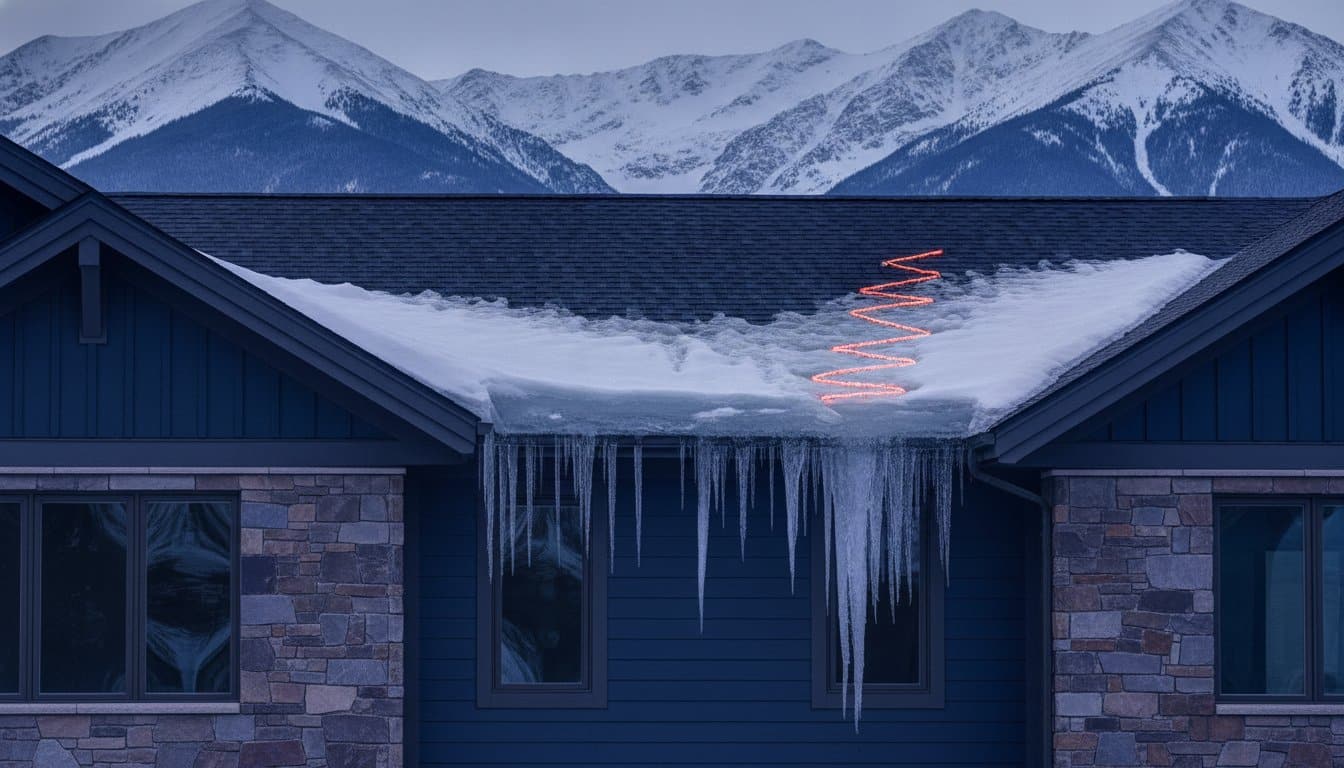
Identifying the early warning signs can prevent a minor nuisance from becoming a structural crisis. Look for “ice stalactites” or massive icicles forming along the gutters, which indicate that the drainage system is failing. Inside the units, water stains on shared walls or ceilings are clear indicators that the roof’s weather barrier has been compromised. You should also watch for signs of gutter strain, such as sagging or pulling away from the fascia. Perhaps most importantly, heavy ice buildup creates a significant safety hazard for residents, as large snow slides can occur over common walkways and unit entrances without warning.
Why Multi-Unit Buildings in Utah are Prone to Severe Ice Damming
Utah’s climate is legendary for its “greatest snow on earth,” but for community managers, it presents a significant logistical hurdle. In Utah, Idaho, and Wyoming, the high altitude and intense solar radiation create a volatile cycle. While the sun might melt snow on south-facing roofs during the day, north-facing units often remain in a perpetual deep freeze. This lack of solar thermal gain means ice accumulates faster and stays longer on those shadowed slopes, leading to massive ridges that threaten the building’s integrity. Without a targeted strategy for ice dam prevention for HOAs, these environmental factors can quickly overwhelm standard maintenance budgets.
In multi-story condo buildings, the “stack effect” plays a critical role in roof safety. Warm air naturally rises through stairwells, elevator shafts, and shared utility chases. This concentrated heat collects against the underside of the roof deck, melting the snow pack even when outside temperatures are well below freezing. When this meltwater reaches the cold, unheated eaves, it solidifies instantly. This structural reality makes multi-unit buildings far more susceptible than standalone homes, as the collective heat of dozens of units is directed toward a single shared roofline.
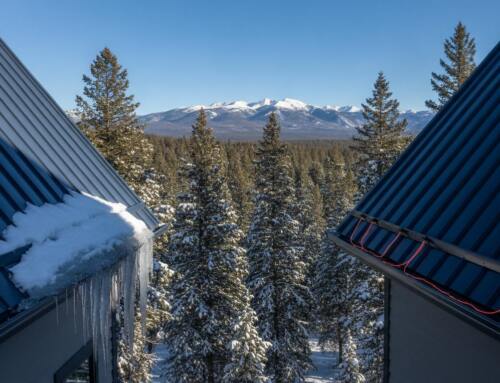
Many mountain communities utilize metal roofing for its durability and fire resistance. However, without professional Roof Snow Retention systems, these roofs can be dangerous. Large sheets of snow can slide off all at once, damaging lower roof sections, destroying landscaping, or creating a significant safety risk for residents on common walkways. If your community has noticed these “snow avalanches,” it’s often a sign that the roof’s thermal management needs a professional review.
Inadequate Insulation in Older HOA Developments
Older HOA developments, specifically those built more than 20 years ago, often rely on insulation standards that are now considered insufficient for our region’s winters. Retrofitting shared attic spaces is frequently physically impossible or prohibitively expensive for a board. Heat “bypasses”, such as leaks from unit vents, recessed lighting, or plumbing stacks, allow interior warmth to bypass insulation entirely. These localized hot spots on the roof trigger rapid melting that feeds the growth of ice dams at the perimeter.
Gutter Complexity and Shared Drainage Systems
Shared drainage systems in high-density housing create a domino effect during the winter. If one unit’s gutter is clogged with debris or pine needles, the entire building’s drainage is compromised. Frozen downspouts are a frequent culprit in townhomes, as they prevent meltwater from leaving the roof and force it to back up under the shingles. Standard residential gutters often buckle under the sheer weight of Intermountain snow loads, which can exceed 30 pounds per square foot. Consulting with a specialist can help your board determine if your current drainage infrastructure is built to withstand these pressures.
As boards work through these technical challenges, they must also consider the legal ramifications of property damage. Navigating Liability is a complex part of the process, as governing documents often vary on who is responsible for the exterior envelope versus the unit’s interior. Establishing a clear prevention plan early is the best way to avoid these disputes entirely.
Navigating Liability: Is the HOA Board or the Homeowner Responsible for Ice Dams?
Determining who is responsible for winter roof damage often feels like a legal puzzle for community leaders. In most Utah townhomes and condos, the roof and exterior envelope are classified as “common areas,” which places the burden of maintenance squarely on the association. Because the board has a fiduciary duty to protect these shared assets, failing to address known drainage issues can be seen as a breach of that duty. Implementing a clear policy for ice dam prevention for HOAs protects the board from claims of fiduciary negligence while ensuring the building’s structural integrity remains intact.
Liability extends beyond just the shingles and gutters. When ice dams cause meltwater to spill over the sides of a building, it often refreezes on common walkways and entryways. This creates a significant slip and fall risk for residents and guests. If a board is aware of a recurring ice problem but fails to take preventative action, the association could be held liable for any resulting injuries. Taking a proactive stance with professional de-icing solutions isn’t just about property care; it’s a vital part of community safety and risk management.
Insurance companies are also becoming more stringent regarding preventative maintenance. If a claim is filed for water intrusion, an adjuster will look for evidence that the board took reasonable steps to prevent the loss. If the damage is deemed the result of long-term neglect or a lack of proper ice dam prevention for HOAs, the master policy claim could be denied. This leaves the association to cover expensive repairs out of the reserve fund, which often leads to unpopular special assessments for all homeowners.
Master Policies vs. HO-6 Policies
Understanding the boundary between the association’s master policy and a homeowner’s HO-6 policy is critical for resolving disputes. Generally, the master policy covers the building’s “shell,” while the owner’s policy covers the “studs-in” portion of the unit. The ‘origin of loss’ rule dictates that insurance coverage is determined by the physical location where the damage-causing event first occurred, regardless of where the resulting water eventually landed. This means if a roof leak caused by an ice dam damages a resident’s ceiling, the HOA is often responsible for the exterior repair, while the resident’s insurance handles the interior finishes.
Proactive Governance: Creating a Prevention Policy
The most effective boards move beyond reactive repairs by establishing formal prevention policies. This might include mandating the installation of Self Regulating Heat Cable on high-risk north-facing units or scheduling annual professional inspections. By using reserve funds to invest in permanent de-icing systems and Controller Options, the board can demonstrate a high standard of care. These investments are often viewed favorably by insurance carriers and can help maintain lower premiums for the entire community over time.
Designing a Community-Wide Prevention Strategy with Professional Heat Trace Systems
Creating a community-wide plan requires a shift from emergency response to engineering-led protection. The first step for any board is to commission a professional thermal assessment. This evaluation uses infrared technology to identify exactly where heat is escaping the building envelope. By pinpointing these thermal leaks, you can prioritize high-risk areas like north-facing eaves and complex shared valleys. This data-driven approach ensures that your budget for ice dam prevention for HOAs is spent where it will have the most impact, rather than applying a “one-size-fits-all” solution to every unit.
A successful technical rollout typically follows a methodical five-step process:
- Step 1: Conduct a professional thermal assessment to identify heat loss zones.
- Step 2: Prioritize north-facing eaves and shared valleys where ice accumulates fastest.
- Step 3: Select high-quality Self Regulating Heat Cable for maximum durability.
- Step 4: Integrate automated controllers and sensors to manage energy consumption.
- Step 5: Implement Roof Snow Retention systems to stop dangerous roof avalanches.
By following this path, boards can ensure that their investment in ice dam prevention for HOAs provides long-term protection rather than a temporary patch. This structured approach builds trust with residents and demonstrates a clear commitment to asset preservation.
The Advantage of Self-Regulating Heat Cables
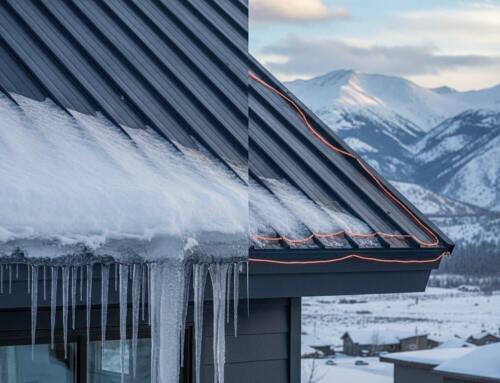
Self-regulating technology is the gold standard for large-scale property management because it’s inherently efficient. These cables feature a specialized core that adjusts its heat output based on the ambient temperature at every point along the line. If one section of the roof is buried in snow while another is in the sun, the cable only draws the power needed for the cold areas. This durability means the system can last significantly longer than constant wattage options, which run at full power until they eventually burn out. Before your board selects a system, it’s worth understanding the critical differences outlined in this comparison of professional vs DIY heat tape, which explains why hardware-store cables often fail under the demands of a multi-unit property.
Automated Controllers and Snow Sensors
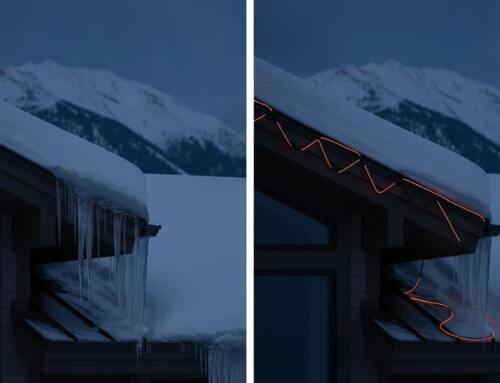
For property managers, manual operation of a de-icing system is a logistical nightmare. Modern Controller Options solve this by using moisture and temperature sensors to activate the system only when conditions for ice damming are present. These sensors detect when the temperature drops below freezing and moisture is present, ensuring the cables aren’t drawing power during dry cold snaps. This automation reduces the HOA’s carbon footprint and lowers seasonal utility bills. To see how these technical solutions fit your specific property, you can request a custom HOA system design from our team.
Partnering with Licensed Specialists for Long-Term HOA Asset Protection
Selecting the right partner for ice dam prevention for HOAs is as much a legal decision as it is a technical one. Large-scale multi-unit developments present electrical and structural challenges that a general handyman or a “roof raking” service simply isn’t equipped to handle. Because these systems interface directly with the building’s power grid, they require the precision of a licensed electrical contractor. At Utah Heat Cable, we specialize in the custom design and installation of industrial-grade systems throughout Utah, Idaho, and Wyoming, ensuring that every component meets the rigorous demands of the Intermountain West’s climate.
Unlike “one-size-fits-all” retail solutions, a professional partnership focuses on the unique architectural nuances of your complex. This involves calculating precise circuit loads for hundreds of feet of cable and ensuring that the placement addresses the specific thermal bypasses identified in your initial assessment. This level of detail is what separates a temporary fix from a durable, community-wide asset. When you invest in professional-grade ice dam prevention for HOAs, you aren’t just buying hardware; you’re securing a custom-engineered solution built to protect your specific rooflines for years to come.
Ensuring Safety and Code Compliance
Handyman or DIY installations on shared property carry significant risks, from electrical fires to voided insurance policies. Professional installation ensures that every circuit is properly grounded and protected by specialized breakers designed for heat-trace systems. When your board keeps detailed records of code-compliant installations, you’re building a “paper shield” that protects against negligence claims. These certifications are often required by master policy providers during annual renewals to prove the association is meeting its duty of care. It’s a critical step in maintaining the safety of the residents and the long-term viability of the community’s insurance coverage.
Developing a Multi-Year Maintenance and Inspection Plan
A proactive strategy doesn’t end with installation. We recommend a structured maintenance cycle to ensure the longevity of your investment and the continued safety of the structure. This methodical approach includes several key tasks:
- Perform annual pre-winter testing of all Self Regulating Heat Cable and automated controllers.
- Clear gutters and downspouts of autumn debris to ensure meltwater has a clear path once the system activates.
- Inspect Roof Snow Retention hardware for any signs of movement or stress after high-wind events.
- Review system performance logs to optimize energy settings for the coming season.
Taking the first step toward a permanent solution is the best way to secure your community’s future and provide residents with peace of mind. Contact Utah Heat Cable for an HOA Community Assessment to begin designing a comprehensive protection plan for your property.
Securing Your Community’s Future Against Winter Risks
Transitioning from reactive emergency repairs to a permanent engineering solution is the most responsible path for any board. By moving beyond seasonal removal and focusing on ice dam prevention for HOAs, you protect both the community’s reserve funds and its structural integrity. You’ve seen how professional thermal assessments and self-regulating technology can mitigate the specific risks of multi-unit buildings. These investments don’t just stop leaks; they provide the board with documented code compliance and the peace of mind that comes from meeting a high duty of care.
As a licensed electrical contractor specializing in HOA and commercial design, Utah Heat Cable is ready to help you navigate these technical challenges. We understand the unique weather patterns of Utah, Idaho, and Wyoming, and we take pride in delivering master-level craftsmanship to every project. Don’t wait for the next heavy snow cycle to test your roof’s vulnerabilities. Secure Your HOA Property Today – Request a Custom De-Icing Design and ensure your community remains a safe, protected place for every resident.
Frequently Asked Questions
Is the HOA board or the homeowner responsible for ice dam removal?
Responsibility for ice dam removal generally falls to the HOA if the roof is classified as a common area in the governing documents. Boards have a fiduciary duty to maintain the building envelope to prevent structural decay and safety hazards. While individual unit owners might be responsible for interior finishes, the association usually manages the exterior shell to ensure uniform maintenance and protect the shared structure from water intrusion.
Can an HOA mandate the installation of heat cables on all units?
An HOA board can often mandate the installation of heat cables if the CC&Rs or bylaws authorize the board to set maintenance standards for the community’s safety and preservation. Implementing a uniform policy for ice dam prevention for HOAs helps avoid “piecemeal” protection where one unit’s neglect causes damage to a neighbor’s shared wall. Boards should consult with legal counsel to ensure the mandate aligns with their specific governing documents before implementation.
How much does a community-wide ice dam prevention system cost?
The cost of a community-wide system depends on the total linear footage of the eaves, the complexity of the rooflines, and the existing electrical capacity of the buildings. Since every multi-unit complex has different thermal challenges, a custom assessment is necessary to determine the exact scope of work. Investing in a permanent system is typically a more sound financial decision than paying for repeated emergency steam removal services every winter.
What is the best type of heat cable for large condo buildings?
Self-regulating heat cable is the most effective choice for large condo buildings due to its energy efficiency and long-term durability. Unlike constant wattage cables that run at full power regardless of the temperature, self-regulating technology adjusts its heat output based on the surrounding environment. This makes it ideal for complex structures where one side of a building might be in the sun while the other remains frozen in the shade. For a deeper look at why retail alternatives fall short for large-scale applications, see our full breakdown of professional vs DIY heat tape options and the key technical features that separate them.
Will heat cables increase the HOA’s electricity bill significantly?
Electricity costs remain manageable when the system is paired with advanced controller options and moisture sensors. These sensors ensure the system only activates when freezing temperatures and snow are both present, preventing the cables from drawing power during dry cold snaps. This automated approach ensures that the community is protected during storms without wasting energy or inflating the association’s seasonal utility budget.
Does insurance cover damage caused by ice dams in an HOA?
Insurance typically covers the resulting damage from ice dams, such as roof collapse or interior water intrusion, but it rarely covers the cost of prevention or removal. Approximately 1 in 60 insured homes files a claim for water or freezing damage each year, and the average payout can be substantial. Maintaining a proactive plan for ice dam prevention for HOAs is vital because repeated claims for preventable damage can lead to higher premiums or the loss of coverage.
How long do professional-grade roof heat cables last?
Professional-grade heat cables generally have a lifespan of 10 to 20 years when installed by a licensed electrical contractor. The actual longevity depends on the quality of the materials used and the severity of the local environmental conditions. Regular pre-winter inspections and the use of high-quality industrial components help ensure that the system remains a reliable part of the HOA’s long-term asset protection strategy for decades.