
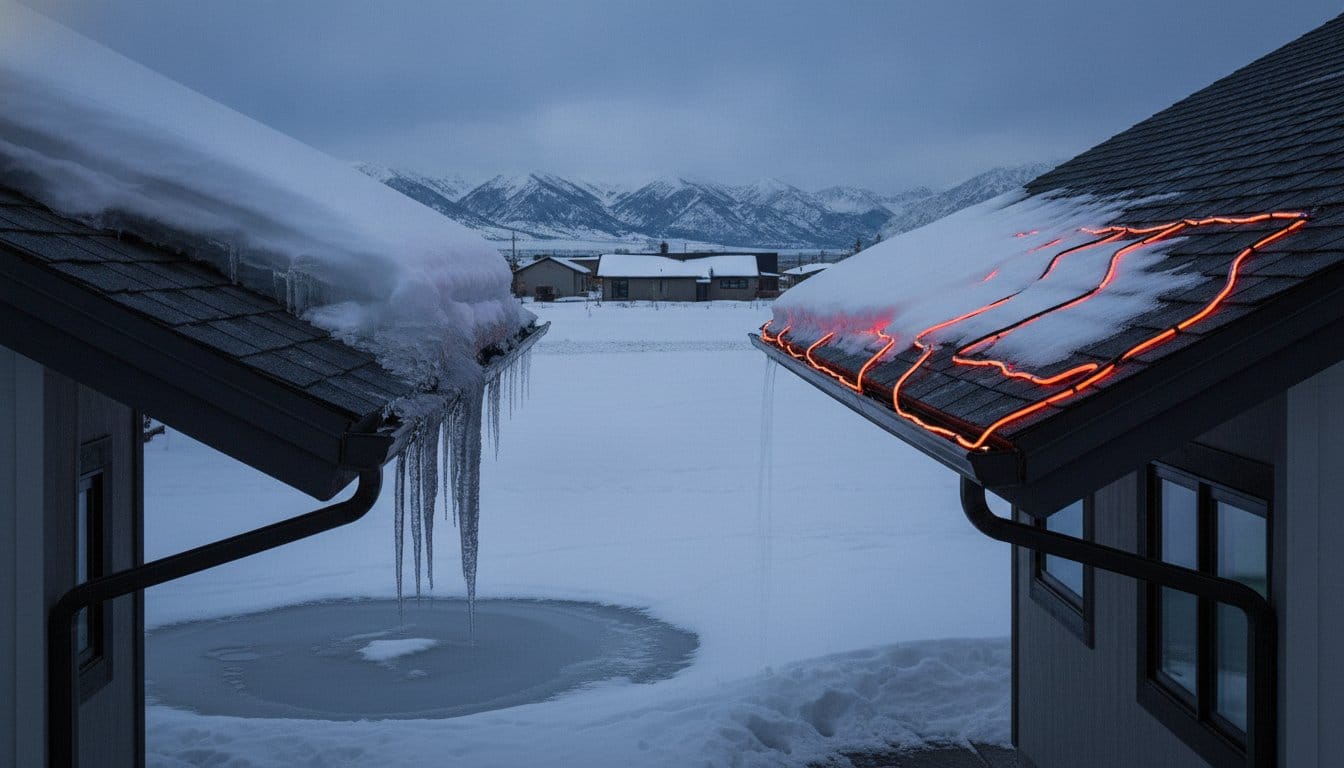
Why does the “cheapest” heat tape from a big-box hardware store often end up costing Salt Lake homeowners thousands more in emergency roof repairs by mid-February? It’s a question many neighbors ask after watching ice dams climb right over their DIY cables during a heavy Utah winter. You’ve likely felt that same frustration, staring at north-facing eaves and worrying about the inevitable leaks or mold damage that follow a stubborn freeze-thaw cycle. You want a solution that offers genuine peace of mind rather than a temporary patch that fails when the temperatures truly drop.
Understanding the roof heating cable cost Salt Lake City residents face in 2026 requires looking past the initial price tag to the long-term value of a professional-grade system. We promise to clarify the real-world factors that influence your investment, from the efficiency of self-regulating technology to the importance of meeting current National Electrical Code standards. This guide previews everything you need to know about choosing a system designed to last ten years or more; ensuring your home remains a safe, dry shield against the elements while lowering your liability from dangerous falling ice.
Key Takeaways
- Learn why self-regulating cables are the industry standard for durability, often lasting a decade longer than basic hardware store alternatives.
- Get a clear breakdown of the professional roof heating cable cost Salt Lake City homeowners can expect in 2026, including materials and licensed electrical labor.
- Understand how variables like roof pitch and material selection, such as asphalt shingles versus metal, influence your custom de-icing design and overall quote.
- Discover how automated controllers and smart sensors can significantly reduce your monthly electricity bills by only heating when environmental conditions require it.
- Identify the “Expert Design” philosophy that transforms a simple cable into a comprehensive system capable of preventing five-figure roof and mold repairs.
Understanding Roof Heating Cable Costs in Salt Lake City
A professional de-icing setup is far more than a simple wire plugged into an outdoor outlet. It’s a precision-engineered system comprising three critical parts: the heating cable itself, a dedicated controller with moisture and temperature sensors, and a code-compliant electrical connection. When you evaluate the roof heating cable cost Salt Lake City homeowners encounter, you’re looking at a solution designed to handle the unique density of our local snowfall. Utah’s snow is famous for its weight and moisture content. This requires a robust design that manages the transition from freezing to melting without failing under the pressure of several hundred pounds of ice. While retail products might seem like a bargain, they rarely account for the specific engineering needed to survive a Wasatch winter.
Investing in a professional system shifts the focus from the upfront price to long-term value. A cheap fix that requires replacement every two years isn’t a deal; it’s a recurring expense. High-quality systems utilize Trace heating technology to ensure the cable only generates heat when and where it’s needed. This technical approach preserves the integrity of your shingles and gutters while keeping your energy bills manageable. By choosing commercial-grade materials, you’re essentially installing a fifteen-year insurance policy against the structural damage caused by recurring ice dams.
Why Salt Lake City Pricing Differs from National Averages
Salt Lake City’s environment presents challenges that national averages don’t consider. At our altitude, high-intensity UV rays can quickly degrade standard cable jackets, causing them to crack and short out after just a few seasons. Local systems require specialized “mountain-grade” fasteners and clips that can withstand extreme thermal expansion without pulling away from the roofline. Additionally, the 2026 labor market along the Wasatch Front reflects a high demand for licensed electrical contractors who understand the 2023 National Electrical Code. These professionals ensure that your system is safe and code-compliant, which is a standard that general handymen often overlook.
The “Cheap Heat Tape” Trap
The frustration of “cheap heat tape” usually sets in during the coldest nights of January. Retail-grade cables often lack the internal construction to maintain consistent temperatures when the mercury drops well below freezing. If a system fails during a storm, the cost of emergency ice removal and subsequent roof repairs can easily triple your initial savings. Constant wattage cables operate at a fixed heat output regardless of the external temperature, which leads to wasted energy and potential overheating during milder winter days. This inefficiency makes them a poor choice for anyone looking for a durable, set-and-forget solution for their home.
Material Costs: Self-Regulating vs. Constant Wattage
The technology behind the cable determines whether your system is a reliable asset or a constant liability. When calculating the roof heating cable cost Salt Lake City homeowners must weigh the initial purchase price against the long-term efficiency of the materials. Professional-grade self-regulating cables typically range from $2.50 to $4.50 per linear foot for the materials alone. In contrast, constant wattage cables are much cheaper upfront, often priced between $0.70 and $1.70 per linear foot. However, these lower-cost options lack the internal “intelligence” required to handle the fluctuating temperatures of a Wasatch winter, often leading to significantly higher energy bills and a shorter system lifespan.
Durability is often found in the outer jacket. Standard plastic or thermoplastic jackets are common in retail kits, but they tend to become brittle under Utah’s intense high-altitude UV exposure. Commercial-grade systems utilize fluoropolymer jackets. This material provides superior resistance to chemicals and environmental stress, ensuring the cable remains flexible and functional for over a decade. If you’re unsure which material fits your roof’s specific needs, you can consult with a local de-icing specialist to review your options.
Self-Regulating Cable: The Gold Standard for Utah
Self-regulating cable contains a specialized semi-conductive core that responds to the surrounding temperature. As the air gets colder, the core contracts, allowing more electrical current to flow and generate heat. When the sun comes out and the roof warms up, the core expands and restricts the current. This “thinking” capability makes it the only safe choice for complex roof layouts where cables might overlap. Unlike constant wattage versions, which can overheat and melt if they touch, self-regulating cables naturally throttle their output to prevent damage. This safety feature, combined with a 10-year plus lifespan, justifies the higher initial investment for most Salt Lake properties.
Controllers and Sensors: The Brains of the System
A high-quality cable is only as good as the controller managing it. Basic manual switches require you to remember to turn the system on before a storm and, more importantly, off once the sun returns. Advanced SLC systems use automated ambient and moisture sensors that only activate the heat when both freezing temperatures and moisture are present. This prevents the system from wasting power on a clear, 40-degree day. While adding smart-home integrated controllers increases the material cost, the ability to monitor energy usage from your phone often pays for itself through reduced monthly utility costs. These “brains” ensure your roof heating cable cost Salt Lake City investment remains efficient year after year.
Installation Variables: What Drives the Quote Up or Down?
Every home along the Wasatch Front presents a unique structural puzzle. When assessing the roof heating cable cost Salt Lake City homeowners should expect, the final number isn’t just about the length of the wire; it’s about the physical labor required to secure that system against the heavy, wet snow typical of our region. A steep, historic roof in the Avenues requires significantly more setup time, safety rigging, and specialized equipment than a standard ranch-style home in Sandy. These accessibility factors are primary drivers of installation labor, as they dictate how many technicians are needed and how long they must remain on the roof to ensure a precision fit.
Roofing materials also change the installation method and the necessary hardware. While asphalt shingles are the standard for most residential projects, metal roofs require a more complex approach. On metal surfaces, we often need to integrate roof snow retention systems to prevent massive snow slides from shearing the heating cables right off the eaves. Without these guards, a single heavy storm could destroy your entire investment in a matter of seconds. Additionally, the total linear footage is influenced by your roof’s design; deep valleys and complex gutter runs require much more cable than a simple, straight eave, which naturally impacts both material and labor requirements.
Architectural Complexity in the Wasatch Front
North-facing roofs are the primary culprits for ice dams because they rarely receive direct sunlight to help with natural melting. Designing a system for these problem areas involves mapping out dormers and deep valleys where snow accumulates and refreezes. A custom heat trace layout ensures the cable is placed exactly where the ice forms, rather than using a generic zig-zag pattern that might miss the most critical zones. Multi-story homes further complicate this process, often requiring specialized lifts or safety harnesses that add to the professional service fee but ensure the job is done without risk to the property or the crew.
Licensed Electrical Work and Salt Lake County Permits
Safety is the foundation of every professional installation, and this means adhering to the 2023 National Electrical Code, which Salt Lake City has strictly adopted for 2026. This requires installing dedicated circuits and specialized GFCI protection to prevent fire hazards and system failures. Hiring a licensed electrical contractor isn’t just a matter of following the law; it’s about protecting your homeowners insurance. If a fire or electrical issue occurs due to unpermitted work, your insurance carrier may deny the claim. Unpermitted work can void your existing roof warranties, leaving you unprotected against future leaks.
Running Costs and ROI: Is a Heated Roof Worth It?
Many homeowners hesitate to install de-icing systems because they fear a spike in their monthly utility bills. However, when you analyze the roof heating cable cost Salt Lake City residents actually experience, the operational expense is often much lower than expected. A typical 100-foot professional cable uses approximately 500 watts of power per hour. Depending on the frequency of storms and your specific electricity rates, you can expect to pay between $40 and $200 per month during the peak of winter. This is a controlled, predictable cost that acts as a safeguard for your home’s structure.
The true return on investment becomes clear when you compare these monthly figures to the alternative. A single major ice dam can lead to a $15,000 insurance claim for structural repairs, mold remediation, and interior drywall replacement. Beyond the financial aspect, a professional system adds tangible value to your property. In high-snow neighborhoods like Park City or the Salt Lake east bench, buyers view a high-quality de-icing system as a premium feature that ensures the home’s longevity. To see how these systems fit into your budget, you can request a custom de-icing design for your property.
Calculating Your Winter Electricity Bill
To estimate your specific costs, use this basic formula: multiply the total wattage of your cable by the number of hours it runs, then divide by 1,000 to find the kilowatt-hours (kWh). Multiplying that by your local utility rate gives you the hourly cost. Professional “Z-pattern” installations maximize the melting area while minimizing the total linear feet required, which helps keep this number as low as possible. Additionally, ensuring your attic has proper insulation reduces the “heat leak” from your home that causes snow to melt and refreeze in the first place, allowing your cables to work more efficiently.
Avoiding the $10,000 Ice Dam Bill
The hidden ROI of a professional system is the prevention of emergency expenses that always seem to arrive at the worst times. Consider these common costs associated with unprotected roofs in the Salt Lake Valley:
- Emergency Steam Removal: When ice dams form, professional steam removal services can cost several hundred dollars per hour, often requiring multiple hours to clear a single roofline safely.
- Interior Remediation: Water backing up under shingles often leads to ruined insulation and mold growth inside your walls, which requires expensive professional remediation and drywall repair.
- Safety Risks: A reliable system means you don’t have to risk your safety on a ladder in the middle of January to chip away at ice, a task that often leads to roof damage or personal injury.
Automated sensors are the most effective way to control these costs. Unlike manual switches that might be left on for days during a dry spell, sensors only activate the system when moisture and freezing temperatures are both present. This precision ensures you’re never paying for heat you don’t need.
Why Utah Heat Cable is the Best Investment for Your SLC Home
Choosing a provider involves more than just comparing estimates. It’s about finding a partner who understands how the wind whips off the Great Salt Lake and how heavy snow settles on a steep bungalow in Sugarhouse. When you evaluate the roof heating cable cost Salt Lake City homeowners are quoted, remember that you aren’t just buying wire; you’re investing in a custom-engineered defense system. We specialize in designing layouts that account for the unique architecture of Utah homes, ensuring every north-facing eave and complex valley is protected by commercial-grade, self-regulating cable. This tailored approach prevents the common failures seen in “one-size-fits-all” retail kits.
Being a licensed electrical contractor means our focus is always on safety and long-term reliability. We don’t just “hang tape”; we design electrical systems that meet the rigorous 2023 National Electrical Code standards. This professional approach ensures your home is protected from both ice dams and electrical hazards, providing a level of security that general contractors or handymen simply cannot offer. From the windy hills of Draper to the historic streets of the Avenues, we’ve built a reputation for systems that stand up to the most punishing Utah winters.
The David Tanner Difference: Experts Who Train the Pros
Our expertise is rooted in a deep understanding of thermal mechanics. David Tanner isn’t just a technician; he’s an expert who trains other professionals in the field of heat-trace design. This high level of specialization is why our systems frequently outlast hardware store alternatives by a decade or more. Our clients don’t have to worry about their cables failing during record-breaking snow years because we build for the extremes. Residents across the Salt Lake Valley have seen their neighbors’ gutters collapse under ice while their own homes remained clear and dry, thanks to our precision-engineered designs.
Get a Custom Quote for Your Salt Lake City Property
Every roof has what we call “ice dam DNA.” This is the specific combination of pitch, orientation, and insulation that dictates where ice will form. Our local team performs a comprehensive evaluation of these factors to create a layout that is both efficient and effective. Preparing in the off-season is the best way to ensure your home is ready before the first frost hits and the winter rush begins. Don’t wait until the water is already leaking through your ceiling to seek a solution. Protect your home today with a custom heat cable quote from Utah Heat Cable.
Secure Your Wasatch Home Against the Coming Winter
Investing in a professional de-icing system is a strategic decision that protects your home’s structural integrity. We’ve explored how self-regulating technology and automated sensors transform a potential energy drain into a manageable, efficient safeguard. While the initial roof heating cable cost Salt Lake City residents face may seem higher than retail alternatives, the long-term value is found in a system that survives a decade of heavy snow and high-altitude UV exposure. By choosing a solution that meets the 2023 National Electrical Code, you ensure your property remains safe and your insurance coverage stays intact.
With over 20 years of Utah winter experience, our team at Utah Heat Cable provides the expertise needed to design a system specifically for your roof’s unique challenges. We are a licensed electrical contractor dedicated to providing custom-designed, self-regulating systems that offer genuine peace of mind. Don’t wait for the next record-breaking storm to discover a leak. You can Get a Professional Roof Heat Cable Quote for Your SLC Home today and start your winter season with confidence. Your home is your most valuable asset; let’s make sure it’s protected before the first snowflake falls.
Frequently Asked Questions
How much does it cost to run roof heat cables per month in Salt Lake City?
Running costs typically range from $40 to $200 per month during active winter months. This estimate depends on the total linear footage of your system and the wattage of the cable used. Because electricity rates and winter storm frequency vary, using automated controllers is the most effective way to keep these operational expenses on the lower end of the spectrum.
Is it cheaper to install heat cables on a metal roof vs. asphalt shingles?
Installation on a metal roof is generally more complex and carries a higher cost than on asphalt shingles. Metal surfaces require specialized snow retention systems to prevent heavy snow slides from shearing the cables off the eaves. While the cable itself costs the same, the additional hardware and labor needed to secure the system against sliding ice increase the overall investment compared to a standard shingle roof.
Can I install roof heating cables myself to save on labor costs?
While DIY kits are available, professional installation is strongly recommended to ensure safety and code compliance. Improperly installed cables are a significant fire hazard and can lead to electrical shorts that damage your home’s wiring. Additionally, a licensed electrical contractor ensures the system meets the 2023 National Electrical Code, which protects your homeowners insurance and prevents the voiding of your roof warranty.
How long do professional-grade self-regulating heat cables last in Utah?
High-quality self-regulating cables are designed to last for 10 years or more, even with Utah’s intense UV exposure and extreme temperature swings. This longevity far exceeds the two-year lifespan typical of retail-grade heat tape. Investing in commercial-grade materials with fluoropolymer jackets ensures the system remains flexible and effective through many consecutive Wasatch winters without requiring frequent replacement.
Do I need a separate electrical circuit for my roof de-icing system?
Yes, most professional systems require a dedicated electrical circuit with specialized GFCI protection to operate safely. This prevents the system from overloading existing household circuits, which could lead to tripped breakers or fire risks. A licensed professional will evaluate your current electrical panel to determine if a new circuit is necessary to support the roof heating cable cost Salt Lake City homeowners are planning for.
What is the best time of year to get a quote for heat cable installation in SLC?
The ideal time to request a quote is during the spring or summer months. Scheduling your installation in the off-season allows you to beat the autumn rush and ensures your system is fully tested and operational before the first major snowstorm hits. Waiting until an ice dam has already formed often leads to higher emergency service fees and potential delays due to high seasonal demand.
Will heat cables prevent all icicles from forming on my gutters?
Heat cables are primarily designed to prevent ice dams and structural damage rather than eliminating every small icicle. While the system will create clear drainage paths for meltwater to reach the downspouts, minor icicles may still form in extremely cold or windy conditions. The goal is to ensure that water can flow freely off the roof, preventing the heavy ice buildup that causes leaks and gutter failure.
Does homeowners insurance cover the cost of heat cable installation?
Homeowners insurance typically doesn’t cover the initial cost of installation, as it’s considered a preventative home improvement. However, installing a professional system can prevent the types of water damage claims that insurance companies often penalize. It’s always wise to check with your specific provider to see if a professional installation by a licensed contractor qualifies you for any safety-related premium discounts.