
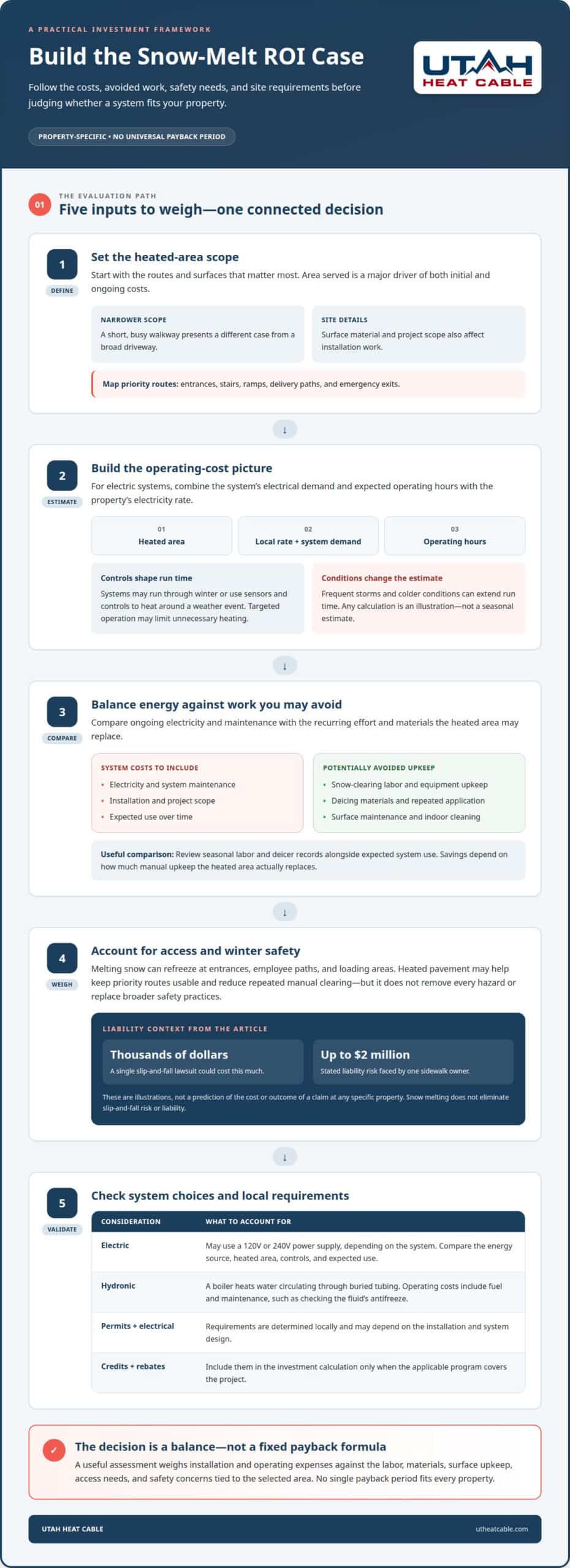
The return on investment for a snow melt system depends less on snowfall alone than on what it costs to operate and what it helps you avoid. Electricity rates, the area being heated, and how often the system runs shape ongoing costs, while reduced manual clearing, improved staff safety, and lower slip-and-fall exposure can strengthen the value. There’s no single payback period that fits every property.
It’s reasonable to weigh energy use carefully before investing, especially when winter conditions make entrances and walkways difficult to maintain. This article explains the main operating-cost factors and how to assess them alongside labor, surface maintenance, and liability considerations. You’ll see what makes a system’s investment more or less practical for your property.
Key Takeaways
- Compare the heated area and installation scope first, since the area served is a major driver of both initial and ongoing costs.
- Estimate electricity use by considering local rates, system run time, and whether controls activate heating around weather events.
- Weigh potential savings in snow-clearing labor and surface upkeep alongside the system’s energy needs.
- Factor in safer, clearer walkways when assessing the investment, especially where winter conditions increase slip-and-fall concerns.
Why Choose Electric Snow Melt Systems?
Electric snow melting can reduce manual clearing, but its value depends on the project scope, winter use, and upkeep it may avoid. Compare the system’s operating needs with the work and materials currently used to keep the area clear.
Operating Costs and Avoided Maintenance
Operating costs include electricity and maintenance. Potential savings may come from less labor, fewer deicing materials, and reduced indoor cleaning. For example, a property that regularly clears a busy entrance can compare seasonal labor and deicer records with expected system use. This comparison matters because energy costs continue after installation, while savings depend on how much manual upkeep the heated area replaces.
Long-Term Costs Versus Manual Removal
Compare installation and operating expenses with recurring snow removal, equipment upkeep, and surface maintenance. The heated area is a major factor: a short, busy walkway presents a different case from a broad driveway. Surface material and project scope also affect installation work. Consider expected system use over time alongside the manual work and materials used each winter.
Tax Credits, Rebates, and Local Requirements
Tax credits and rebates depend on the program and property, so include them in your investment calculation only when the applicable program covers the project. Permit and electrical requirements are determined locally and may depend on the installation and system design. Snow-melting systems may use a 120V or 240V power supply, depending on the system. These details can affect planning and project scope.
Resale Value and Liability Effects
A snow melt system may make a property more appealing to prospective buyers, but there is no standard resale-value increase to assume. Its practical value may be clearer where icy access creates recurring safety concerns. Snow melting can reduce manual removal and help keep walkways clear, but it does not eliminate slip-and-fall risks or liability. Weigh these benefits against how the property is used in winter.
Electricity rates and operating-cost factors
Electricity use depends on the heated area, system demand, local rates, and operating hours. Any calculation is an illustration, not a seasonal estimate: snowfall, temperature, schedule, and electricity rates all affect the total.
Controls shape the operating schedule. A system can run through winter or use sensors and controls to heat the surface around a weather event. Targeted operation may limit unnecessary heating, while frequent storms and colder conditions can extend run time. For a useful estimate, combine the system’s electrical demand and expected operating hours with the property’s electricity rate.
At commercial loading docks, clear pavement can support delivery access when snow or ice would otherwise disrupt routes. Automated snow removal can reduce repeated manual clearing and the associated equipment maintenance. Keeping heavy-use surfaces clearer may also reduce physical removal that can wear pavement and affect its lifespan. These operational benefits matter most where access needs to remain dependable through winter.
Hydronic snowmelt works differently: a boiler heats water that circulates through buried tubing beneath the surface. Operating costs include fuel and system maintenance, such as checking the fluid’s antifreeze. Because electric and hydronic systems use different energy sources, compare the energy source, heated area, controls, and expected use when assessing efficiency. Snow-melting systems can also reduce reliance on deicing chemicals. For walkways and access routes, an electric sidewalk or driveway deicing system is another option.
Staff safety and slip-and-fall liability
Winter risks increase when melting snow refreezes across entrances, employee paths, or loading areas. Slippery surfaces can disrupt work and expose staff, visitors, and delivery personnel to falls. Heated pavement addresses snow and ice at the surface and can reduce repeated manual removal as temperatures change. It may help keep priority routes usable, but it does not remove every hazard or replace broader property safety practices.
Liability matters because a fall can bring injury costs, disruption, and legal claims. A single slip-and-fall lawsuit could cost thousands of dollars, and one sidewalk owner faced stated liability risk of up to $2 million. Those figures illustrate why property owners may weigh prevention alongside energy use. They aren’t a prediction of the cost or outcome of a claim at any specific property.
Assess the routes people actually use: building entrances, stairs, ramps, delivery paths, and emergency exits. A snow melt system can target selected surfaces instead of every paved area. Focusing the scope this way connects the installation to the places where staff and visitors most need clear access. Consider where snow accumulates, where runoff can refreeze, and which routes stay busy in winter.
Repeated scraping and chemical application can affect pavement and surrounding areas. Less physical removal may help limit surface wear, while reducing deicing chemicals can lessen chemical exposure around entryways. To assess heated access for your property, consider sidewalk and driveway deicing systems for the routes that need winter protection.
Utah Heat Cable: De-Icing Services
Utah Heat Cable installs sidewalk and driveway deicing systems and provides de-icing services to help property owners address snow and ice on walkways and driveways. These options can suit properties where winter accumulation makes access, staff movement, or manual clearing a recurring concern. Controller options support system operation, while roof snow retention systems address snow movement from roofs.
Start by identifying the routes and surfaces that create the greatest operational or safety concerns. A frequently used entrance may call for a different solution than a driveway or roof edge. Matching protection to the site keeps the investment focused on the practical problem it needs to solve.
Contact Utah Heat Cable to discuss deicing options for your property.
Plan a Safer Winter Before the Next Storm
A useful next step is to identify which parts of your property need protection and how you want the system to operate. Defining the scope gives you a clearer basis for evaluating the return on investment for a snow melt system against your site’s needs, rather than treating every walkway or roof edge alike.
Utah Heat Cable installs Self Regulating Heat Cable and Constant Wattage Heat Cable, and provides De-Icing Services for different snow and ice challenges. The right solution depends on the surfaces you want to keep clear and the winter conditions they face.
Explore your options and take the next step toward a more prepared property with Utah Heat Cable’s de-icing solutions. A thoughtful plan now can make winter access easier to manage.
Frequently Asked Questions
What Factors Affect Operating Cost?
Operating costs depend on the heated area, electricity rate, system demand, operating hours, and winter conditions. For a short, frequently used walkway, estimate energy use across the intended schedule, then apply the local electricity rate. Control settings affect how often the system runs, so include the planned operating pattern.
Why Install Snow Melting?
Snow melting can help keep important access areas clearer in winter and reduce reliance on manual clearing. It may suit a home where a steep driveway or frequently used entrance is difficult to maintain after storms. The practical benefit depends on which surfaces matter most to residents and visitors, and how often those areas need snow or ice removal.
What is the average installation cost of a residential snow melt system in the U.S.?
No single average cost reflects every residential project. The return on investment for a snow melt system depends partly on the area covered, surface material, and installation scope, which also affect project costs. Installing a system during new construction differs from working with an existing surface. Treat costs as project-specific and weigh them against the areas you need to keep accessible.
How much does it cost to operate an electric snow melt system per winter?
Seasonal operating expenses depend on the system’s energy demand, local electricity rate, and run time. Use the system’s rated power and expected operating hours to estimate consumption, then apply the utility rate. Frequent snow or colder conditions may require more operating time, so the total varies with weather and control settings.
How does snow melt system ROI compare with hiring snow removal services?
Compare the return on investment for a snow melt system with recurring removal expenses, including labor, equipment upkeep, and deicing materials. The comparison depends on service frequency, the area cleared, and whether crews can maintain access when needed. Past invoices and labor records can help show how these expenses compare with system operation over time.