
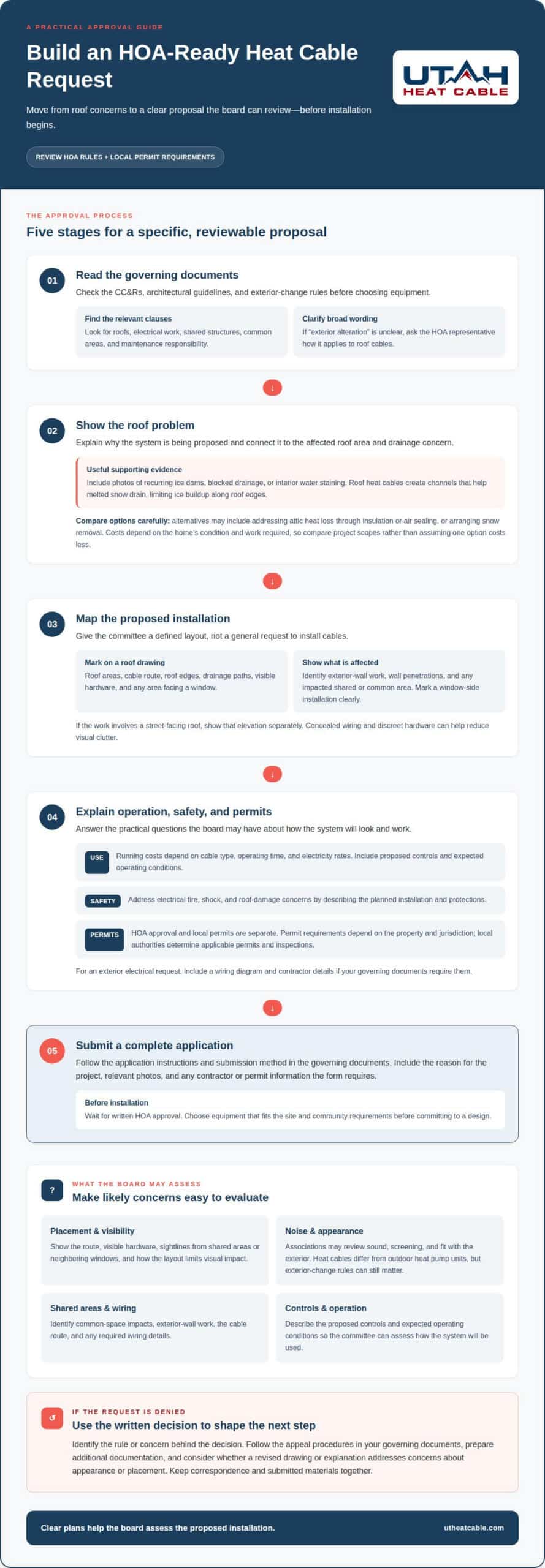
A persuasive HOA request explains how heat cables address an ice or snow problem while respecting the community’s rules for exterior changes. To convince an HOA to approve heat cables, review the CC&Rs and architectural guidelines, then submit a written request before installation. Describe the proposed equipment and placement clearly, and find out whether local permits apply.
The board may consider more than the practical benefit. Visible equipment, wiring, noise, and effects on shared areas can all influence its decision. A complete, specific application addresses these concerns instead of leaving the board to guess how the installation will look or work.
This article covers what to look for in your HOA documents, what details to include in your request, and how to address placement, appearance, noise, and permits. With those points covered, you can present a practical case for approval and see how professional heat-cable planning can support the process.
Key Takeaways
- Review your CC&Rs and architectural rules to see how they address exterior changes, shared areas, and maintenance responsibility.
- Describe the proposed installation clearly, including its location and any exterior-wall or shared-space impacts, and determine whether permits apply.
- Address likely concerns about equipment placement, appearance, and noise in your request so the board can assess the project with fewer unanswered questions.
- Choose equipment that fits the site and community requirements before submitting your application, rather than committing to a design that may conflict with HOA rules.
Permit requirements for work involving shared spaces or exterior walls
A clear request helps explain how to convince an HOA to approve heat cables: identify the roof area, shared space, and exterior work involved. HOA approval and local permits are separate requirements, and permit rules depend on the property and jurisdiction.
Roof heat cables create channels that help melted snow drain, limiting ice buildup along roof edges. Include photos of recurring ice dams, blocked drainage, or interior water staining to show why you’re proposing them.
Alternatives include addressing attic heat loss through insulation or air sealing, or arranging snow removal. Costs depend on the home’s condition and the work required, so compare project scopes rather than assuming one option costs less.
Running costs depend on cable type, operating time, and electricity rates. Include the proposed controls and expected operating conditions in your application so the committee can assess how the system will be used.
Heat cables aren’t condensers. If the project also involves exterior equipment or wall penetrations, show the exact placement, cable route, and any affected common area. For example, clearly mark a window-side installation on the plan.
For an exterior electrical request, include a wiring diagram and contractor details if your governing documents require them. If exterior lighting is also part of the proposal, a trim-color sample can show how its track will blend in. Concealed wiring and discreet hardware help reduce visual clutter.
Address concerns about electrical fire, shock, and roof damage by describing the planned installation and protections. Requirements vary by state and locality: HOA guidelines govern association approval, while local authorities determine applicable permits and inspections.
Restrictions on equipment placement, noise, and appearance
HOA guidelines often address the appearance and sound of outdoor equipment, especially when it’s visible from shared areas or neighboring windows. Reviews commonly consider placement, screening, noise, and how well an installation fits the exterior. Explain the practical reason for the upgrade, then show how its layout limits visual impact.
Heat cables differ from outdoor heat pump units, but association rules for exterior changes can still matter. In Sightline’s sample, nearly half of associations restricted outdoor heat pump placement. Roughly one-third capped noise levels or required equipment screening, and 60 percent of associations governing detached homes set aesthetic standards. These figures describe heat pump rules, not heat-cable restrictions; review your governing documents to understand what applies.
Make the proposed cable route easy to assess. On a simple drawing, mark roof edges, drainage paths, visible hardware, and areas facing a window. If the committee objects to the appearance, consider whether a less visible route or revised layout addresses its specific concern. Wait for written approval before installing.
If the HOA denies your request, read the written decision and identify the rule or concern behind it. Prepare additional documentation and follow the appeal procedures in your governing documents. A revised drawing or explanation may address concerns about visible equipment or placement. Keep correspondence and submitted materials together, and use these planning considerations to clarify the proposed layout.
Appearance and noise are the main concerns associations typically regulate; they also frequently ban window and portable air conditioners. California homeowners facing an electrical denial can review it, prepare documentation, and follow appeal procedures.
Reviewing CC&Rs and HOA rules before choosing equipment
Start with the CC&Rs, architectural guidelines, and rules for exterior changes. These documents explain which installations need board review and who maintains affected property. Look for clauses covering roofs, electrical work, shared structures, and common areas. If a rule uses broad wording such as “exterior alteration,” ask the HOA representative how the board applies it to roof cables.
Before choosing equipment, compare the proposed route and controls with the HOA rules. Your plan should identify the roof areas involved, cable placement, visible hardware, and any affected shared property. Add a marked roof drawing and clear product details to the architectural application. Boards can assess a defined proposal more readily than a general request to install cables.
Communities may use different review processes, so follow the application instructions and submission method in your governing documents. Include the reason for the project, relevant photographs, and any contractor or permit information the form requires. If the work involves a street-facing roof, show that elevation separately to help the committee assess visibility.
Solar panels and EV chargers have distinct legal considerations. California’s Solar Rights Act protects access to solar installations, while California’s Right to Charge law addresses certain restrictions on EV chargers in shared spaces. Those protections don’t automatically apply to heat cables, so use the HOA’s heat-cable review process.
To compare heat-cable options before finalizing your application, explore the available systems and match the proposed cable and controls to the roof areas in your plan.
Utah Heat Cable: De-Icing Services
Utah Heat Cable provides roof de-icing services for homeowners addressing recurring ice buildup. After reviewing your HOA’s rules, a project-specific plan can connect the proposed equipment to the roof areas and drainage concerns identified in your application.
For roof-edge snow and ice concerns, roof snow retention systems and controller options may also suit the property’s needs. Sidewalk and driveway de-icing systems address icy walking and vehicle areas, which involve different placement considerations from roof cables. Keeping the proposed work focused helps you explain its purpose clearly to your HOA.
If you’re preparing an approval request, contact Utah Heat Cable to discuss roof de-icing and the project needs you’ve identified.
Prepare for a Confident Next Step
Plan the application around the property’s seasonal needs, not just the equipment. A clear decision can help you coordinate HOA review with the timing of snow and ice protection. Keep the board’s written response with your project records, then use the approved scope to guide the next discussion about system selection.
Utah Heat Cable offers self-regulating heat cable, constant wattage heat cable, and roof de-icing services. These options give homeowners a starting point for discussing a system suited to the areas they want to protect. To convince your HOA to approve heat cables, prepare a focused project plan that keeps the discussion practical and specific.
Explore Utah Heat Cable’s options and take your next step toward a well-planned winter protection project.
Frequently Asked Questions
How Do I Write A Letter Of Request To HOA?
Address the letter to the HOA board or architectural review committee and request written approval before installation. State the ice-related problem, identify the roof area, and describe the proposed heat-cable work in plain language. Attach a simple roof sketch and relevant photos. Close by asking what additional information the board needs and how to receive its written decision.
How do I request HOA approval for heat cables step by step?
First, find the association’s submission method and application form. Then prepare your request, supporting materials, and any contractor information required. Submit the complete package to the named board or committee contact, keep a copy, and record the submission date. Wait for written approval before scheduling installation, and retain the decision with your property records.
What HOA rules or governing documents cover roof modifications and exterior wiring?
Start with the declaration of covenants, conditions, and restrictions, then review the bylaws, architectural standards, and rules for exterior alterations. Search for terms such as roof changes, electrical work, common elements, and maintenance responsibility. In a condominium, also check provisions about limited common elements, since a roof or exterior wall may be treated differently from owner-controlled space.