
A metal roof can turn accumulated snow into a sudden slide. The cost of a snow retention system in Utah depends on roof size, layout, metal profile, and access for installation, so one price cannot fit every project. Utah Heat Cable provides project pricing after you request a quote.
It’s reasonable to want a clear budget before choosing a system, particularly when sliding snow could put people or property at risk. A well-designed retention system helps restrain snow and reduce sudden releases.
This article explains what affects project pricing, how roof design shapes the system, and what to consider when planning installation. You’ll also see how Utah Heat Cable’s roof snow retention service can help protect a metal roof.
Key Takeaways
- Assess where snow can slide from the roof and what lies below to identify the areas that need protection.
- Roof size, layout, metal profile, and access all affect installation scope, so evaluate the whole roof rather than focusing only on the hardware.
- Compare individual snow guards, snow fences, and continuous systems by how they distribute and restrain snow across your roof.
- Consider roof snow retention for sliding snow and de-icing options for areas where ice buildup or slippery surfaces create a separate concern.
Preventing sudden snow slides
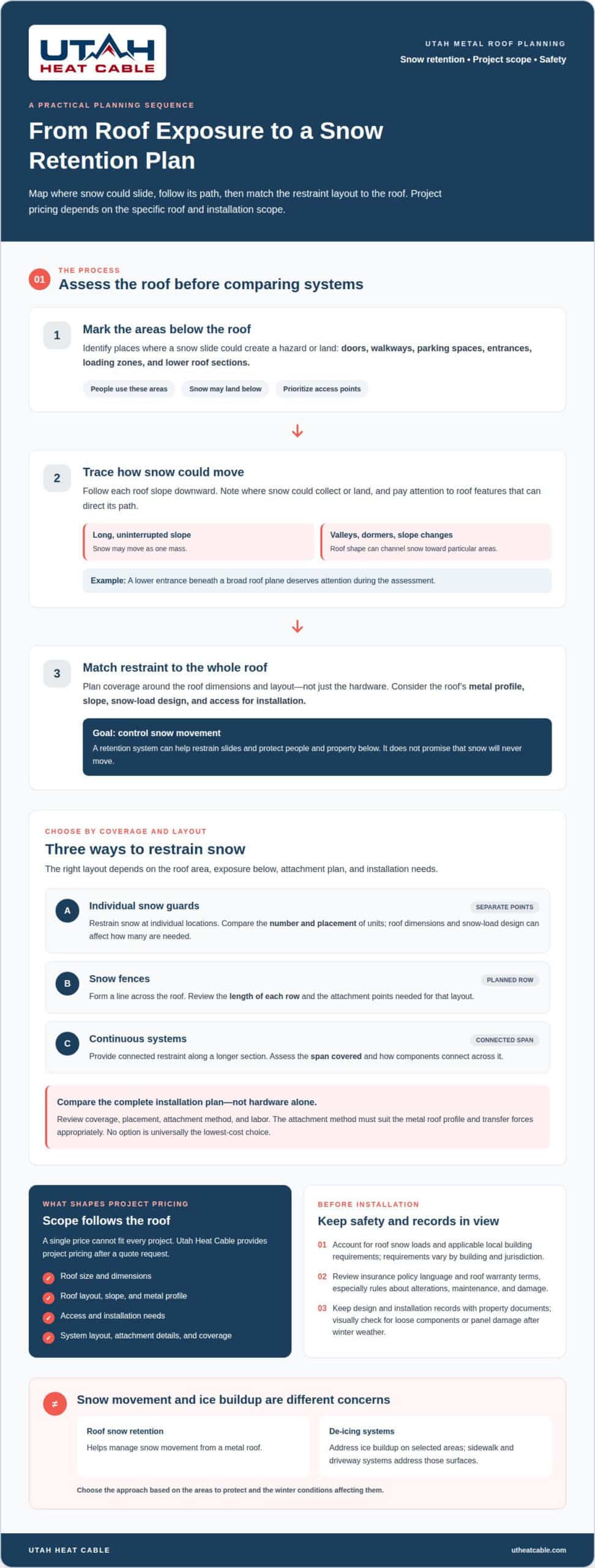
On a metal roof, accumulated snow can release suddenly as thawing loosens the layer. A snow retention system can help restrain slides and protect people and property below. In Utah, start by identifying roof edges above doors, walkways, parking spaces, entrances, and lower roof sections. These locations help reveal where a slide could create a hazard.
Next, assess the roof’s shape. A long, uninterrupted slope may allow snow to move as one mass, while valleys, dormers, and changes in slope can channel it toward particular areas. For example, a lower entrance beneath a broad roof plane deserves attention during the assessment. The layout should account for both the roof and the areas below, rather than relying on a few randomly placed guards.
- Mark exposure areas: Record doors, paths, parking spots, and lower roofs beneath the metal roof.
- Trace possible slide paths: Follow the slope downward and note where snow could collect or land.
- Match restraint to the layout: Consider roof dimensions, profile, slope, and access when planning coverage.
The snow retention system cost in Utah depends on these project details. A roof with multiple sections or difficult access may need a different installation plan than a simple roof plane. The goal is to control snow movement, not to promise that snow will never move. Review the complete roof layout before comparing proposals so you can judge how each design addresses the building’s specific slide risks.
Reducing liability and improving building safety
Start with areas people use every day: entrances, sidewalks, loading zones, and parking stalls. Snow sliding above a doorway can expose visitors and staff to falling snow or ice. Map these locations against the roof slopes above them to help prioritize protection and document the safety planning.
Utah snow retention design should account for roof snow loads and applicable local building requirements. Requirements vary with the building and its jurisdiction, so the design needs to suit the specific roof and project. Consider roof shape, slope, metal profile, and the areas below, since these details affect how loads transfer through guards and attachments.
Homeowners insurance policies and roof warranties do not follow one universal rule for snow retention. The policy language and warranty terms determine coverage, exclusions, and conditions. Review them before installation, particularly sections on roof alterations, maintenance, and damage. Keep the system design and installation records with your property documents.
An unsuitable system can leave areas exposed or place excessive force on roof panels and attachments. Poorly positioned guards may also redirect snow toward an entrance or lower roof. Maintenance depends on system condition, roof access, and any damage found. Include visual checks after winter weather, and promptly address loose components or panel damage.
- Mark public and staff access points beneath roof slopes.
- Match system layout to roof geometry and snow-load design.
- Keep warranty, insurance, design, and installation records together.
For a roof-specific plan, consider roof snow retention options as part of protecting building access areas.
After a winter when snow-removal spending exceeds its budget, the Utah Department of Transportation may postpone non-essential, non-safety-related maintenance until the next fiscal year. In other words, costly winters may lead to deferred maintenance, but only work that is both non-essential and non-safety-related is covered by this postponement.
How do snow guard costs compare with snow fences and continuous snow retention systems?
Snow guards, snow fences, and continuous systems differ in their coverage and installation scope. Individual guards restrain snow at separate points. A fence forms a line across the roof, while a continuous system provides connected restraint along a longer section. For example, a small roof area above one entrance may need a different layout from a broad roof above several walkways.
Individual guards may require many separate attachments, depending on roof dimensions and the snow-load design. A fence needs a planned row and suitable attachment points. Continuous systems require coordinated components across the intended span. For all three, the metal roof profile matters because the attachment method must suit the panels and transfer forces appropriately.
There is no universally lowest-cost option. A small number of guards may limit material needs, but a larger roof can require more pieces and installation time. A fence or continuous layout may cover a longer area, with the scope shaped by roof length, access, and mounting details. Compare proposals based on coverage, placement, attachment plan, and labor, not hardware alone.
- Snow guards: Compare the number and placement of individual units.
- Snow fences: Review the length of each planned row and its attachment layout.
- Continuous systems: Assess the span covered and how components connect.
For each approach, pricing depends on the project and is provided after a quote request. Roof size, profile, access, system layout, and installation needs determine the scope. To explore roof protection options, review snow retention system options and compare how each layout addresses your roof’s exposure.
Utah Heat Cable: De-Icing Services
Utah Heat Cable provides De-Icing Services for properties where ice buildup is a separate concern from sliding snow. Roof Snow Retention helps manage snow movement, while de-icing systems address ice on selected areas. If winter conditions also affect access routes, Sidewalk and Driveway Deicing Systems can help protect those surfaces. Controller Options are available as part of the system choices.
When planning protection, distinguish between snow retention, which addresses roof snow movement, and de-icing, which focuses on ice buildup. The right approach depends on the areas you need to protect and the conditions affecting them. Utah Heat Cable can help you consider these services for your property. Contact Utah Heat Cable to discuss your snow retention or de-icing needs.
Plan protection before winter arrives
Use your next step to turn roof concerns into a practical property plan. The cost of a snow retention system in Utah depends on the roof and its surroundings. Identify which areas need attention first, then decide whether snow control alone addresses your winter concerns or whether ice buildup is also an issue.
Utah Heat Cable offers Self Regulating Heat Cable, Constant Wattage Heat Cable, and De-Icing Services for different winter protection needs. A conversation about your goals can help identify which type of service fits the areas you want to protect. Contact Utah Heat Cable to discuss your property’s winter protection needs. Taking a thoughtful approach now can help you prepare with greater confidence before seasonal conditions arrive.
Frequently Asked Questions
How much does a snow retention system cost in Utah per linear foot?
There is no standard per-foot figure for a snow retention system in Utah. Some layouts use individual guards, while others extend along a roof edge or slope, so linear footage alone may not represent the system required. Price depends on roof profile, coverage, attachment details, and access. Utah Heat Cable provides project pricing after a quote request.
What is the average total cost to install snow guards on a Utah roof?
One average total cannot represent every Utah roof project. A small section above one entry differs from a roof needing guards across several slopes. The total depends on the number and placement of guards, roof material and profile, installation access, and labor. A project quote accounts for these details instead of applying one figure to every home.
What are typical labor and installation costs for snow guards in Utah?
Labor and installation costs depend on the roof and the work required, not just the guards themselves. A straightforward roof section may call for a different installation scope than a steep or complex layout covering multiple areas. Roof profile, access, attachment requirements, and system placement all shape the labor plan. Utah Heat Cable provides project pricing after a quote request.