
A generous roof overhang is the first line of defense against snowmelt reaching log walls. Protecting log homes from snow buildup starts with directing water away: a 2-to-4-foot overhang can help shield the walls, while clear gutters, downspouts, and good grading move runoff away from the foundation. An ice dam forms when heat melts snow on the roof and the water refreezes at the colder eaves, where it can back up beneath the roof covering.
It makes sense to focus on the roof, but protecting log homes from snow buildup also means managing meltwater after it leaves the eaves. Overhangs, drainage, and seasonal checks work together to limit moisture and ice damage. Roof snow retention and de-icing systems can also help manage roof hazards.
Key Takeaways
- Before winter, clear debris from drainage paths and test that water flows away from the house.
- Keep accumulated snow away from the foundation to reduce prolonged contact with the lowest logs.
- Inspect caulking and weather seals for cracks or gaps, and address damaged areas before freezing weather.
- Where roof snow or ice creates a recurring concern, roof snow retention or de-icing systems may help manage the hazard.
1. Roof overhangs to direct melting snow away from walls and foundations
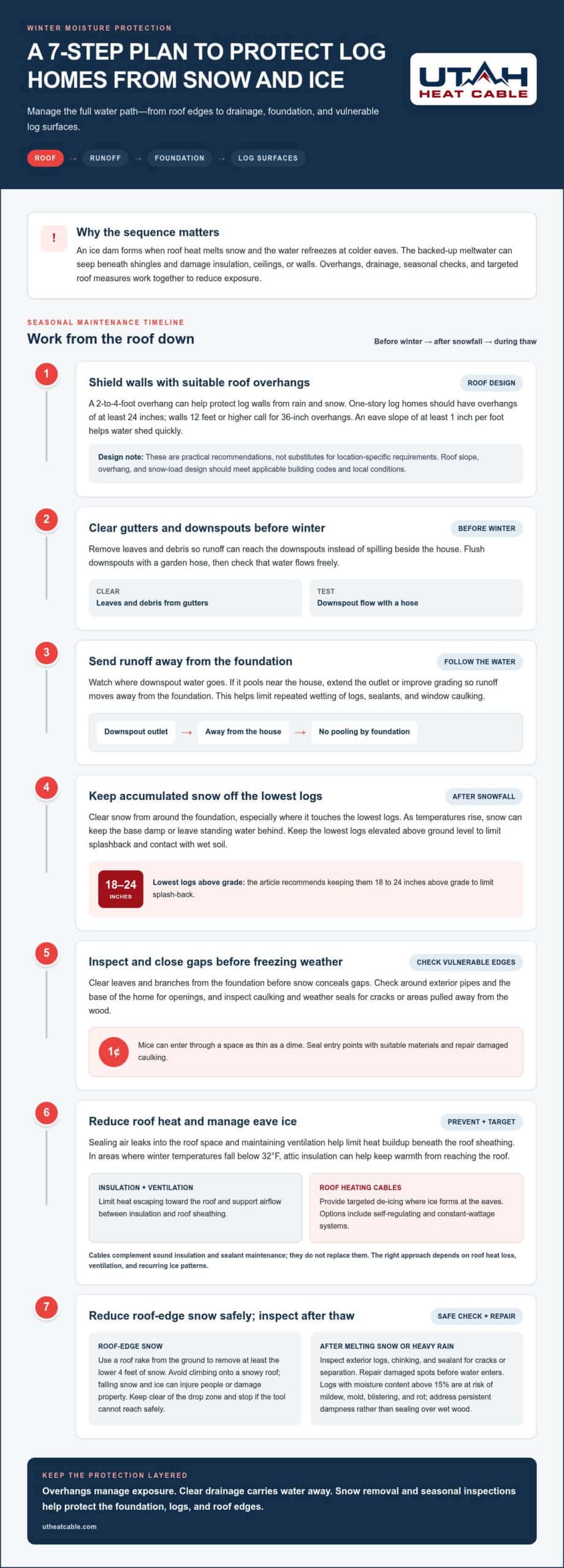
Deep eaves move rain and melting snow past log walls, windows, and the foundation. A 2-to-4-foot overhang can provide a broad shield; one-story log homes should have overhangs of at least 24 inches. An eave slope of at least 1 inch per foot helps water shed quickly. These are practical recommendations, not substitutes for location-specific building requirements. Snow-load design and roof details vary by location, and log-home roof slope and overhang should meet applicable building codes.
Keep gutters clear so runoff reaches downspouts instead of spilling beside the house. Before winter, remove leaves and debris, then flush downspouts with a garden hose. Watch where the water flows: extend the outlet or improve grading if runoff pools near the foundation. This helps keep meltwater away from logs and reduces repeated wetting of natural wood, sealants, and window caulking.
After snowfall, clear snow from around the foundation, especially where it touches the lowest logs. As temperatures rise, accumulated snow can keep the base damp or leave standing water behind. Maintain drainage away from the house and keep the lowest logs elevated above ground level to limit splashback and contact with wet soil.
Clear leaves, branches, and other debris from the foundation before snow conceals gaps. Inspect around exterior pipes and the base of the log home for openings; mice can enter through a space as thin as a dime. Seal entry points with suitable materials, and check that existing caulking has not cracked or pulled away. These checks help keep animals out and limit routes for melting snow and rain to reach vulnerable areas.
2. Roof overhangs that direct rain and snow away from log walls
Broad eaves help shield log walls from rain, snow, and prolonged winter weather. A 2-to-4-foot roof overhang can help protect walls from rain and sun, while walls 12 feet or higher call for 36-inch overhangs. These dimensions limit direct exposure, but roof design must also account for structure and local conditions. Log-home roof slope and overhang should meet applicable building codes.
A steeper roof pitch generally sheds snow more readily, while flatter roofs are more prone to ice dams. There is no single safe snow-load figure for every log home. Capacity depends on structural design, roof span, materials, and local snow conditions. These factors, rather than a general rule, determine the roof’s intended load.
Ventilation between insulation and roof sheathing helps carry away heat that escapes from living areas. If warm air heats the roof, it can melt snow; the meltwater may then refreeze at colder eaves and form an ice dam. Sealing air leaks into the roof space and maintaining ventilation help limit this cycle. Keep gutters clear as well, since trapped snow and ice can contribute to ice dams.
To reduce snow near the roof edge, use a roof rake from the ground to remove at least the lower 4 feet of snow. Avoid climbing onto a snowy roof: sliding snow and ice can fall suddenly and injure people or damage property below. Work from a stable position, keep clear of the drop zone, and stop if the tool cannot reach safely. This step complements overhangs by reducing snowmelt exposure where eaves meet the walls.
3. Preventing saturation and ice damage
Ice dams form when heat melts roof snow, then water freezes at colder eaves. The backed-up meltwater can seep beneath shingles, soak insulation, and damage ceilings or walls. In areas where winter temperatures fall below 32 degrees, attic insulation can help keep warmth from reaching the roof. Sealing air leaks and maintaining ventilation also reduce heat buildup under the roof sheathing.
Insulation and roof heating cables address different parts of the problem: insulation limits heat escaping toward the roof, while cables help manage ice buildup at the eaves. Improving insulation is a useful preventive measure, and cables provide targeted de-icing where ice forms. The right approach depends on roof heat loss, ventilation, and recurring ice patterns.
After melting snow or heavy rain, inspect exterior logs, chinking, and sealant for cracks or areas pulled away from the wood. Repair damaged spots before water enters and compromises the home’s integrity. Logs with moisture content above 15% are at risk of mildew, mold, blistering, and rot, so address persistent dampness rather than sealing over wet wood. Keep the lowest logs 18 to 24 inches above grade to limit splash-back.
For recurring ice at the eaves, consider roof de-icing heat cables, including self-regulating and constant-wattage options. These systems complement sound insulation and careful sealant maintenance; they do not replace them. A layered plan helps manage melting snow while protecting log surfaces and the materials behind them.
Utah Heat Cable: De-Icing Services
Utah Heat Cable offers De-Icing Services for areas where recurring ice creates concerns around a log home. If snow and ice collect at roof edges, de-icing can be part of a plan alongside proper insulation, ventilation, and drainage. Roof Snow Retention addresses snow movement on the roof, while Controller Options and Sidewalk and Driveway Deicing Systems serve other parts of a property’s winter preparation.
The right option depends on where snow or ice gathers and which areas need attention. Reviewing these patterns before winter helps identify whether the priority is roof-edge ice, sliding snow, or icy walking and driving surfaces. De-icing systems complement, rather than replace, routine inspections and moisture control around log walls and foundations.
Contact Utah Heat Cable to discuss de-icing options for your property.
Prepare the Home for the Next Winter
A useful next step is to note where snow and ice repeatedly collect, then plan prevention before winter returns. Keeping a record can help focus attention on roof areas and nearby surfaces where melting and refreezing create recurring hazards. Protecting log homes from snow buildup requires ongoing maintenance, not a single seasonal task; roof conditions, drainage, and moisture control all deserve attention as the home ages. For homeowners seeking insights into structural upkeep, professional contractors such as acuteroofing.ie provide examples of the installation and repair standards needed to keep roofs weather-resistant.
Where recurring roof ice calls for a dedicated system, Utah Heat Cable offers Self Regulating Heat Cable, Constant Wattage Heat Cable, and De-Icing Services. These options can support a prevention plan alongside routine maintenance. Explore the available services and contact Utah Heat Cable about de-icing options. Taking a considered step before the next snowfall can help you prepare with greater confidence.
Frequently Asked Questions
What is an ice dam?
An ice dam is a ridge of ice at a roof edge that blocks melting snow from draining. Water can collect behind it and travel beneath roof shingles, potentially reaching the attic or interior walls. After a freeze-thaw cycle, look for thick ice along the eaves, icicles, or damp patches indoors. For homeowners protecting log homes from snow buildup, these signs point to roof and drainage conditions worth addressing.
How to prevent snow buildup and ice dams on a log home roof?
Reduce the conditions that let snowmelt refreeze at the eaves: limit heat escaping into the roof space, keep ventilation paths open, and maintain clear drainage. After a storm, check from the ground for uneven snow accumulation and blocked gutters. A consistent plan for protecting log homes from snow buildup also includes noting where ice repeatedly forms, as those patterns can reveal trouble spots.
How to safely remove snow from a log home roof
Use a roof rake from the ground when snow needs clearing, and keep people, pets, and vehicles away from the area below the eaves. Pull snow down in controlled passes rather than striking or scraping the roof surface. Do not climb onto a snow-covered roof or work beneath snow that may slide. If you cannot remove snow safely from the ground, leave the job to trained help.
When should snow be removed from a roof based on depth or weight?
There is no snow-depth threshold that applies to every log home roof. Snow weight changes with moisture and compaction, while safe capacity depends on the roof’s design and the loads it was built to handle. Watch for unusual roof sagging, new interior cracks, or doors that suddenly stick. These changes warrant prompt attention rather than waiting for a particular snow depth.
Risks of roof rakes and snow removal damage to log home roofs
A roof rake can scratch or dislodge roofing materials if its edge is dragged forcefully, and pulling snow may cause it to slide unexpectedly. Avoid levering the tool against gutters, flashing, or roof edges. Remove snow gently without trying to scrape the surface bare, and stay clear of the falling snow’s path. Ice buildup may conceal roof features, making forceful removal especially risky.