
What if the thick ridge of ice along your eaves is not just winter decoration, but an active structural warning sign? Most Utah homeowners assume a solid roof guarantees winter protection, which makes it alarming to spot water pooling along exterior walls. If you are wondering what can happen if I get an ice dam, the reality extends far beyond heavy icicles. Trapped meltwater inevitably forces its way beneath shingles, threatening your attic envelope and living spaces.
You will discover the immediate and long-term consequences of ice damming, helping you protect your Utah home from structural rot, ruined insulation, and costly repairs. We will walk through the hidden mechanics behind these winter water backups and outline the proven, professional solutions that safeguard your property all season long.
Key Takeaways
- Trapped meltwater backs up behind ice ridges through hydrostatic pressure, forcing water beneath shingles and causing sudden interior ceiling leaks.
- Discover what can happen if I get an ice dam over multiple seasons, including ruined insulation R-values, structural wood rot, and hidden attic mold.
- Heavy ice accumulations and cantilevered icicles pull down gutter systems while creating severe falling hazards over high-traffic entryways and walkways.
- Learn why retail heat tape often fails to perform and how engineered self-regulating heat cable systems deliver permanent, reliable roof protection.
Immediate Interior Damage and Structural Leaks
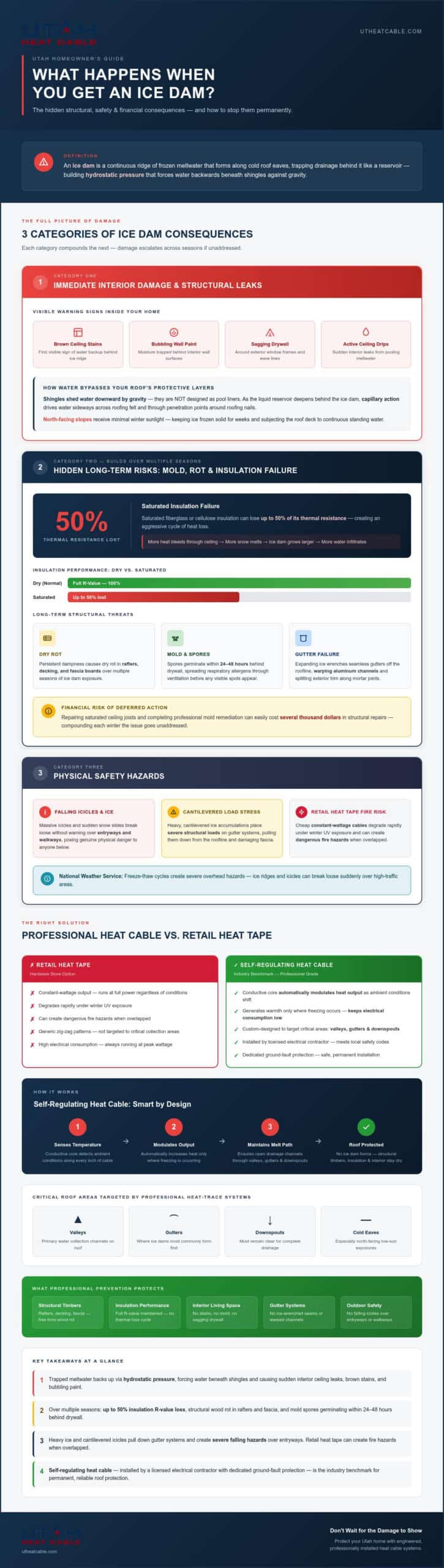
An ice dam is a continuous ridge of frozen meltwater that forms along the cold eaves of a roof, trapping drainage behind it like a reservoir. When homeowners ask what can happen if I get an ice dam, the earliest consequences manifest right inside the living space. Meltwater pools behind the ice shelf, building up hydrostatic pressure as snow melts above. This standing water finds shingle overlaps and works backwards against gravity, showing up indoors as brown ceiling stains, bubbling wall paint, and sagging drywall around exterior window frames.
How Water Bypasses Your Roofs Protective Layers
Roofing shingles are engineered to shed water downward by gravity, not to act as a waterproof pool liner. Understanding standard ice dam formation and mechanics reveals why standard roofs fail under standing water. As the liquid reservoir deepens, capillary action drives water sideways across roofing felt and straight through thousands of penetration points around roofing nails.
If you wonder what can happen if I get an ice dam on shaded sections, the risk multiplies. North-facing slopes receive minimal winter sunlight, keeping the ice shelf frozen solid for weeks. This prolonged exposure subjects the underlying roof deck to weeks of continuous standing water, completely overwhelming standard underlayment and soaking structural framing beneath.
Hidden Long-Term Risks: Mold, Rot, and Insulation Failure
Water infiltration often goes unnoticed until structural framing begins to break down. When water seeps beneath the roof plane, attic insulation absorbs it quickly. Saturated fiberglass or cellulose can lose up to 50% of its thermal resistance. This thermal loss creates an aggressive cycle: more household warmth bleeds through the ceiling, melting additional snow on the roof above and enlarging the ice dam. Over multiple seasons, that trapped dampness causes persistent dry rot in rafters, decking, and fascia boards.
Moisture also triggers microbial contamination. According to the University of Minnesota Extension’s ice dam guide, indoor humidity and persistent exterior seepage create the perfect conditions for wood decay and mold proliferation. Spores can germinate within 24 to 48 hours behind drywall, spreading respiratory allergens through your ventilation long before visible spots appear on living room walls.
The Escalating Cost of Deferred Maintenance
Homeowners often underestimate what can happen if I get an ice dam repeatedly over several winters. Beyond interior drywall staining, persistent freeze-thaw cycles force trapped water into mortar joints and gutter brackets. Expanding ice wrenches seamless gutters straight off the roofline, warping aluminum channels and splitting exterior trim. Repairing saturated ceiling joists and completing professional mold remediation can easily cost several thousand dollars in structural repairs.
Investing in an engineered prevention system stops this damage before moisture ever breaches the building envelope. By maintaining open melt pathways along cold eaves, you protect structural timbers, safeguard insulation performance, and eliminate costly restoration cycles.
Safety Hazards and Professional Prevention Strategies
Beyond structural envelope damage, heavy ice ridges create severe exterior hazards. Massive icicles and sudden snow slides break loose without warning over entryways, posing genuine physical danger to anyone walking below. Homeowners evaluating what can happen if I get an ice dam must account for these heavy, cantilevered loads. The National Weather Service ice dam safety guidelines emphasize that freeze-thaw cycles create severe overhead hazards. Many people try installing retail heat tape from hardware stores, but cheap constant-wattage cables degrade rapidly under winter UV exposure and can create dangerous fire hazards when overlapped.
In contrast, commercial self-regulating heat cable serves as the industry benchmark for long-term protection. Its conductive core automatically modulates heat output as ambient conditions shift, generating warmth only where freezing occurs while keeping electrical consumption low.
The Importance of Licensed Electrical Installation
Safe operation hinges on expert electrical craftsmanship. Partnering with a licensed electrical contractor guarantees that your setup meets local electrical safety codes and features dedicated ground-fault protection. Rather than relying on generic zig-zag patterns, custom-designed heat-trace systems target critical collection areas like valleys, gutters, and downspouts. This continuous thermal path ensures meltwater drains freely off your roofline, permanently neutralizing the physical and structural threats of winter ice.
Safeguard Your Utah Roof Before the Next Big Freeze
Understanding what can happen if I get an ice dam changes how you view winter roof care. Trapped meltwater doesn’t just stain ceiling drywall; it silently ruins attic insulation, rots structural decking, and creates dangerous falling hazards below your gutters. Waiting for indoor leaks turns a preventable seasonal challenge into an expensive restoration project.
As a licensed electrical contractor serving Utah, Idaho, and Wyoming, Utah Heat Cable provides custom heat-trace design to stop ice formation at the eaves. Investing in commercial self-regulating systems keeps drainage pathways completely open, eliminating the threat of roof leaks before winter weather hits.
Protect your home from ice dam damage and schedule a professional consultation today. You’ll enjoy total peace of mind knowing your property is safe, dry, and securely protected against every freeze.
Frequently Asked Questions
Can ice dams cause my roof to collapse?
While complete structural roof collapses are rare on modern Utah homes, the massive weight of trapped ice can cause localized structural failures. Ice weighs approximately 57 pounds per cubic foot. When an ice dam traps standing meltwater behind heavy snowpack, eave overhangs and rafters can sag under the dead load, cracking interior sheetrock and bending exterior fascia.
Will insurance cover damage caused by ice dams?
Most standard homeowners insurance policies cover sudden interior water damage caused by ice dams, but they generally exclude preventive ice removal. If you are assessing what can happen if I get an ice dam, carriers typically reimburse drywall repairs and ruined insulation. However, insurers classify routine clearing as regular home maintenance unless it qualifies as active emergency mitigation.
How do I know if the water in my walls is from an ice dam or a pipe leak?
You can identify an ice dam leak by paying close attention to weather changes and moisture location. Ice dam leaks appear strictly along exterior perimeter walls, roof valleys, and window headers during winter freeze-thaw cycles. In contrast, plumbing leaks run continuously regardless of outdoor temperatures and will cause your water meter to spin while fixtures remain off.
Is it safe to use a salt puck or chemicals to melt an ice dam?
Tossing calcium chloride pucks or rock salt onto your roof is never safe and often causes permanent exterior deterioration. Chemical runoff discolors shingle granules, corrodes aluminum gutters, and kills plants below. When exploring what can happen if I get an ice dam, salt pucks only burn narrow channels without clearing the dam, making dedicated self-regulating heat cable the proper permanent solution.