
Waiting for the first drip to hit your living room floor before calling for emergency steam removal is like trying to stop a flood with a single bucket. If you live in the mountains, you know that Ogden valley ice dams aren’t just a seasonal nuisance; they’re a direct threat to your home’s structural integrity. You’ve likely spent winters nervously watching massive ridges of ice grow along your eaves, dreading the thaw-freeze cycle that forces water under your shingles. It’s a frustrating and expensive cycle.
The good news is that you don’t have to spend your winter climbing ladders. You can protect your property with professional-grade prevention strategies tailored for high-elevation snow loads. This guide explores how custom-engineered heat trace systems and snow retention methods offer a permanent, energy-efficient solution. It’s the best way to ensure your home remains a safe haven, regardless of how much snow the season brings.
Key Takeaways
- Learn how the Ogden Valley microclimate and lake-effect moisture from Pineview Reservoir create unique challenges for roof safety and snow management.
- Compare the long-term benefits of self-regulating heat cable against the high recurring costs and physical risks of reactive emergency steaming.
- Discover how professional-grade installations prevent Ogden valley ice dams from causing structural damage, interior leaks, or dangerous snow slides.
- Understand the importance of custom-designed layouts and automated controllers in creating an energy-efficient de-icing system for high-elevation mountain homes.
Understanding the Ogden Valley Ice Dam Challenge
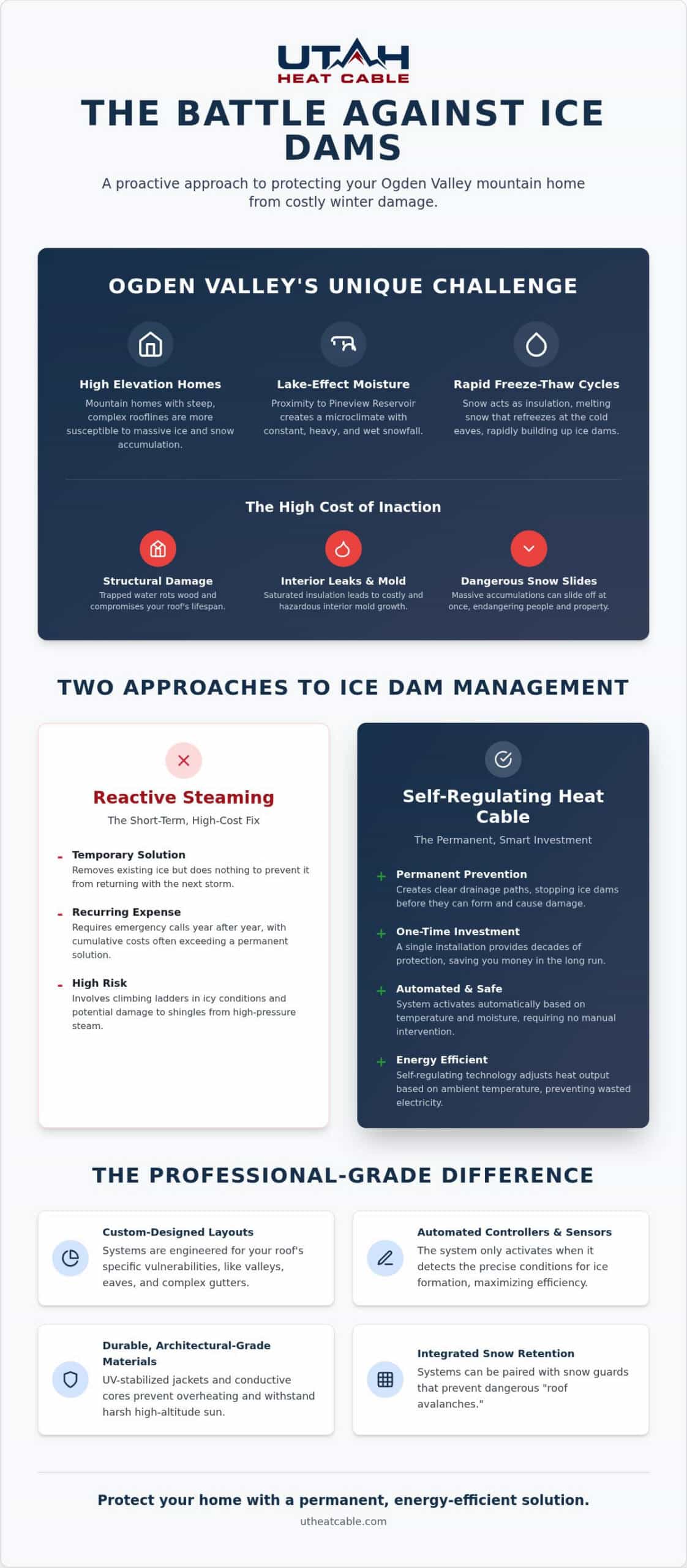
To protect your mountain home, you first have to understand the specific environmental enemy you’re facing. What is an ice dam? Essentially, it’s a ridge of ice that forms at the edge of your roof, creating a physical barrier that prevents melting snow from draining. In our region, Ogden valley ice dams aren’t just a minor winter nuisance. Between the high elevation and the constant lake-effect moisture rolling off Pineview Reservoir, properties in Huntsville, Eden, and Liberty face a relentless barrage of heavy, wet snow that typical roofing isn’t designed to shed on its own.
When you ignore Ogden valley ice dams, the damage quickly moves beyond the shingles. Trapped water backs up under the roof deck, leading to rotted wood, saturated insulation, and eventually, interior mold growth that can be incredibly costly to remediate. A single season of neglect in these microclimates can compromise a roof’s lifespan by years. Because mountain homes often feature steep pitches and complex rooflines, they are particularly susceptible to these massive accumulations that can eventually lead to dangerous snow slides.
The Science of Snow Loads in the Wasatch Range
Heavy snow might look peaceful, but it acts as a powerful thermal blanket. This layer of insulation traps heat escaping from your attic, which melts the bottom layer of snow against your roof. As that runoff reaches the cold eaves, it refreezes instantly. The 2026 winter patterns in Utah have shown an increase in these rapid freeze-thaw cycles, making professional prevention more critical than ever. Properly managing these loads requires more than just a shovel; it requires a technical understanding of how heat moves through your home. For a deeper dive into roof thermodynamics, check out our Need to Know guide.
Permanent Solutions: Self-Regulating Heat Cable vs. Reactive Steaming
Many homeowners view steam removal as the standard fix for winter roof issues. It’s understandable; when ice builds up, you want it gone immediately to prevent a disaster. However, reactive steaming is a recurring expense that does nothing to stop Ogden valley ice dams from returning during the very next storm cycle. Over several seasons, the cumulative cost of emergency calls often exceeds the one-time investment in a professional heat trace system. As the University of Minnesota Extension explains ice dam causes, the root problem involves temperature differentials that require a permanent thermal solution rather than a temporary patch.
Professional-grade self-regulating heat cable is the industry standard for energy efficiency and reliability. Unlike basic constant-wattage cables that run at full power regardless of the weather, these systems adjust their heat output based on ambient temperatures. When the air turns freezing, the cable draws more power to clear the drainage path. As it warms, the output drops automatically. This intelligent response prevents wasted electricity and ensures your roof is clear of Ogden valley ice dams without manual intervention.
Why Professional Heat Trace Systems Outperform DIY Options
We often see “hardware store heat tape” fail in harsh mountain environments. These DIY products lack the durability required for our winters and can even pose fire risks if they overlap. In contrast, professional cables feature an internal conductive core that prevents overheating. They also utilize UV-stabilized outer jackets to withstand intense high-altitude sun. For specific technical specs, you can consult our Self-Regulating Heat Cable guide. Investing in a custom de-icing system ensures your property is shielded by an architectural-grade solution rather than a temporary fix.
Designing a Custom Ice Protection System for Your Mountain Home
No two roofs in the Wasatch Range are identical. A north-facing slope in Liberty faces entirely different thermal challenges than a sun-drenched gable in Huntsville. Effectively preventing Ogden valley ice dams requires a layout designed for your home’s specific architectural vulnerabilities. We focus on critical areas like valley gutters, complex eaves, and internal drains where ice naturally anchors. By integrating automated controllers and moisture sensors, your system remains dormant until it detects the exact conditions for ice formation. This precision ensures you aren’t wasting energy while providing total protection during the heaviest storms.
A comprehensive design also addresses the physical weight of the snow. We often integrate roof snow retention systems alongside our heat cables. These systems act as a brake, preventing dangerous “roof avalanches” from sliding off all at once. This protects your landscaping, decks, and anyone walking below. The result is a fully automated shield that works while you’re asleep or away on vacation. You can finally stop worrying about the next big forecast and trust that your home’s exterior is managing the load itself.
The Importance of Licensed Electrical Contractors for Code Compliance
Installing heat cable is fundamentally an electrical project, not a roofing one. Because these systems interface directly with your home’s power supply, they require the expertise of a licensed electrical contractor to ensure long-term safety. We prioritize the installation of GFEP (Ground Fault Equipment Protection) breakers, which are a non-negotiable code requirement for fire safety in de-icing applications. Many general handymen or roofing companies overlook these technical details, leaving your property at risk. Visit our Products and Services page to explore custom design options that prioritize both performance and local code compliance.
Secure Your Roof Before the Next Wasatch Storm
Protecting your mountain home requires shifting from reactive maintenance to proactive engineering. We’ve explored how Ogden valley ice dams result from specific high-elevation conditions that demand more than just temporary steaming. By choosing self-regulating heat trace systems over generic hardware store options, you ensure your property is shielded by a solution that responds to real-time weather changes. This shift not only saves your roof but also protects your budget from recurring emergency costs.
It’s easier to prepare now than to face a crisis mid-storm. As a Licensed Electrical Contractor, we specialize in high-elevation snow management through custom engineered solutions that prioritize safety and code compliance. You don’t have to spend another winter worrying about leaks or dangerous snow slides. Protect your Ogden Valley home with a custom heat-trace design from Utah Heat Cable. Our team is ready to help you achieve lasting peace of mind and total property protection.
Frequently Asked Questions
Are ice dams common in Ogden Valley?
Ice dams are exceptionally common across the Ogden Valley due to the region’s high-elevation microclimate and lake-effect moisture from Pineview Reservoir. These environmental factors create heavy snow loads that insulate the roof and accelerate the freeze-thaw cycle. Without professional intervention, Ogden valley ice dams frequently cause recurring leaks and structural damage for residents in Huntsville, Eden, and Liberty.
How much electricity does a roof heat cable system use?
Electricity consumption depends on the system’s design and your specific controller options. Self-regulating heat cables are highly efficient because they automatically reduce power output as the ambient temperature rises. When paired with automated moisture and temperature sensors, the system only draws significant power when conditions for ice formation are present. This intelligent management prevents the energy waste associated with constant-wattage products.
Can I install heat cables on a metal roof in Eden or Liberty?
You can certainly install professional heat trace systems on metal roofs in Eden or Liberty. Metal surfaces often require specialized mounting hardware and custom-engineered layouts to ensure the cable stays secure during heavy snow movement. Our team designs these systems to clear drainage paths effectively without compromising the aesthetic or structural integrity of your metal roofing material or high-altitude finishes.
Does heat cable prevent snow slides on steep mountain roofs?
Heat cable alone does not prevent snow slides; its primary job is to clear drainage paths for meltwater. To stop dangerous “roof avalanches” on steep pitches, we recommend installing roof snow retention systems alongside your heat cable. This combination manages the meltwater to prevent Ogden valley ice dams while physically holding the snow pack in place to protect your landscaping and decks.