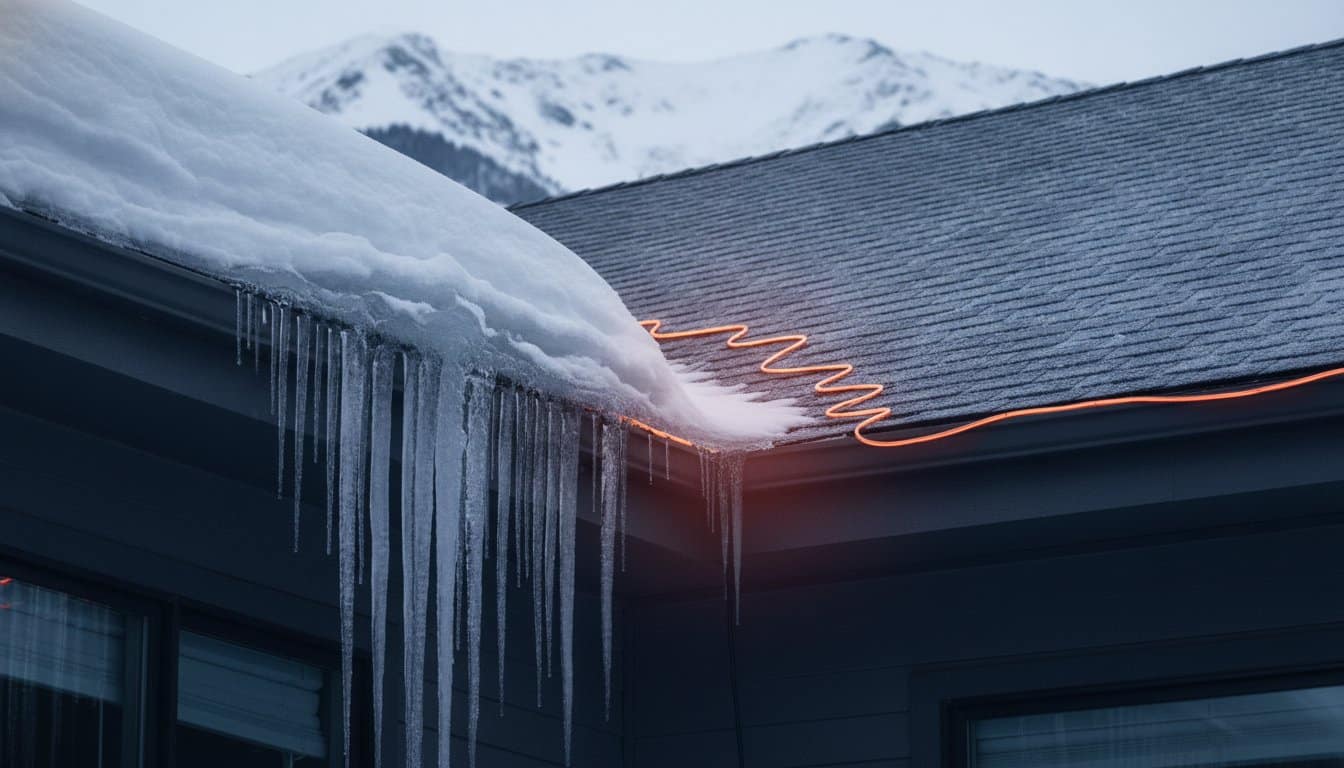
The standard “heat tape” found on hardware store shelves is often a temporary bandage for a problem that requires a master craftsman’s precision. When the heavy snows of the Intermountain West begin to stack up, relying on a basic plug-in cord can lead to a false sense of security and, eventually, a saturated ceiling. If you’ve spent previous winters worrying about the structural integrity of your eaves or the mounting cost of running inefficient heaters, you aren’t alone. Winterizing your roof with heat cable is about more than just melting snow; it’s a technical strategy for long-term water management and property protection.
I understand the frustration of dealing with recurring ice dams and the anxiety that comes with every major storm. This guide will teach you how to protect your home using professional-grade, self-regulating systems designed to withstand our unique climate. We’ll explore the critical differences between constant-wattage and self-regulating cables, navigate the latest 2026 National Electrical Code requirements, and outline a path toward a safe, maintenance-free winter season.
Key Takeaways
- Learn the science behind ice dam formation and how a properly designed heat-trace shield prevents water from penetrating your home’s exterior.
- Discover why winterizing roof with heat cable requires a custom approach to handle the specific drainage needs of valleys and north-facing slopes.
- Compare the long-term energy savings and safety benefits of self-regulating cables against the risks associated with standard hardware store “heat tape.”
- Understand the critical role of licensed electrical contractors in ensuring your system meets 2026 National Electrical Code standards for outdoor safety.
- Review a professional pre-installation checklist to prepare your gutters, shingles, and attic insulation for the heavy snow seasons ahead.
What is Roof Winterization with Heat Cable?
Winterizing your roof with heat cable is more than a simple home maintenance task; it is a technical strategy for property preservation. This process involves installing a protective heat-trace shield that manages snowmelt before it becomes a structural liability. Many homeowners wait until they see a massive icicle hanging from their gutter to think about protection. By then, the damage is often already occurring behind the shingles. True winterizing roof with heat cable happens before the first Utah freeze, ensuring that your drainage paths are clear and your electrical systems are ready for the heavy seasonal load. If you don’t act early, you’re essentially gambling with your roof’s integrity during the harshest months of the year.
The Anatomy of an Ice Dam
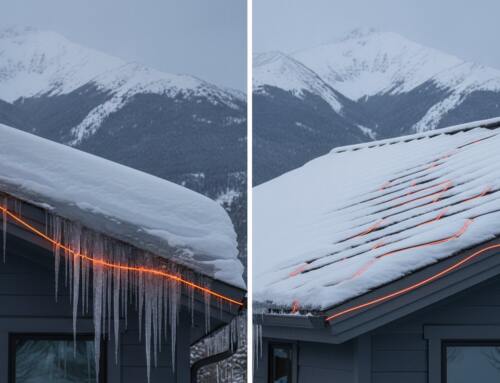
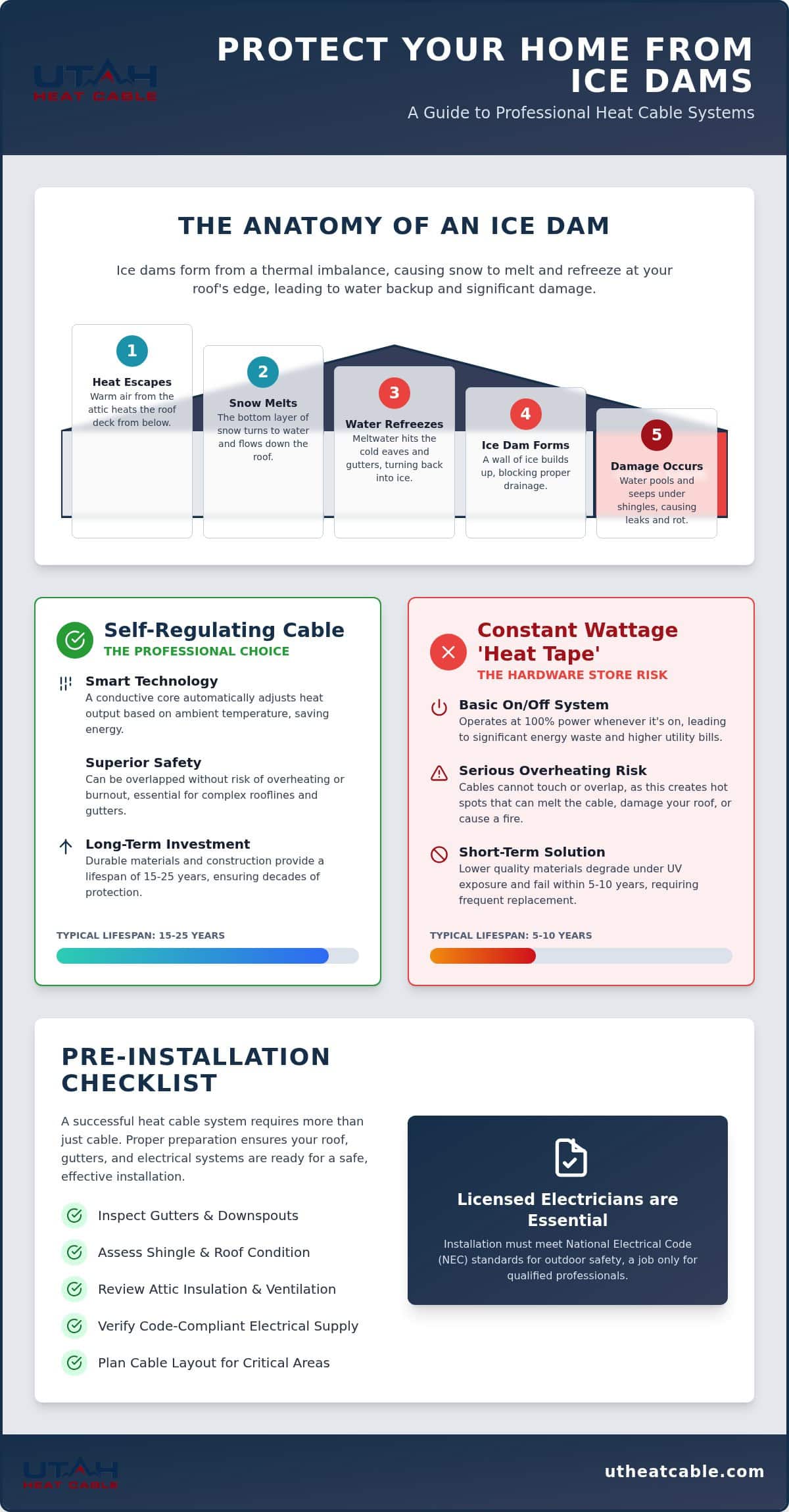
Ice dams are the result of a specific thermal imbalance. When warm air leaks from your living space into the attic, it heats the underside of the roof deck. This causes the bottom layer of snow to melt, even when outdoor temperatures are well below freezing. As this liquid flows down toward the eaves, it hits the cold portion of the roof that hangs over the exterior walls. Here, the water refreezes, creating a solid wall of ice. Once this barrier is established, subsequent meltwater pools behind it. Shingles are designed to shed water downward, but they cannot withstand the hydrostatic pressure of standing water. This leads to leaks, ruined insulation, and mold growth inside your walls. Gutters and downspouts are usually the first points of failure. They become encased in heavy ice that can weigh hundreds of pounds, eventually pulling the hardware away from your fascia and creating a safety hazard for anyone walking below.
How Heat Cables Provide a Solution
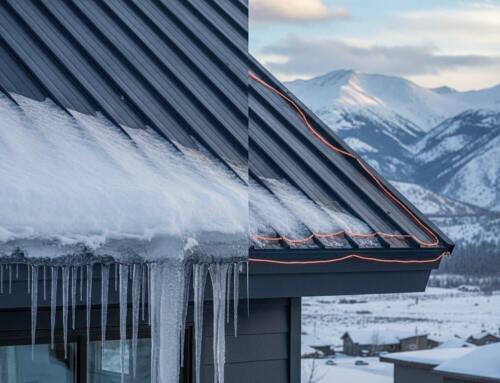
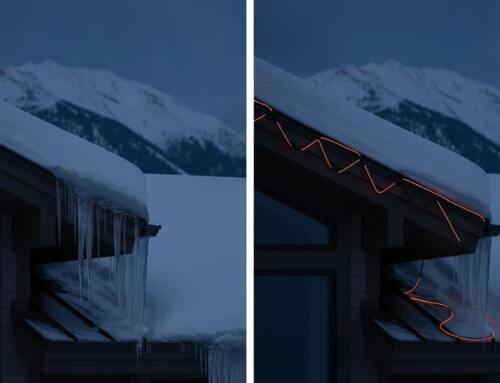
Professional Trace heating systems solve this by creating a reliable exit route for water. Instead of trying to heat the entire roof, these cables maintain a consistent drainage channel through the snowpack and ice. This allows water to flow from the roof, through the gutters, and down the spouts without ever turning back into a solid. This prevents the heavy ice expansion that often tears gutters away from the home. A heat-trace system is a code-compliant electrical solution for moisture management. In regions like Utah, Idaho, and Wyoming, these systems are especially critical for north-facing rooflines where the sun doesn’t reach. By maintaining these open channels, you ensure that your home’s exterior remains a protective shield rather than a victim of the elements. Proper preparation ensures that your system is inspected and energized before the snow packs into the valleys, providing peace of mind through every blizzard.
Self-Regulating vs. Constant Wattage Heat Cables
Choosing the right hardware is the most critical decision you’ll make when winterizing roof with heat cable. While constant wattage cables have historically dominated the residential market, the industry is shifting toward self-regulating technology for several vital reasons. Constant wattage systems operate like a basic light switch; they are either 100% on or 100% off. This lack of nuance leads to wasted energy and potential overheating if the cable isn’t monitored constantly. Self-regulating cables feature a specialized conductive core that adjusts its power output based on the surrounding temperature. As the air gets colder, the core contracts to allow more electricity to flow, generating more heat. When the sun emerges and temperatures rise, the core expands, naturally throttling the energy draw without any manual intervention.
Why We Recommend Self-Regulating Cables
Safety is the primary driver behind our recommendation. Because self-regulating cables adjust their own heat, they can be overlapped without the risk of combustion or burnout. This is essential for complex rooflines where cables must cross in narrow gutters or valleys. These systems also offer a superior long-term return on investment. While the initial setup requires a higher grade of material, the energy efficiency and extended lifespan make them more cost-effective. Research indicates that self-regulating cables can last between 15 and 25 years, whereas older constant wattage models typically fail within 5 to 10 years. For a permanent solution, we suggest installing Self Regulating Heat Cable to ensure your home remains protected through decades of heavy snow.
The Dangers of Retail ‘Heat Tape’
It’s common for homeowners to fall into the “cheap” trap of hardware store kits, often marketed as heat tape. These retail products are usually constant-wattage and lack the durable outer jackets required for the intense UV exposure and temperature swings of the Intermountain West. These kits often become brittle after just one or two seasons, leading to cracked insulation and electrical shorts. In fact, government safety experts emphasize the importance of inspecting these systems annually because of their high failure rate and fire risk. Professional-grade cables are built with industrial-strength fluoropolymer jackets that resist chemical degradation and mechanical wear. Relying on a store-bought kit often results in a system that fails exactly when you need it most, leaving you with a frozen gutter and a dangerous climb up a ladder in the middle of January. Professional design ensures your electrical load is balanced and your roof remains undamaged by excessive heat.
Hardware Store ‘Heat Tape’ vs. Professional Installation
The most common question we hear from homeowners is whether they can simply buy a boxed kit and handle the project themselves. While the DIY route seems cost-effective on a Saturday afternoon, it often lacks the structural and electrical integrity required for our specific region. Winterizing roof with heat cable is a precise task that requires a deep understanding of how snow moves and melts on your unique roofline. A master craftsman doesn’t just “clip and go.” We ensure every connection is built to withstand Wyoming-level winds and the heavy pressure of descending snow packs that would easily shear off a generic retail installation. When you choose professional installation, you’re investing in a system designed to survive the environment, not just a temporary fix that might fail during the first blizzard.
Professional installation by a licensed electrical contractor provides a layer of security that a retail kit cannot match. If an electrical issue occurs, your homeowner’s insurance provider will likely investigate whether the system was installed according to local codes. Improper grounding or overloaded circuits are significant risks that can lead to devastating consequences. Statistics from the CPSC highlight the gravity of these risks, noting that there have been approximately 3,300 residential fires involving heat tapes annually. These incidents are often the result of improper installation or the use of aging, low-quality hardware. We prioritize your safety by ensuring your electrical panel can handle the load and that every foot of cable has the correct ground-fault protection required by law.
Code Compliance and Safety
In Utah and surrounding states, electrical codes for outdoor de-icing systems are stringent. Professional systems require specialized equipment-protection ground-fault breakers that a standard outdoor outlet cannot provide. We evaluate your home’s total electrical capacity before any cable is laid. If your panel is already at its limit, adding a comprehensive roof system could trip breakers or cause wire overheating. Our team ensures that every installation is grounded correctly and wired to a dedicated circuit, removing the fire hazards often associated with uncertified DIY projects.
Custom Design for North-Facing Slopes
Generic kits fail because they don’t account for the micro-climates on your roof. North-facing slopes in the Intermountain West rarely see the sun, meaning snow stays longer and freezes into much denser ice. We calculate the exact footage needed for your specific valleys, gutters, and downspouts to ensure water has a clear path all the way to the ground. Additionally, we often integrate Roof Snow Retention systems into our designs. This prevents massive snow slides from shearing off your cables, which is a common failure point in retail installations that lack a professional, engineered layout.
Professional Installation Checklist: Steps to a Winter-Ready Roof
Winterizing roof with heat cable requires a methodical approach that begins long before the first snowflake touches the shingles. A professional installation isn’t a rushed afternoon project; it’s a multi-step engineering process designed to ensure that your home’s drainage systems remain functional under extreme stress. We start with a comprehensive pre-installation inspection. This involves checking the health of your shingles to ensure they can support mounting hardware, cleaning gutters of debris that could trap heat, and verifying that attic insulation isn’t the primary cause of excessive melting. If your roof has existing damage, installing cable over it only hides the problem rather than solving it.
Once the roof is cleared, we map the custom heat-trace layout. We don’t use a standard zigzag pattern across the entire eave. Instead, we identify the specific valleys, dormers, and north-facing sections where ice is most likely to congregate. Mounting these cables requires heavy-duty, UV-resistant clips that grip the shingles or gutters without piercing the roof membrane. This is vital for maintaining your roof warranty. After the physical layout is secure, we move to electrical integration. This means connecting the system to a dedicated circuit equipped with specialized equipment-protection ground-fault breakers. Before we consider the job finished, we perform a commissioning test to verify the system draws the correct amperage, ensuring it will provide the necessary heat when the mercury drops.
The Importance of Gutter and Downspout Trace
A roof cable alone is ineffective if the meltwater has nowhere to go once it leaves the shingles. We loop the cable deep into the gutters and through the entire length of the downspouts to keep the exit path open. The chimney effect occurs when cold air rises through an open downspout, flash-freezing meltwater before it can exit, which is why heat cable must be looped through the entire length of the vertical pipe. This ensures that water reaches the ground or a safe drainage area rather than backing up and freezing into a solid block of ice that could eventually burst your downspouts or pull the gutters away from the fascia. For a deeper look at how to design these systems correctly, our professional gutter de-icing cable installation guide covers the latest 2026 NEC requirements and high-performance design strategies.
Controller Options and Automation
Efficiency is just as important as protection when you are winterizing roof with heat cable. While a manual switch is a simple option, many homeowners in the Intermountain West prefer automated systems that respond to the weather. You can choose from Controller Options that include ambient thermostats or moisture-sensing probes. These sensors ensure the system only runs when both freezing temperatures and snow are present, significantly reducing your monthly energy bills. Modern smart home integration even allows you to monitor your roof’s status from your phone, giving you total control over your home’s defense system even when you’re away for the holidays.
The Utah Heat Cable Advantage: Long-Term Protection
Choosing a dedicated partner for winterizing roof with heat cable is a decision that impacts your home’s safety for decades. We don’t view heat cable as a simple plug and play retail product. Instead, we treat every property as a unique engineering challenge that requires precision and local insight. Our team understands that a north-facing dormer in Park City requires a different thermal response than a standard eave in Boise. By specializing in custom-designed systems for Utah, Idaho, and Wyoming, we provide localized expertise that national retailers simply cannot offer. As a licensed electrical contractor, we ensure your system isn’t just functional, but fully code-compliant and safe for your family.
Our commitment to total property care means we look at the big picture. We often integrate our specialized heat-trace designs with Sidewalk and Driveway Deicing Systems to create a seamless shield against the elements. This holistic approach ensures that your entire property remains a safe, ice-free zone. When your roof drainage is synchronized with your ground-level de-icing, you eliminate the risk of meltwater refreezing on your walking paths. This creates a comprehensive solution for winter property management that keeps your family safe from both roof leaks and slippery surfaces. We focus on providing a long-term solution rather than a temporary fix that will need replacement in a few years.
A Neighborly Approach to Elite Protection
We believe in a neighborly approach to elite protection. This means we focus on education and prevention rather than high-pressure sales tactics. We take pride in our workmanship and our reputation for reliability within the community. Our goal is to be the steady, confident voice you can trust when the forecast turns grim. We want you to understand the mechanics behind our methods. This transparency builds trust and ensures you feel empowered and protected before the environmental challenges of winter arrive. Every installation is handled with the precision of a master craftsman who understands the gravity of the problem at hand.
Next Steps for Your Home
If you’re ready to secure your home, the best time to act is before the seasonal rush begins. Scheduling a professional consultation allows us to perform a thorough walkthrough and identify potential weak points in your current defense. Preparing your property for a walkthrough involves clearing any visible debris from your gutters and ensuring our team has access to your electrical panel. This proactive step ensures a smooth installation process and allows us to design a system that fits your specific needs. See how Utah Heat Cable can protect your roof this winter and experience the peace of mind that comes from master-level craftsmanship and dedicated local service.
Secure Your Home Before the First Freeze
Effective property protection starts with understanding that winterizing roof with heat cable is a deliberate engineering solution, not a simple hardware purchase. By choosing a custom-designed, self-regulating system over generic retail alternatives, you’re ensuring your home has a durable shield against the heaviest snow cycles. Professional-grade cables offer a significantly longer lifespan and better energy efficiency, while a code-compliant installation by a licensed electrical contractor removes the fire risks associated with DIY kits. These systems provide a permanent path for meltwater, protecting your eaves and gutters from the destructive weight of ice dams.
As a local specialist serving Utah, Idaho, and Wyoming, we take pride in delivering the precision and reliability your property deserves. You don’t have to face the next blizzard with anxiety about leaks or structural damage. Our master craftsmen are ready to help you transition from temporary fixes to a long-term moisture management strategy. Protect your home from ice dams; request a professional design today and enjoy the peace of mind that comes with elite-level protection. Let’s make this winter your safest and most maintenance-free season yet.
Frequently Asked Questions
Is it better to leave heat cables on all winter?
You shouldn’t leave your cables running 24/7 throughout the entire season. This practice leads to unnecessarily high energy bills without providing extra protection. Instead, the system should only be energized during active snow events or when temperatures are in the “melt-freeze” range between 20 and 34 degrees. Using automated sensors ensures the system activates only when moisture and freezing temperatures are present, which is a key part of efficiently winterizing roof with heat cable.
Can heat cables damage my roof shingles or gutters?
Professional self-regulating cables are designed to be safe for direct contact with asphalt shingles and metal gutters. Unlike low-quality retail kits that can reach dangerous temperatures, these systems throttle their output to prevent overheating. We use specialized, non-penetrating clips to secure the cables, ensuring your roof warranty remains intact. If you use a constant-wattage cable without a controller, you risk damaging the roof membrane through excessive, unregulated heat exposure.
How much electricity does a roof heat cable system use?
Electricity usage varies based on the total linear footage and the ambient temperature. A typical self-regulating cable might draw 5 to 8 watts per foot when active in cold conditions. For a standard home with 100 feet of cable, this is comparable to running a few traditional light bulbs. By integrating smart controllers, you can reduce this consumption by ensuring the system only draws power when it is physically necessary to maintain an open drainage path.
What is the difference between heat tape and heat cable?
The primary difference lies in the technology and durability. “Heat tape” is often a retail term for constant-wattage products that provide a fixed amount of heat regardless of the weather. Professional “heat cable” usually refers to self-regulating systems that feature a semi-conductive core. These cables are built with industrial-grade jackets that resist UV damage, allowing them to withstand the harsh sun and wind common in the Intermountain West for decades.
Do I need a professional to install my roof heat cables?
Hiring a licensed electrical contractor is essential for ensuring your system meets local electrical code requirements. Professional installation guarantees that your system has dedicated circuit protection and proper grounding, which prevents the fire hazards associated with DIY kits. Additionally, professionals understand the complex physics of snowmelt on north-facing slopes, providing a custom layout that a generic store-bought kit simply cannot provide for your unique property and roofline.
How long do professional-grade self-regulating heat cables last?
A professional-grade self-regulating system typically lasts between 15 and 25 years. This longevity is due to the advanced fluoropolymer jackets and robust internal construction that resist chemical and environmental breakdown. In contrast, retail-grade products frequently fail within 3 to 5 years because their outer insulation becomes brittle and cracks under UV exposure. Investing in high-quality materials ensures that winterizing roof with heat cable remains a one-time project rather than a recurring seasonal expense.
Can I install heat cables on a metal roof?
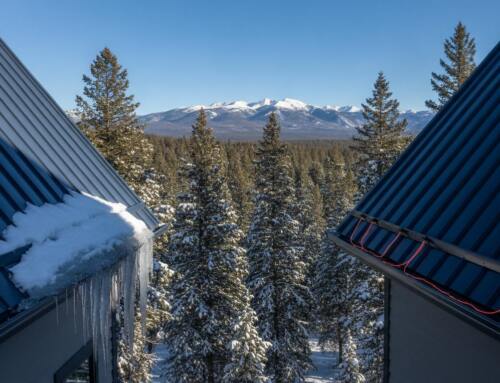
You can certainly install these systems on metal roofs, though the mounting method changes. We avoid using standard shingle clips that could scratch or puncture the metal panels. Instead, we use specialized adhesive-backed mounts or mechanical seam clamps that preserve the integrity of the roof. This is particularly important for homes in snowy regions like Utah or Wyoming, where metal roofs are prone to sudden snow slides that could otherwise tear away improperly secured cables.
What happens if my heat cable system stops working in the middle of winter?
If your system fails during a storm, ice dams will begin to form almost immediately. You should check your ground-fault breaker first, as moisture in a connection can sometimes trip the safety switch. If the breaker won’t reset, it is time to call a specialist to diagnose the fault. We recommend performing a “dry run” test every October to verify the amperage draw and ensure your system is fully functional before the first heavy freeze arrives.