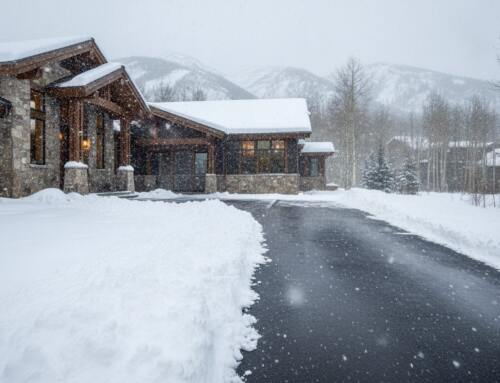
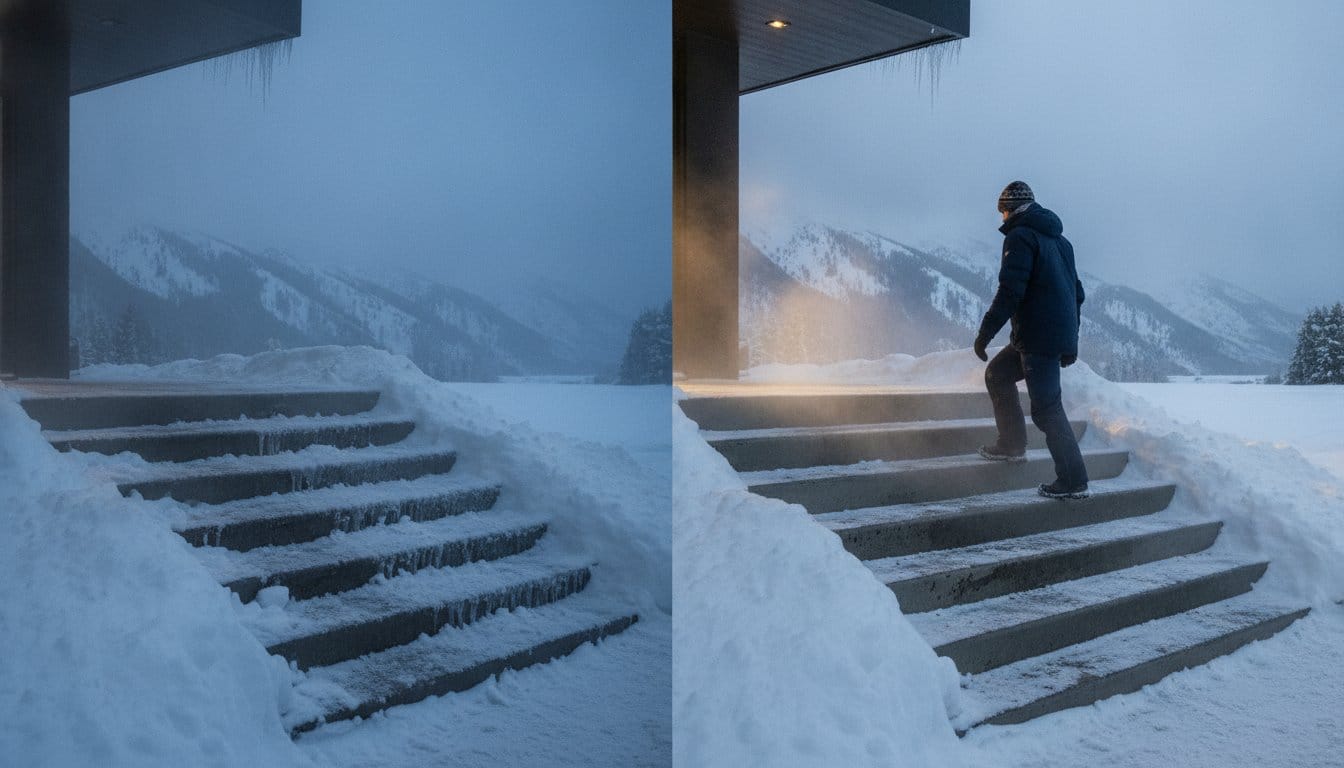
A single patch of black ice on your front steps can turn a routine morning into a liability nightmare before you’ve even finished your first cup of coffee. Most Utahns are all too familiar with the back-breaking labor of pre-dawn shoveling and the constant worry that chemical de-icers are quietly destroying their concrete. Investing in a professional heated stairs installation changes the equation, turning a seasonal chore into a permanent safety feature that protects your guests and your property.
It’s a relief to know that you can finally step outside during a blizzard without fear of a slip or a fall. This guide explores how modern snow melt systems, designed specifically for our local climate, provide a “set-it-and-forget-it” solution for your home or business. We’ll walk through the technical requirements of the 2021 Utah building codes, the efficiency of automated sensor technology, and how these systems protect your long-term property value while eliminating the need for manual labor.
Key Takeaways
- Identify the hidden financial risks of traditional de-icing methods and how automated snow melt systems mitigate liability for commercial and HOA properties.
- Compare the long-term benefits of permanent embedded cables against portable mats to determine the best safety investment for your home’s entryway.
- Gain insight into how self-regulating cables and moisture sensors work together to provide an automated, energy-efficient defense against ice.
- Prepare for your project by learning what to expect during a professional heated stairs installation, including critical electrical load planning and sub-base preparation.
- Discover the importance of site-specific designs that account for Utah’s diverse geography to ensure reliable performance in every winter storm.
The Case for Heated Stairs: Safety and Liability in Utah Winters
Utah winters are notoriously unpredictable, often swinging from heavy snowfall to sunshine within hours. This rapid temperature shift creates a dangerous cycle where melted snow refreezes into invisible sheets of ice. For many property owners, a professional heated stairs installation isn’t just a luxury; it’s a critical safety measure. Relying on manual shoveling often leaves behind a thin layer of moisture that becomes a hazard the moment the sun goes down. Automated snow melting systems solve this by maintaining a surface temperature that prevents accumulation and ice formation entirely.
Protecting Your Property Investment
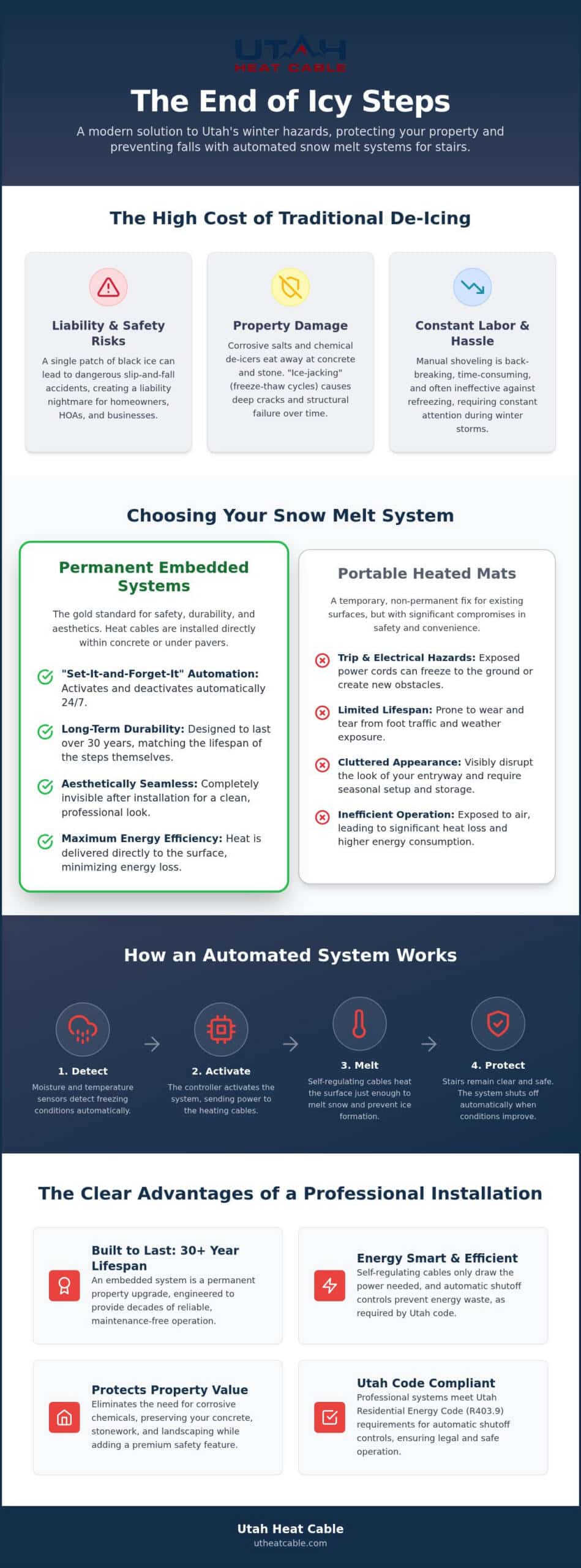
Traditional de-icing methods often cause more harm than good. When you spread salt or chemical de-icers on concrete steps, you’re introducing corrosive agents that can eat away at the finish and seep into the soil, damaging your landscaping. Even worse is the “ice-jacking” effect. This happens when water enters small pores in concrete, freezes, and expands, eventually leading to deep cracks and structural failure. By choosing a permanent heating solution, you eliminate the need for these harsh chemicals. While the initial investment is higher than a bag of salt, the long-term ROI is clear. You’ll save money on concrete repairs and landscaping replacements while extending the life of your entryway by years.
Liability Prevention for Businesses and HOAs
For commercial property managers and HOA boards, safety is a legal obligation. High-traffic entryways and emergency exits must remain clear at all times, regardless of when a storm hits. Manual labor is often delayed by travel times or staffing shortages; this leaves a window of vulnerability where a slip-and-fall accident can occur. Our professional-grade heated stairs installation utilizes advanced controller options and sensors to provide 24/7 protection. These systems activate automatically when moisture and freezing temperatures are detected, ensuring your property is safe before the first employee or resident arrives. Under the Utah Residential Energy Code, specifically section R403.9, these systems must have automatic shutoff controls. This makes the “set-it-and-forget-it” approach both a legal standard and a practical safety net. Having an automated system also provides documented proof of your proactive safety measures, which can be an invaluable asset for insurance purposes and risk management. For businesses looking to extend this protection beyond entryways, commercial driveway heating offers a comprehensive solution that eliminates the reactive cycle of plowing contracts and salt damage across your entire property.
Choosing Your Snow Melt System: Permanent vs. Portable Solutions
When planning a heated stairs installation, the first decision is between a permanent embedded system and a temporary portable solution. While both aim to melt snow, their effectiveness and long-term value differ significantly. For most property owners in Utah, electric systems are the preferred choice over hydronic, or liquid-based, options for stairs. Electric cables are thinner and more flexible; this allows them to be precisely routed around the complex geometry of steps and risers without the bulky manifold requirements of a hydronic setup.
Embedded Electric Systems
These systems represent the gold standard for durability and aesthetics. By embedding Self Regulating Heat Cable or constant wattage options directly into the concrete, pavers, or stone during construction, you create a seamless safety barrier that is invisible to the eye. These systems are designed to last over 30 years, often mirroring the lifespan of the building materials themselves. Embedded cables are the most efficient choice for new construction because they eliminate heat loss to the air and focus thermal energy exactly where it’s needed. Using self-regulating technology ensures the system draws only the power required to maintain a safe temperature, which prevents energy waste during milder winter days.
Portable Mats and Retrofit Options
Portable heated mats serve as a quick, non-permanent fix for existing structures where a full renovation isn’t currently feasible. They are useful for immediate winter protection, but they come with significant compromises. Surface-mounted mats rely on visible power cords that can become frozen to the ground or create new hazards. According to OSHA winter safety guidelines, maintaining clear, unobstructed walkways is vital for preventing workplace injuries; unfortunately, the cords and edges of portable mats can sometimes introduce unexpected tripping risks. If you’re looking for a professional assessment of your entryway, exploring custom Sidewalk and Driveway Deicing Systems can help you decide which path fits your budget and safety goals.
Retrofitting an existing set of stairs with a permanent system is often limited by the need to tear out and repave the surface. This is why planning during the build or major renovation phase is ideal. Permanent installs provide a clean, professional finish that enhances curb appeal while ensuring 24/7 reliability without the clutter of seasonal hardware. Choosing a permanent solution means you don’t have to worry about storing mats in the summer or checking for frayed wires every October. If you’re also concerned about the walkways leading up to your entryway, a sidewalk snow melting system can extend the same automated protection across your entire property perimeter. Homeowners who want to address their full property footprint should also consider a professional heated driveway installation in Utah to create a seamless, end-to-end snow melt solution from the street to the front door.
Technical Breakdown: How Professional Stair De-Icing Systems Work
A professional heated stairs installation is more than just a heating element tucked under stone; it’s a precisely engineered electrical system. To achieve reliable results in our region, the design must balance heat output with energy efficiency. Understanding how these components interact allows you to choose a setup that provides maximum safety with minimal waste. The goal is to create a thermal barrier that responds to environmental changes in real time.
Self-Regulating vs. Constant Wattage
We primarily utilize Self Regulating Heat Cable for stair applications due to its unique ability to adjust heat output locally. The cable features a specialized polymer core that becomes more conductive as it gets colder. If one step is buried under a snowdrift while another is clear and catching the sun, the cable will naturally provide more heat to the cold area. This prevents overheating and protects your stone or concrete from thermal stress. In contrast, constant wattage cables provide a steady stream of heat regardless of the surface temperature. While constant wattage is sometimes used for very large, uniform areas, the intricate geometry of stairs usually demands the precision of self-regulating technology. This ensures even melting across every tread and riser without drawing unnecessary power.
Automated Controllers and Sensors
The efficiency of your system depends heavily on its brain, or the controller. For Utah’s climate, we focus on Controller Options that utilize smart sensors to detect both moisture and temperature. This prevents the system from running during a dry cold snap or a warm rainstorm. There are two main types of sensors to consider for a comprehensive setup:
- Aerial Sensors: These are mounted on a roofline or pole to detect falling snow the moment it starts, allowing the system to begin warming the stairs before accumulation begins.
- In-Ground Sensors: These are embedded directly into the stair surface to measure the actual pavement temperature. They ensure the system stays on until the ice is gone and shuts off once the surface reaches a safe, dry state.
Modern systems often integrate with smart home technology, giving you the ability to monitor performance or trigger a manual override from your phone. This automation isn’t just about convenience; it’s a safety feature. Professional systems include an “idle” mode that keeps the cables at a baseline temperature during extreme cold. This ensures they can respond instantly when a storm hits. This proactive approach keeps your entryway clear 24/7 without requiring you to flip a switch or check the forecast every hour.
The Installation Process: What to Expect from a Licensed Contractor
A professional heated stairs installation follows a methodical four-phase process designed to ensure the system survives Utah’s harsh winters for decades. It begins with a custom design where we calculate the specific electrical load required for your stair dimensions and local elevation. This isn’t a “one size fits all” calculation; it depends on the precise wattage needed to overcome regional snow loads. Once the design is finalized, the sub-base is prepared and the heating elements are carefully laid out according to the engineering plan. After the cables are secured, the concrete is poured or pavers are installed. Finally, the system is integrated into your electrical panel and undergoes rigorous testing to ensure every component functions as intended.
The Critical Role of the Licensed Electrical Contractor
Many property owners are tempted by DIY heat tape or surface mats, but these temporary fixes often fail because they lack the robust engineering of a professional system. As a licensed electrical contractor, we ensure your installation complies with the 2020 National Electric Code (NEC) and specific Utah amendments. This includes the mandatory installation of Ground Fault Circuit Interrupter (GFCI) protection, which is essential for any outdoor heating application to prevent electrical hazards. Without professional oversight, you risk electrical shorts or total system failure that could eventually require tearing out your new stairs to fix. Our expertise ensures that the electrical demand of the system is properly supported by your existing service panel.
Preparation and Pouring
The longevity of the system depends entirely on how the cables are handled before the concrete arrives. We secure the heating elements to rebar or wire mesh using specialized ties to prevent the cables from “floating” or shifting toward the surface during the pour. A master craftsman knows that precise cable spacing during a heated stairs installation is the difference between a clear walkway and a set of stairs with dangerous icy stripes. We perform a ‘Megger’ test during the pour to ensure the heating cable’s insulation remains intact and hasn’t been damaged by tools or heavy materials. This level of precision protects your investment from the moment the concrete is wet until it’s fully cured. If you’re ready to secure your entryway with a permanent solution, you can request a quote for our professional De-Icing Services to start your project today.
Custom Snow Melt Solutions with Utah Heat Cable
Utah’s diverse landscape means a heated stairs installation in the Salt Lake Valley requires a different engineering approach than one in the high-altitude terrain of Park City. Environmental factors like wind exposure, average snowfall, and local freeze-thaw cycles dictate the specific power density your system needs. We don’t believe in generic solutions because a system that’s underpowered for your specific microclimate will leave behind dangerous icy patches. As a local specialist, we understand these regional nuances and design every project to withstand the exact conditions of your property.
Residential and Commercial Expertise
Our team tailors every system to meet the unique demands of the property type. For luxury residential projects in mountain communities, the focus is often on preserving high-end stone finishes while ensuring total snow clearance. In commercial settings, such as retail plazas or HOA common areas, the priority shifts toward high-volume liability protection and reducing long-term overhead. We’ve seen how a custom stair system can save a local business thousands of dollars in annual maintenance costs by eliminating the need for private snow removal contracts and constant salt applications. Business owners seeking to protect their entire property footprint can learn more about how commercial driveway heating systems integrate with stair and walkway solutions to create a fully automated, liability-free winter environment. These integrated solutions often combine stair heating with Sidewalk and Driveway Deicing Systems or Roof Snow Retention to create a comprehensive shield for the entire building envelope.
Get Started with a Professional Design
The most successful projects begin during the architectural or planning phase. When we’re involved early, we can coordinate directly with your masons and concrete contractors to ensure the electrical infrastructure is perfectly positioned. This collaborative approach prevents the need for costly adjustments later in the build. We provide the technical drawings and load calculations that other contractors rely on to move the project forward smoothly. If you’re ready to upgrade your property’s winter safety, you can Contact Utah Heat Cable for a custom snow melt quote today. Choosing a locally-owned specialist means you’re getting more than just a contractor; you’re gaining a partner who takes pride in protecting our community from the elements with precision and care.
Secure Your Entryway Against Utah’s Winter
Transitioning from the daily stress of manual snow removal to a permanent safety solution is a significant step toward total property protection. By choosing a professional heated stairs installation, you eliminate the hidden costs of salt damage and the constant risk of slip-and-fall liability. These systems utilize advanced self-regulating technology and automated sensors to provide a reliable barrier that activates only when needed. It’s a proven way to ensure your family, guests, or customers always have a clear path; even during the most severe mountain storms, you won’t have to lift a shovel.
As a Licensed Electrical Contractor specialized in Utah’s high-snow regions, we understand that precision engineering is the only way to guarantee results. Our custom de-icing designs are built to meet the latest building codes while maximizing energy efficiency for your specific elevation. Don’t wait for the first blizzard to realize your stairs are a hazard. You can Request a Custom Snow Melt Quote for Your Utah Property and take the first step toward a safer, maintenance-free winter. We look forward to helping you protect your home or business with a system built to last.
Frequently Asked Questions
How much does it cost to run heated stairs in Utah?
Operating costs are determined by the system’s total wattage and local utility rates. For instance, a system drawing 39,000 watts in a high-snow area might cost around five dollars per hour to operate based on current residential electricity rates. Because automated sensors only activate the system during actual storms, most homeowners find the seasonal cost is far lower than the price of professional snow removal or concrete repair.
Can you install a heating system on existing concrete stairs?
A standard heated stairs installation typically requires the heating elements to be embedded within the concrete or a mortar bed. If your stairs are already poured, we generally recommend a full replacement or adding a new decorative overlay of stone or pavers on top of the existing structure. This ensures the cables are protected and positioned at the correct depth to melt snow efficiently without wasting energy.
Are heated stairs safe for pets and children?
These systems are exceptionally safe for every member of your family. The surface temperature rarely exceeds 50 degrees Fahrenheit, so there’s no risk of burns. Additionally, because the system eliminates the need for corrosive salts and chemical de-icers, you don’t have to worry about toxic residues that can irritate a pet’s paws or a child’s skin during the winter months.
Do heated stairs work for heavy snow in mountain regions like Park City?
Professional systems are engineered specifically to handle the heavy, wet snow loads common in high-altitude areas like Park City. By increasing the wattage per square foot during the design phase, we ensure the system has enough thermal power to stay ahead of rapid accumulation. A well-designed mountain system provides a clear, dry path even when several inches of snow fall within a single hour.
How long do professional snow melt systems last?
When installed correctly by a licensed contractor, a high-quality snow melt system is designed to last as long as the stairs themselves. Most embedded cables have a projected lifespan of 30 to 50 years. Since there are no moving parts and the cables are protected by concrete or stone, they require virtually no maintenance once the initial installation and testing phases are complete.
What happens if a heating cable breaks under the concrete?
While physical damage is rare once the system is embedded, specialized diagnostic tools can locate a break with extreme precision. We use technology to find the exact spot of a fault, allowing for a localized repair rather than tearing out the entire staircase. This is why the testing we perform during the initial heated stairs installation is so critical to the long-term health of the system.
Do I need to turn the system on manually every time it snows?
Manual operation is an option, but most property owners prefer fully automated controllers. These systems use sensors to detect moisture and freezing temperatures, triggering the heat before snow can accumulate. This ensures your steps are clear even if a storm hits while you’re asleep or away from home. Automation also saves money by shutting the system off the moment the surface is dry.
Can heated stairs be installed under pavers or natural stone?
Yes, our heating systems are fully compatible with pavers, bluestone, granite, and other natural stone finishes. The cables are embedded in a layer of sand or mortar beneath the decorative surface. This versatility allows you to maintain the high-end aesthetic of your home’s entryway while benefiting from the same professional-grade protection and safety found in standard concrete installations. For property owners who want to extend radiant heat protection to their vehicle access areas, exploring heated driveway installation options in Utah is a natural next step toward a fully protected winter property.