
Is your winter peace of mind worth more than the price of a frantic, last-minute phone call to an ice removal crew? For many homeowners, the cycle of watching the eaves and praying for a thaw has become an expensive seasonal ritual. When you weigh the cost of ice dam prevention vs repair, the math reveals a stark reality about protecting your home equity. It’s frustrating to face rising material costs for shingles and gutters just because a preventable ice buildup forced its way under your roofline. This guide will show you why investing in professional-grade protection is a strategic financial move rather than just another maintenance task. We’ll break down the long-term savings of self-regulating systems compared to the mounting expenses of structural fixes and emergency interventions, helping you end the “emergency call” cycle for good.
Key Takeaways
- Learn why the cost of ice dam prevention vs repair favors early action, as repetitive emergency steam removal fees can quickly eclipse the price of a permanent system.
- Understand how proactive protection prevents water from being forced under shingles, saving your roof deck and interior finishes from moisture damage and structural decay.
- Discover the technical advantages of self-regulating heat cables that automatically adjust energy output, providing a durable solution that significantly outlasts temporary DIY fixes.
- See how a one-time capital improvement in 2026 ends the stressful cycle of monitoring snow loads and making frantic emergency calls during heavy winters.
The Financial Breakdown: Emergency Removal vs. Proactive Prevention
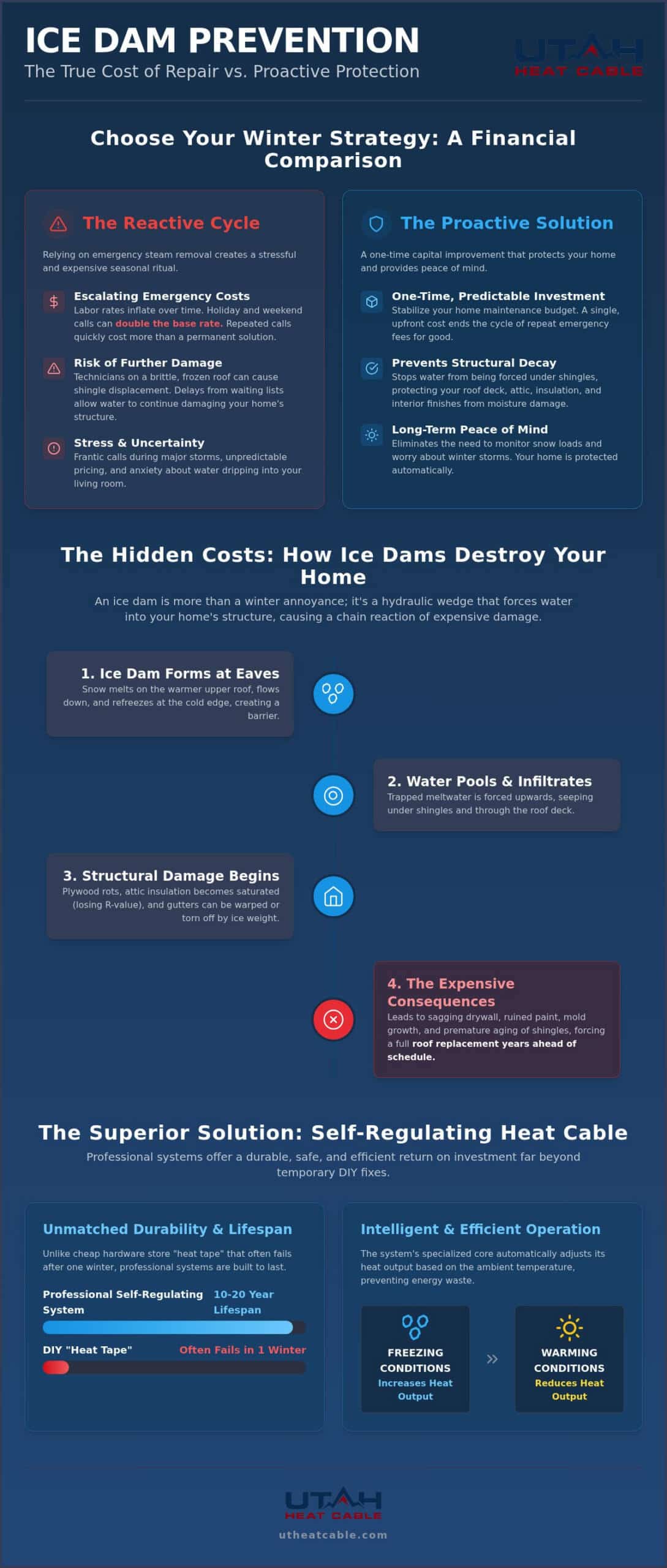
Many homeowners view winter roof leaks as a random nuisance, but they are actually a predictable symptom of how ice dams form on regional properties. Relying on emergency de-icing services creates a “reactive cycle” that can drain your home maintenance budget. If you find yourself calling for steam removal two or three times over a decade, you’ve likely spent more than the total cost of ice dam prevention vs repair. This doesn’t even account for the steady inflation of labor rates over time or the stress of managing a crisis.
A professional heat-trace system represents a one-time capital improvement that stabilizes your expenses. In contrast, emergency service pricing is inherently volatile. When a record storm hits Salt Lake City or Jackson Hole, local demand spikes instantly. You aren’t just paying for the technical labor; you’re paying a premium for immediate availability. Proactive prevention eliminates the anxiety of being stuck on a two-week waiting list while meltwater drips into your living room. For those seeking long-term security, our products and services provide custom-designed systems that stop this cycle before the first snowflake falls.
The Hidden Costs of the Reactive Approach
The true expense of the reactive method often stays hidden until the invoice arrives. Emergency premiums for holiday or weekend calls can double the base rate of a single removal session. Beyond the service fee, the repeated mechanical stress of technicians walking on a frozen, brittle roof can lead to minor shingle displacement or gutter strain. Perhaps the greatest risk is the “waiting list” delay. If a specialist is backed up for days during a peak freeze, the moisture infiltration continues to compromise your roof deck every hour the dam remains in place.
Structural Math: How Ice Dams Accelerate Roof Replacement Costs
Ice dams don’t just sit on your roof; they act as a hydraulic wedge. As meltwater pools behind the ice, it’s forced upward under the shingles and directly into the roof deck. This process can cause significant damage to the building by rotting the structural plywood and saturating your attic. When you evaluate the cost of ice dam prevention vs repair, you must account for these invisible structural failures that compromise your home’s integrity.
The interior consequences are equally taxing. Water infiltration often leads to sagging drywall, ruined paint, and the need for professional mold remediation. These repairs are frequently more expensive than the initial de-icing service. Additionally, recurring ice dams strip away protective shingle granules and cause premature aging of the asphalt. This often forces a full roof replacement years ahead of schedule, turning a minor winter annoyance into a massive capital expense. You can learn more about why ice dams are the real culprit for early roof failure in our technical deep dive.
The Escalation of Repair Costs from Attic to Foundation
Moisture damage rarely stays localized. Once attic insulation gets wet, it compresses and loses its R-value, which drives up your monthly heating costs. Heavy ice buildup can also warp or detach your gutters. This leads to poor drainage and potential foundation issues as water pools around your home’s base during the spring thaw. Taking a proactive stance is the only way to avoid this cascade of structural decay. If you want to secure your property, it’s wise to explore the essential principles of snow melt systems before next season.
Maximizing ROI with Self-Regulating Heat Cable Systems
Selecting the right technology is the final step in securing your home’s financial future. While hardware stores offer cheap “heat tape” options, these DIY products frequently fail during their first winter. A professional self-regulating heat cable system represents a superior long-term investment, with a lifespan typically reaching 10 to 20 years. When you analyze the cost of ice dam prevention vs repair, the durability of professional-grade materials offers the best return. As licensed electrical contractors, we prioritize code compliance and safety, ensuring your system operates reliably without risking your home’s electrical integrity.
The technical secret to this efficiency is the cable’s ability to “think” for itself. You can explore the mechanics further in our comparison of Self-Regulating vs Constant Wattage Heat Cable. These systems use a specialized core that increases heat output in freezing conditions and throttles back as the roof warms up. This responsiveness prevents the high energy costs associated with older, “always-on” technologies. It’s a specialized solution built for the extreme temperature swings common in our mountain regions.
Designing for Efficiency and Performance
A truly effective system requires more than just cable; it needs intelligent management. We use automated controllers and ambient sensors to ensure the system only activates when both moisture and freezing temperatures are present. This is particularly important for north-facing slopes and intricate gutter systems where ice tends to persist. Self-regulating cable is a smart-energy solution that only pulls maximum power when ice is present. This custom approach maximizes performance while keeping your operational costs as low as possible.
Securing Your Home Against Future Winters
Choosing a proactive strategy is the most reliable way to protect both your property and your finances. When you evaluate the cost of ice dam prevention vs repair, it’s clear that a one-time investment in professional technology far outweighs the recurring expense of emergency removals and structural fixes. By installing a custom-engineered de-icing solution, you effectively eliminate the risk of water infiltration and ensure your roof reaches its full intended lifespan. As a licensed electrical contractor specialized in the harsh winters of Utah, Idaho, and Wyoming, we understand the precision required to keep your home safe. Don’t wait for the next record snowfall to find yourself on a long waiting list. You can request a custom heat-trace design for your home today to gain permanent peace of mind. Your home is your most valuable asset; give it the high-standard protection it deserves.
Frequently Asked Questions
Is it cheaper to run heat cables or pay for ice dam removal?
Running a self-regulating system is significantly more economical over a five-year period than paying for emergency steam services. When you calculate the cost of ice dam prevention vs repair, the energy used by automated controllers is a fraction of the premium rates charged by removal crews during a Utah blizzard. Prevention stops the damage before it starts, whereas removal only addresses the symptoms.
How much does it cost to repair a roof after an ice dam leak?
General roof leak repairs in 2026 often fall between $350 and $1,900 for minor to average fixes according to industry data. When analyzing the cost of ice dam prevention vs repair, you’ll find that prevention eliminates the need for these structural expenses. While our team doesn’t perform general roof repair, we focus on installing professional-grade heat-trace systems that stop ice from forming.
Does home insurance cover ice dam removal or the resulting damage?
Most standard policies cover the “resulting damage” from a leak, such as ruined drywall or flooring, but they rarely pay for the ice dam removal itself. Insurance companies typically view ice buildup as a maintenance issue that the homeowner should prevent. Relying on a claim often involves high deductibles and the risk of increased premiums, making proactive prevention a safer financial choice.
How long do professional heat cable systems last compared to DIY heat tape?
Professional self-regulating systems are engineered to last between 10 and 20 years when installed by a licensed electrical contractor. In contrast, low-quality DIY heat tape often fails after just one or two Wyoming winters due to brittle jackets and internal component degradation. Investing in high-standard materials ensures your home remains protected for decades rather than requiring a replacement every other season.