
Tossing chemical salt pucks onto your eaves won’t stop the destructive cycle taking place above your ceilings. When winter temperatures fluctuate across the Wasatch Front, ice dams can cause water to leak into your home and cause mold growth within your attic framing before you even spot the first drip.
Watching water seep through fresh drywall during a hard freeze is maddening, and worrying about hidden spores compromising your family’s health is completely justified. You don’t have to settle for exhausting roof rakes or reactive ceiling patches that treat surface symptoms while leaving the underlying moisture intact. In this guide, you’ll discover how backed-up meltwater bypasses shingles, why trapped moisture sparks attic mold, and how engineered self-regulating heat cable stops the cycle permanently. Here is how to protect your roofline and safeguard your living space all winter long.
Key Takeaways
- Understand the thermal mechanics of how ice dams can cause water to leak into your home and cause mold growth beneath your roof deck.
- Learn critical steps to safely contain active interior leaks and protect your finished living spaces without causing further structural damage.
- Discover why aggressive DIY removal methods like salt pucks or axes often worsen roof vulnerabilities and create costly moisture traps.
- Explore how commercial-grade self-regulating heat cable systems establish reliable meltwater drainage paths to stop ice dams permanently.
The Dam-to-Drywall Path: How Roof Ice Forces Water and Mold Indoors
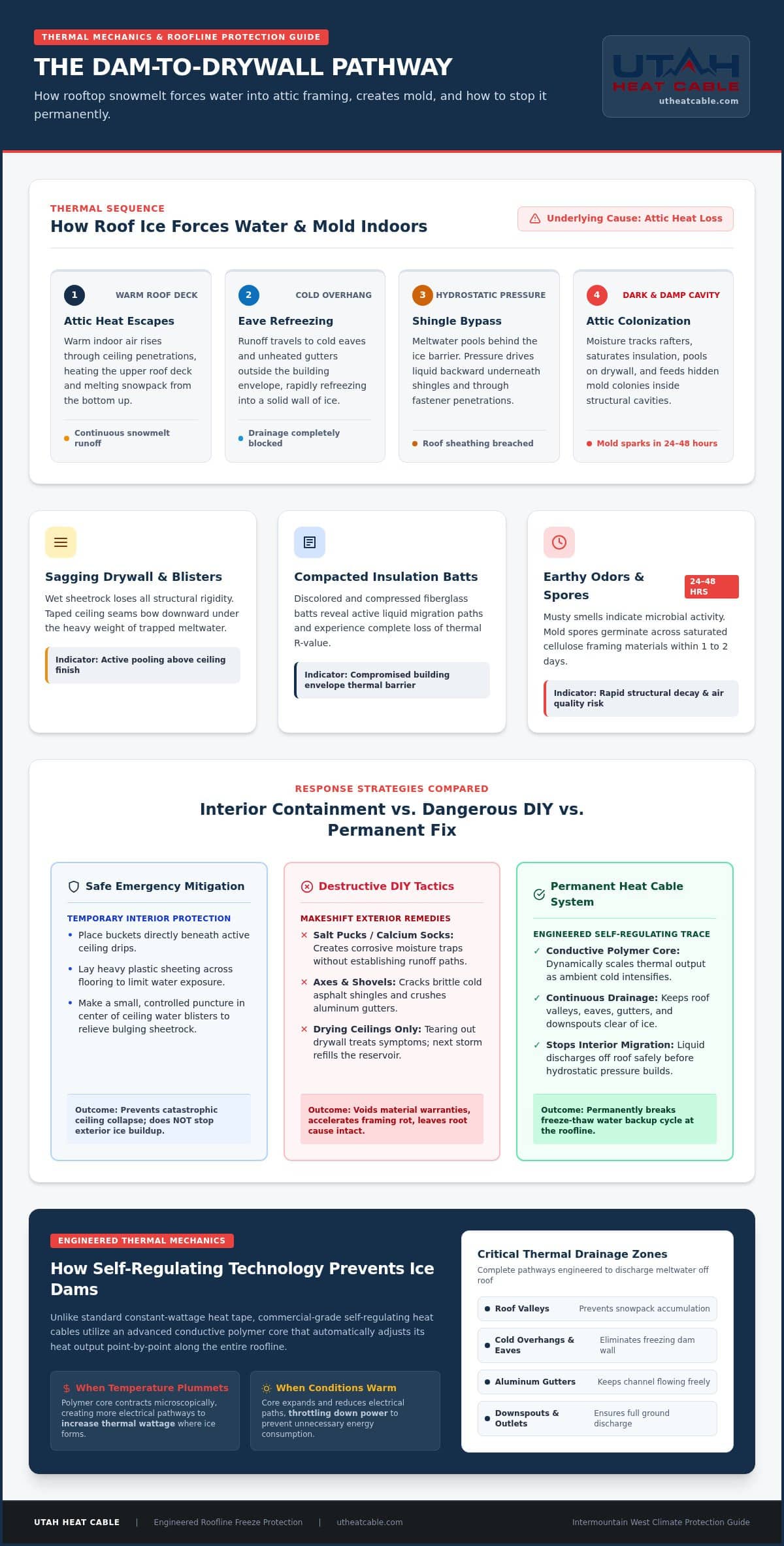
Attic heat loss turns rooftop snow into a quiet structural threat. When warm indoor air rises past ceiling penetrations, it heats the upper roof deck, causing bottom layers of snowpack to melt. This runoff flows down the slope until it reaches the cold eaves and gutters, which overhang outside the building footprint. Here, the liquid refreezes into a dense wall of ice. Understanding what an ice dam is explains why it presents such a severe hazard; it halts natural gravitational drainage. As more meltwater pools behind this frozen barrier, it creates hydrostatic pressure that forces water backward, driving it under shingles and through fastener penetrations directly into the roof decking.
Once water breaches the sheathing, gravity takes over inside the building envelope. Moisture travels along rafters, saturates fiberglass insulation, and pools across ceiling drywall. Because these architectural cavities remain dark and damp, ice dams can cause water to leak into your home and cause mold growth across structural framing long before water breaches the paint.
Early Warning Signs of Hidden Moisture and Microbial Colonization
You can catch internal water migration before major structural degradation occurs by watching for specific physical cues:
- Sagging drywall and blistering paint: Wet sheetrock loses rigidity, causing taped seams to bow downward under the weight of trapped water.
- Compacted insulation batts: Discolored, compressed insulation indicates active liquid pathways and loses all thermal performance.
- Persistent earthy odors: Musty smells reveal hidden colonies, as mold spores germinate within 24 to 48 hours of cellulose materials staying saturated.
Addressing the moisture source immediately prevents extensive framing decay and indoor air contamination.
Stopping Interior Leaks: Emergency Mitigation vs Permanent Fixes
When meltwater starts pooling across your ceiling, immediate containment protects your living space from catastrophic collapse. Set buckets beneath active drips, lay heavy plastic sheeting across flooring, and relieve bulging sheetrock by making a small, controlled puncture right in the center of the water blister. While these steps manage the indoor mess, remember that reactive measures do nothing to clear the frozen barrier above. Homeowners often resort to desperate exterior tactics, like hacking at the ice with axes or tossing calcium chloride socks onto the eaves. These makeshift remedies crack asphalt shingles, crush aluminum gutters, and void material warranties without providing lasting drainage channels.
You can explore critical pre-winter planning and thermal guidelines on our Need To Know page to prepare your property safely before freezing cycles set in.
Why Drying Ceilings Fails Without Eliminating Meltwater Traps
Remediation crews excel at tearing out waterlogged sheetrock and setting up commercial dehumidifiers, but structural drying only manages the aftermath. Because ice dams can cause water to leak into your home and cause mold growth across damp framing, drying the drywall treats a secondary symptom while leaving the root cause untouched. If the outdoor temperature stays below freezing, new runoff will simply pool behind the ridge and soak the newly restored ceiling during the very next snowstorm.
Wood rafters and top plates trapped behind damp insulation quickly develop rot if repeated freeze-thaw cycles keep feeding the reservoir. Rather than repeatedly paying for interior restoration, you can secure permanent exterior drainage paths by exploring proven systems from Utah Heat Cable to stop moisture intrusion before it reaches your living quarters.
Preventing Leaks and Mold with Self-Regulating Heat Cable Systems
Eliminating freeze-thaw traps requires maintaining continuous runoff channels rather than battling ice buildup after it forms. Commercial-grade self-regulating heat cables feature a conductive polymer core that automatically increases thermal wattage as temperatures plummet, then throttles down as conditions warm. This dynamic operation ensures eaves and gutters remain clear of obstructions without consuming unnecessary power. When valleys, gutters, and downspouts stay open, liquid runoff discharges off the structure instantly instead of backing up under cold eaves. You can explore comprehensive heat-trace and snow melt solutions engineered to protect mountain properties from complex winter weather patterns.
Because ice dams can cause water to leak into your home and cause mold growth within hidden wall cavities, an exterior thermal drainage path acts as a true structural barrier against recurring microbial contamination.
Engineered Heat-Trace Design for Intermountain West Winter Climates
Reliable freeze protection demands precise mechanical layout rather than simple plug-in heat tape. Master electrical craftsmanship ensures every component withstands heavy mountain snowloads:
- Dedicated, code-compliant circuitry: Licensed electrical contractors install dedicated outdoor runs that meet National Electrical Code standards, incorporating ground-fault equipment protection to eliminate winter tripping.
- Customized serpentine patterns: Cables run in tailored triangular patterns across roof overhangs, weaving directly into downspouts and valleys to guarantee an uninterrupted drainage route from roofline to ground.
- Intelligent automated controllers: Advanced ambient and moisture sensors activate cables only during active freeze events, delivering dependable ice mitigation while optimizing seasonal energy efficiency.
This systematic defense keeps meltwater moving safely off your home, preventing interior water damage before it starts.
Protect Your Living Space with Engineered Freeze Protection
Unchecked rooftop runoff shouldn’t dictate the safety and comfort of your living space. Reactive interior drying and temporary salt pucks fail to address the root threat, because ice dams can cause water to leak into your home and cause mold growth across structural timbers all season long. Stopping this destructive cycle permanently requires keeping dependable drainage channels open across your eaves, valleys, and downspouts.
Utah Heat Cable delivers specialized de-icing solutions engineered specifically for mountain properties across Utah, Idaho, and Wyoming. As a licensed electrical contractor adhering strictly to local building codes, our team installs commercial-grade self-regulating heat trace systems built to handle severe snowfall. Protect your roof and prevent dangerous interior mold growth before the next freeze arrives: schedule your professional heat cable consultation with our team today and enjoy lasting peace of mind.
Frequently Asked Questions
Can an ice dam leak cause mold inside my home in just two days?
Yes, indoor mold spores germinate rapidly once organic building materials absorb moisture. Because ice dams can cause water to leak into your home and cause mold growth within 24 to 48 hours of cellulose saturation, damp drywall paper and wood rafters become ideal breeding grounds quickly. Prompt moisture mitigation is critical to protect indoor air quality.
How do I know if an ice dam leak has started growing mold inside my attic?
Check for physical warning signs such as dark staining along roof decking seams, matted or discolored fiberglass insulation, and bowed ceiling sheetrock. A sharp, earthy odor near attic access hatches often signals active colonies behind the framing. Hidden moisture can trigger extensive growth before discoloration penetrates finished interior paint.
Does homeowners insurance cover interior water damage and mold from ice dams?
Standard policies generally cover sudden, accidental interior water damage to drywall, ceilings, and personal belongings resulting from an overhead leak. However, insurers rarely pay for the exterior physical removal of the ice ridge itself. Many carriers also limit or exclude mold remediation claims if moisture intrusion was prolonged or neglected.
Why does self-regulating heat cable prevent ice dam leaks better than roof raking?
Roof raking removes surface snow within reach, but it leaves underlying ice rims intact and risks scraping granules off cold shingles. Self-regulating heat cables provide an automated thermal barrier that maintains open meltwater pathways directly through gutters, downspouts, and valleys. This continuous drainage prevents pooled water from ever backing up beneath your shingles.