
What if the most dangerous winter leak in your home is the one you cannot see? When freezing temperatures grip Utah’s valleys and mountain benches, trapped meltwater at your eaves quietly forces its way under the shingles and down into your home’s structural framing. The damage that hides behind your walls often starts long before damp drywall or peeling paint ever appears in your living room.
Few things are more frustrating than patching an interior wall only to watch the same mysterious moisture return the following winter. In this guide, you will discover how winter ice dams drive moisture deep behind your walls, how trapped dampness sparks wood rot within closed stud cavities, and how professional roofline thermal prevention stops structural decay at the source. Here is what is truly happening inside your exterior walls and how to protect your home permanently.
Key Takeaways
- Understand the hydraulic forces behind winter eaves that drive standing meltwater upward beneath roof shingles and directly into wall framing.
- Uncover how the damage that hides behind your walls develops quietly inside sealed cavities, destroying insulation and rotting structural timber before surface signs appear.
- Learn to spot early warning signs, including subtle paint bubbling and persistent winter odors, before framing decay requires extensive remediation.
- Discover why proactive thermal protection with self-regulating heat cable eliminates recurring interior leaks by keeping drainage pathways open all winter.
How Winter Ice Dams Force Water Behind Your Exterior Walls
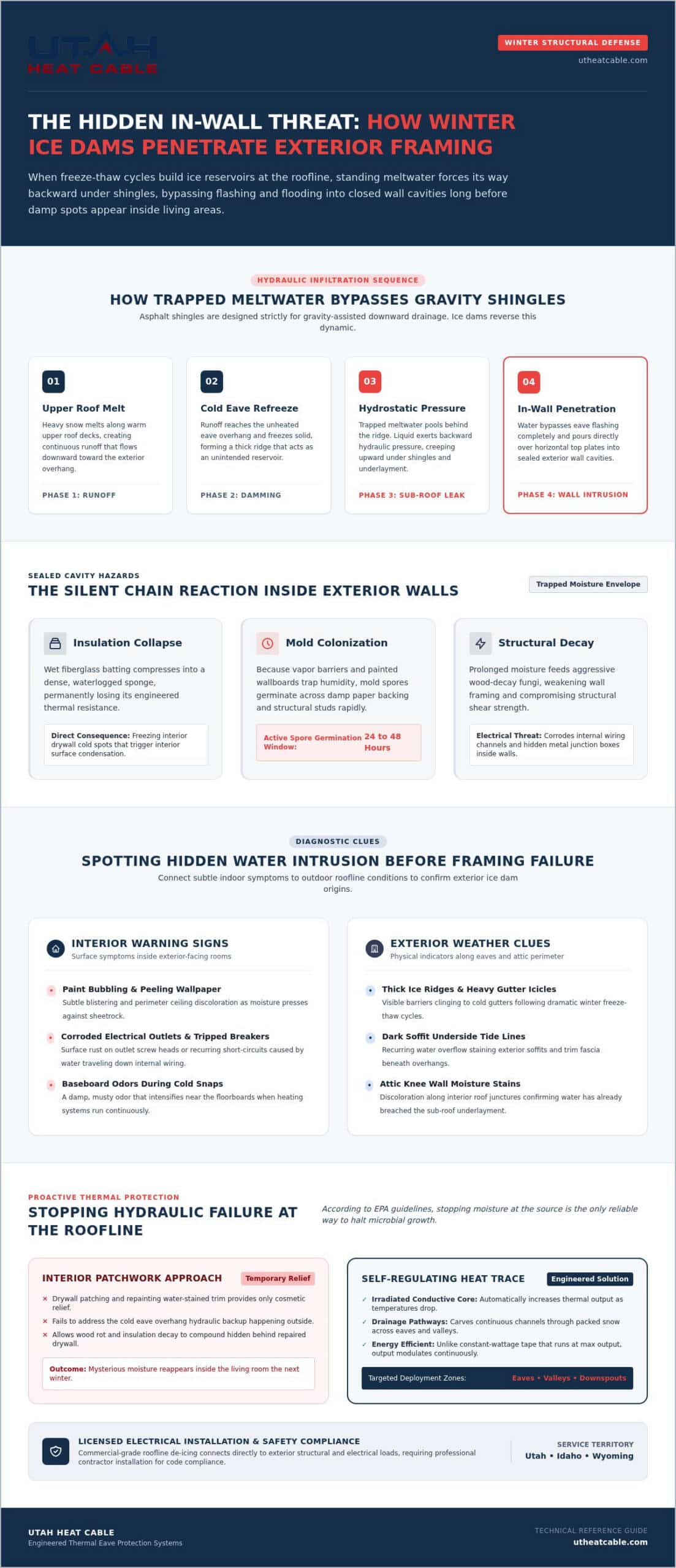
When heavy snow melts along upper roof decks, it runs downward until reaching the cold eave overhang. There, it quickly refreezes into a thick ridge. As documented in studies on ice dam formation on sloped roofs, this barrier forms an unintended reservoir of trapped meltwater. Because asphalt shingles rely on gravity to shed runoff, standing water exerts hydrostatic pressure backward, creeping under shingles and roof underlayment. The liquid bypasses flashing and spills directly across the horizontal top plates of your exterior wall framing. The damage that hides behind your walls begins silently inside this sealed space.
The Destructive Cycle: Saturated Insulation, Wood Rot, and Toxic Mold
Once water bypasses the roofline, it triggers an immediate chain reaction inside the closed stud cavities:
- Compressed insulation: Wet fiberglass batting collapses into a dense sponge, permanently losing its thermal resistance and creating freezing cold spots across interior drywall.
- Rapid mold colonization: Trapped moisture cannot easily evaporate through vapor barriers and painted wallboards. Active mold spores can germinate and colonize damp cellulose paper and framing studs within 24 to 48 hours.
- Structural and electrical decay: Prolonged moisture fuels wood-decay fungi that soften structural lumber, reduce wall shear strength, and corrode hidden metal electrical boxes.
Because modern exterior walls are designed to keep weather out, they also trap moisture inside. The damage that hides behind your walls compounds steadily throughout the winter, long before dampness breaks through to your living space.
Warning Signs of Hidden In-Wall Water Damage to Watch For
Because stud cavities conceal water intrusion, homeowners must watch for subtle surface clues. Inspect exterior-facing rooms for bubbling paint, peeling wallpaper, or faint discoloration along ceiling perimeters. Pay close attention to wall-mounted electrical outlets on outer walls; surface rust on screw heads or sudden breaker trips often signal moisture traveling down internal wiring channels. When your home heating runs continuously during cold snaps, a damp, musty odor that intensifies near baseboards confirms active humidity trapped within the wall envelope.
Tracing In-Wall Moisture Infiltration Back to Cold Roof Eaves
Confirming an exterior source requires connecting these indoor warning signs to outdoor weather patterns. The damage that hides behind your walls typically flares up following dramatic freeze-thaw cycles, especially when thick ridges of ice and hanging icicles cling to your gutters. Check your attic knee walls and the underside of exterior soffits for dark water tide lines, which indicate recurring overflow. Authoritative guidance on preventing ice dam damage highlights how meltwater easily bypasses eave barriers when temperatures fluctuate.
If you suspect an exterior roofline issue rather than an internal plumbing leak, review our need-to-know guide to pinpoint the exact origin. Stopping moisture at the roofline is essential to keep hidden structural framing completely dry.
Preventing In-Wall Structural Damage with Self-Regulating Heat Cable
Patching drywall or repainting water-stained trim provides only temporary cosmetic relief if freezing eaves continue to back up meltwater each winter. Interior repairs simply cannot resolve an exterior hydraulic failure. According to EPA moisture and mold control guidelines, stopping moisture at the source is the only reliable way to halt microbial growth and wood decay. To permanently eliminate the damage that hides behind your walls, property owners must address the freezing temperatures along the roof perimeter. Establishing proactive thermal management stops water before it ever contacts the sub-roof framing.
Engineered Thermal Solutions for Utah, Idaho, and Wyoming Homes
Across mountain valleys and high-elevation benches, fluctuating temperatures demand responsive exterior protection. Commercial-grade, self-regulating heat trace cable systems provide that targeted defense in heavy snow zones. Unlike traditional constant-wattage tape that operates at maximum output continuously, self-regulating cables feature an irradiated conductive core that automatically increases heat output as ambient temperatures plunge.
When installed along eaves, valleys, and downspouts, these heating cables carve continuous drainage pathways through packed snow. Meltwater drains freely off the roof instead of pooling into standing reservoirs behind an ice ridge. Because roofline de-icing systems interface directly with exterior electrical loads and structural components, installation by a licensed electrical contractor guarantees complete safety code compliance. Explore our proven products and services to protect your roofline and eliminate hidden moisture intrusion before winter storms arrive.
Stop Winter Moisture Intrusion Before It Starts
Exterior ice buildup creates steady hydraulic pressure that forces standing meltwater past cold eaves and deep into structural assemblies. Left unaddressed, the damage that hides behind your walls leads to crushed insulation, decayed framing studs, and hidden mold colonies that interior cosmetic patches will never resolve.
True protection requires stopping ice accumulation before runoff can breach your building envelope. As a licensed electrical contractor specializing in custom-designed heat-trace systems, our team provides proven exterior ice dam defense across challenging Utah, Idaho, and Wyoming climates. Take control of your home’s thermal defense before freezing weather settles in. Protect your home from hidden winter water damage with Utah Heat Cable and keep your structural framing completely secure season after season.
Frequently Asked Questions
Can roof ice dams cause water damage inside my walls?
Yes, ice dams frequently drive moisture directly into wall cavities. When thick ice ridges trap melting snow along cold roof eaves, liquid forces backward beneath shingles. This backed-up water migrates over exterior wall plates and drains downward through structural stud bays. The damage that hides behind your walls usually begins here, saturating insulation and structural timber long before leaks appear indoors.
How do I know if water is leaking behind my drywall during winter?
Look for blistering paint, peeling wallpaper, or dark discoloration along exterior wall corners and baseboards after heavy snowfalls. You might also notice unusually cold wall sections or a sharp musty odor when the furnace runs. If electrical outlets along outer walls trip unexpectedly or show traces of internal rust, water is likely traveling downward through your wall framing.
Will replacing my interior drywall fix winter wall moisture permanently?
No, replacing drywall addresses only cosmetic symptoms. If exterior eaves continue to freeze and pool meltwater each winter, recurring leaks will saturate your fresh drywall and insulation again. Truly resolving the damage that hides behind your walls requires eliminating the exterior freeze-thaw damming along your roofline, ensuring water drains off the roof rather than entering framing cavities.
How does self-regulating heat cable prevent in-wall water leaks?
Self-regulating heat cable adjusts its heat output dynamically based on ambient winter temperatures across Utah, Idaho, and Wyoming. Installed along roof eaves, valleys, and downspouts, the cable maintains open drainage channels through packed snow. This prevents standing water reservoirs from backing up under shingles and entering the wall assembly, protecting structural framing and insulation all winter long.