
Heat cable installation generally isn’t covered by insurance in Utah because it’s a building improvement, not a repair to covered damage. Choosing heat cable in Utah is a preventive step: the system creates channels that help melting snow drain before it refreezes at the roof edge. Heat cable can address ice buildup, but it does not replace attic insulation, air sealing, ventilation, or gutter maintenance.
It’s reasonable to want clear answers before winter weather tests your roof. This guide explains what residential and commercial installation involves, when heat cable may help, and how self-regulating and constant-wattage cables differ. The right system depends on your roof, gutters, drainage path, and recurring ice trouble spots. Understanding those factors helps you compare options and plan the next step for your property.
Key Takeaways
- Learn how cable placement across roof edges, valleys, gutters, and downspouts supports a continuous path for meltwater.
- See what a residential or commercial installation considers, from roof layout to the property’s drainage needs.
- Understand how self-regulating and constant-wattage cables differ, and why the right choice depends on the application.
- Explore how Utah Heat Cable’s cable and de-icing options can help address recurring winter ice buildup.
Does insurance pay for heat cable installation?
Heat cable installation generally isn’t covered by insurance because it’s considered a building improvement, not a repair to covered damage. A claim for existing roof or water damage is separate from installing prevention equipment. Roof and gutter cables help manage future ice buildup by creating channels for meltwater to drain.
Cable placement follows the areas where ice can block drainage. A system may run along roof eaves, through gutters and downspouts, and across roof valleys where snowmelt tends to refreeze. In Provo, the route should continue from the roof through the gutter and downspout to the ground. A gap in that route can leave water without a clear exit.
When operating, heat cable warms narrow channels through snow and ice. Meltwater can then move toward the roof edge and flow through the gutter and downspout instead of refreezing there. Roof and gutter heat cable installation should follow the full drainage route, not just one icy section.
Snow guards and heat cables serve different purposes. Cables help manage ice-dam symptoms by maintaining meltwater channels, while snow guards help retain roof snow. Attic insulation, air sealing, and ventilation address heat loss that contributes to ice dams; gutter maintenance helps keep drainage routes clear.
For Utah’s freeze conditions, system design accounts for the roof layout, eaves, valleys, gutter length, downspouts, and recurring ice spots. It also follows the route needed to carry meltwater safely off the roof.
Before installation, the roof and drainage path are assessed to plan cable placement. Seasonal gutter maintenance removes debris that could obstruct flow, while adequate attic insulation helps reduce the heat loss behind uneven roof melting. These prevention measures work together, and clear guidance helps you understand each one’s role.
Residential and commercial cable installation
Installation planning starts with the building’s roof layout, electrical setup, and areas where ice interrupts drainage. Homes and commercial properties need designs suited to their roof access and operating needs. For heat cable in Utah, local winter conditions also make the installation timing and drainage route important.
Kits and Accessories
A heat cable system should match the roof route, gutter layout, and downspout path it needs to serve. Selection also depends on controller options and the electrical setup. Videos can help explain how cables and controls work together, but each building’s roof geometry determines the layout. Accessories should support that design rather than force a one-size-fits-all arrangement.
Installation Quality and Safety
Quality installation follows the intended meltwater path and secures cable without damaging roofing materials. Most installations need a GFCI-protected circuit, so electrical planning is part of the design. Utah Heat Cable is a licensed electrical contractor, and its systems are installed safely according to code. For heat cable in Utah, matching electrical planning to the roof layout helps coordinate the work.
Costs and Scheduling
Price depends on the case and is given after a quote request; cost factors include roof access, cable routing, and electrical work. Fall is the preferred installation period in Utah, before winter begins, although systems can also be added during winter when ice dams occur. A project assessment helps define the work and scheduling needs. Request an installation assessment.
Permits and Licensed Electricians
Permit requirements relate to the project’s electrical scope and jurisdiction. Utah Heat Cable’s licensed electrical contractor handles heat cable installation according to code, coordinating electrical work with the system design. This helps align the cable route, circuit needs, and building conditions during installation.
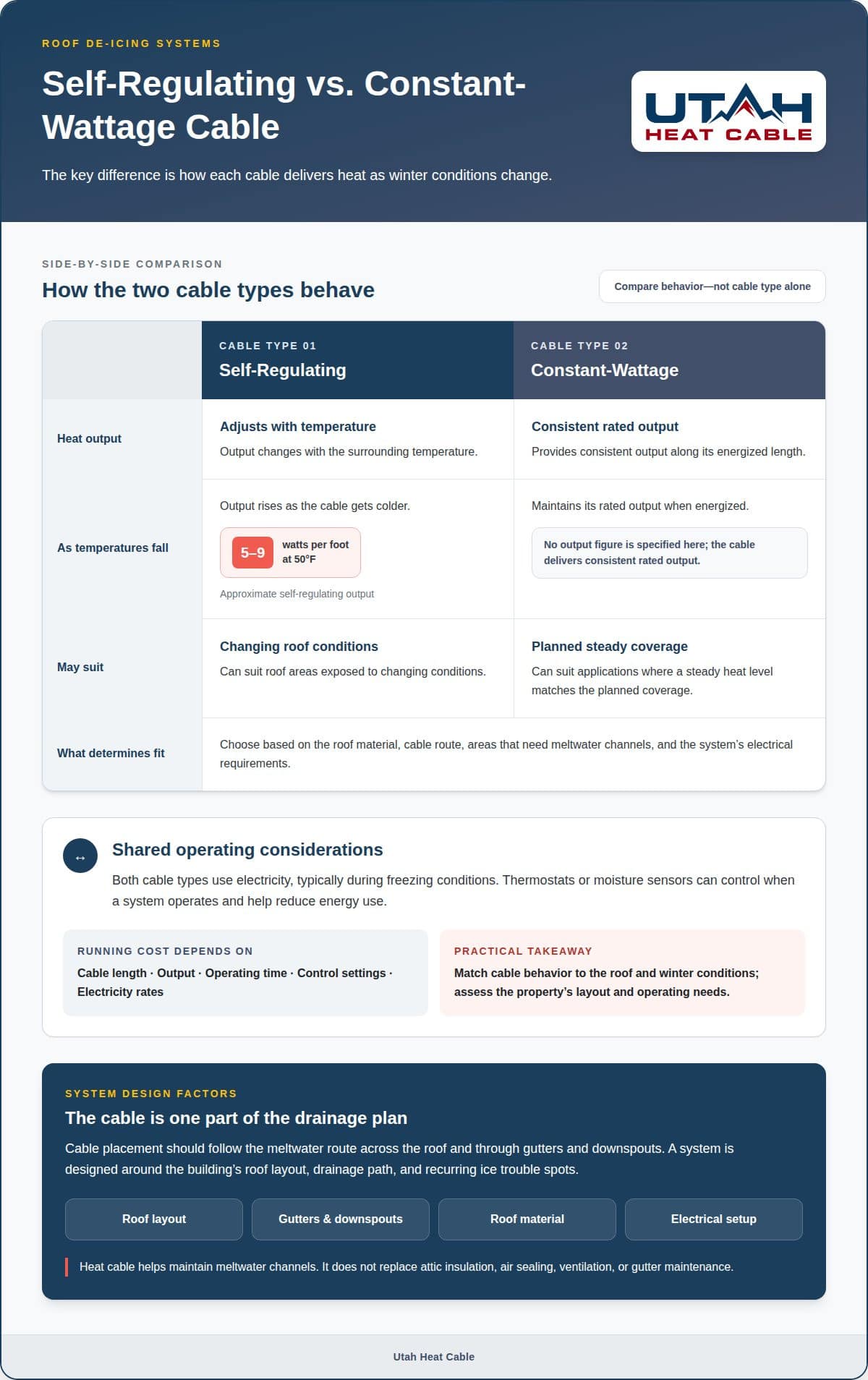
Self-regulating versus constant-wattage cable
The key difference is how each cable delivers heat as winter conditions change. Self-regulating cable adjusts its output with the surrounding temperature, while constant-wattage cable provides consistent rated output when energized. For heat cable in Utah, this distinction can help narrow your options, but roof material and system design matter too.
Self-regulating roof cable output is roughly 5-9 watts per foot at 50°F and rises as temperatures fall. This response can suit roof areas exposed to changing conditions, since output increases as the cable gets colder. The system still needs a layout matched to the building’s roof and electrical requirements.
Constant-wattage cable delivers consistent output along its energized length. It can suit applications where that steady heat level matches the planned coverage. Choose heat cable in Utah based on roof material, cable route, and the areas that need meltwater channels, rather than cable type alone.
Both cable types use electricity, typically during freezing conditions. Thermostats or moisture sensors can control when a system operates and help reduce energy use. Actual consumption depends on cable length, output, operating time, control settings, and electricity rates. These factors determine running costs, so a household’s bill depends on its system and usage.
The practical takeaway is to match cable behavior to the roof and winter conditions. Self-regulating cable changes its output with temperature; constant-wattage cable maintains its rated output. A system assessment can account for your property’s layout and operating needs.
Utah Heat Cable: Self Regulating Heat Cable
Utah Heat Cable installs Self Regulating Heat Cable to suit your roof’s winter drainage needs. The team also installs Constant Wattage Heat Cable. The choice depends on roof layout, areas prone to ice, and how you want the system to operate.
If recurring roof-edge ice is only part of the problem, De-Icing Services or Roof Snow Retention may better fit your property’s needs. The right approach depends on whether you need meltwater channels, snow retention, or both. A tailored system accounts for those conditions instead of treating every roof alike.
For residential, commercial, or HOA properties across Northern Utah and the Wasatch Front, Utah Heat Cable provides heat-trace solutions designed around the building. Contact Utah Heat Cable to discuss a suitable approach for your roof.
Prepare Your Roof for the Next Freeze
Before winter returns, plan around your property’s roof and drainage needs. A heat cable plan for Utah should suit the building, not just address the most visible patch of ice. Utah Heat Cable installs Self Regulating Heat Cable and Constant Wattage Heat Cable, and provides De-Icing Services for different winter property concerns.
To take the next step, share where ice builds up and what type of property you have. That gives the team a useful starting point for discussing an approach suited to your roof or site.
A clear plan now can make winter property care more manageable.
Frequently Asked Questions
Self-regulating or constant-wattage cable?
Self-regulating cable offers more roof-material flexibility: it’s available in 120V and 240V configurations for metal, shingle, wood-shake, and listed membrane roofs. Constant-wattage cable may suit some roof applications, depending on the project requirements. Both use clips rather than screws or nails for attachment. The roof material and project requirements help determine which type fits.
What areas of Salt Lake County do you serve?
Utah Heat Cable serves properties throughout Utah, including Salt Lake County communities such as Salt Lake City, Bountiful, North Salt Lake, Draper, and Sandy. Service also covers Northern Utah and Wasatch Front locations, including Park City, Logan, and Provo. Systems can be designed for homes, commercial buildings, cabins, and managed properties.
What do heated cables actually do?
Heated cables provide targeted heat where ice and snow can obstruct drainage or create slippery surfaces. On a roof, they help move meltwater; on a walkway or driveway, electric radiant heat melts snow and ice. These systems target specific areas and do not address every source of roof heat loss.
Where does the cable need to run on a Provo roof?
On a Provo roof, the cable route should connect snowmelt areas to a clear exit for water. That may mean routing across vulnerable roof edges and valleys, then through the gutter and downspout to ground level. The layout should follow the building’s actual drainage route, including sections where water might collect or refreeze.
What types of heat cable are used for roofs, gutters, and pipes in Utah?
Self-regulating and constant-wattage cables are used for roof and gutter systems, while pipe heat cables and heat-trace systems help protect pipes from freezing. Self-regulating cable is compatible with several roof materials; constant-wattage cable is designed for shingle roofs. For pipe or industrial applications, system selection depends on the equipment and temperature-maintenance needs.